
Harvest
Time Tracking
Sign up free

Calculate Margin on Services

Facing challenges in calculating service margins? Harvest simplifies this with precise tracking of billable versus non-billable hours, ensuring accurate margin analysis.

Try Harvest Free

What should you charge per hour?

Most freelancers and consultants dramatically undercharge. This calculator accounts for what most people miss: non-billable time, taxes, and overhead.

$
Accounting for vacation, holidays, sick days
60%
Most freelancers can bill 50-70% of their time. The rest goes to admin, marketing, proposals, and learning.
$
Software, insurance, equipment, accounting, taxes beyond income tax, etc.
Your break-even rate $0
Recommended rate (+20% buffer) $0
Billable hours per week 0h
Equivalent daily rate $0

Start tracking your billable hours

Walk through the entire flow below. Start a timer, check your reports, and create a real invoice — all in three clicks.

Go ahead — start tracking!

One click and you're timing. Try it right here: start a timer, add an entry, edit the details. This is exactly how it feels in Harvest.

  • One-click timer from browser, desktop & mobile
  • Works inside Jira, Asana, Trello, GitHub & 50+ tools
  • Duration or start/end — your call
  • Day, week & calendar views to stay on top of it all
  • Friendly reminders so no hour gets left behind
Acme Corp
Website Redesign
Homepage layout revisions
1:24:09
Content Strategy
Blog calendar planning
1:30:00
SEO Audit
Technical audit report
0:45:00
Brand Guidelines
Color system documentation
2:15:00
Logo Concepts
Initial sketches round 1
1:00:00

Understanding Service Profit Margins

Calculating profit margins for service-based businesses is crucial to assess profitability and operational efficiency. The primary types of profit margins to consider are gross, operating, and net profit margins. Gross profit margin measures the profitability of core business operations by subtracting the cost of goods sold (COGS) from total revenue and dividing by total revenue. For services, COGS includes direct labor and materials. Operating profit margin accounts for all operating expenses, including salaries and rent. Net profit margin provides an overall profitability view by factoring in all expenses, interest, and taxes. Service industries typically aim for a net profit margin between 10% and 20%, with higher margins indicating stronger profitability.
Breaking Down Costs: Direct vs. Indirect

Understanding the cost components is key to accurately calculating service margins. Direct costs are expenses directly linked to service delivery, such as wages for service employees, materials, and subcontracting. These costs are variable and fluctuate with service demand. Conversely, indirect costs, or overheads, include expenses necessary for running the business but not tied to a specific service. Examples are rent, utilities, and administrative salaries. Properly categorizing these costs is essential for determining precise profit margins. By leveraging Harvest's tracking capabilities, businesses can distinguish between billable and non-billable hours, ensuring a clear understanding of cost allocation.

Benchmarking and Improving Profitability

Benchmarking against industry standards helps service businesses set realistic profit margin goals. For instance, IT services may target net profit margins of 15% to 30%, while consulting firms often achieve 20% to 30%. To improve profitability, businesses can optimize pricing strategies, reduce unnecessary costs, and enhance operational efficiency. Harvest supports these efforts by offering detailed reports on time, expenses, and budgets, enabling informed decision-making. Strategies such as increasing billable hours through improved utilization rates, targeting 75% to 85%, can significantly enhance margins.

Steps to Calculate Service Margins

Accurately calculating service margins involves a systematic approach.

  1. Determine Total Revenue: Calculate the income from services over a specific period.
  2. Identify Direct Costs: List all expenses directly related to service delivery, such as labor and materials.
  3. Calculate Gross Profit: Subtract direct costs from total revenue.
  4. Calculate Gross Profit Margin: Divide gross profit by total revenue, then multiply by 100 to get a percentage.
  5. Identify Operating Expenses: Sum all indirect costs necessary for business operations.
Using these steps, service businesses can accurately compute their profit margins, guided by Harvest's comprehensive tracking and reporting tools.

Calculate Service Margins with Harvest

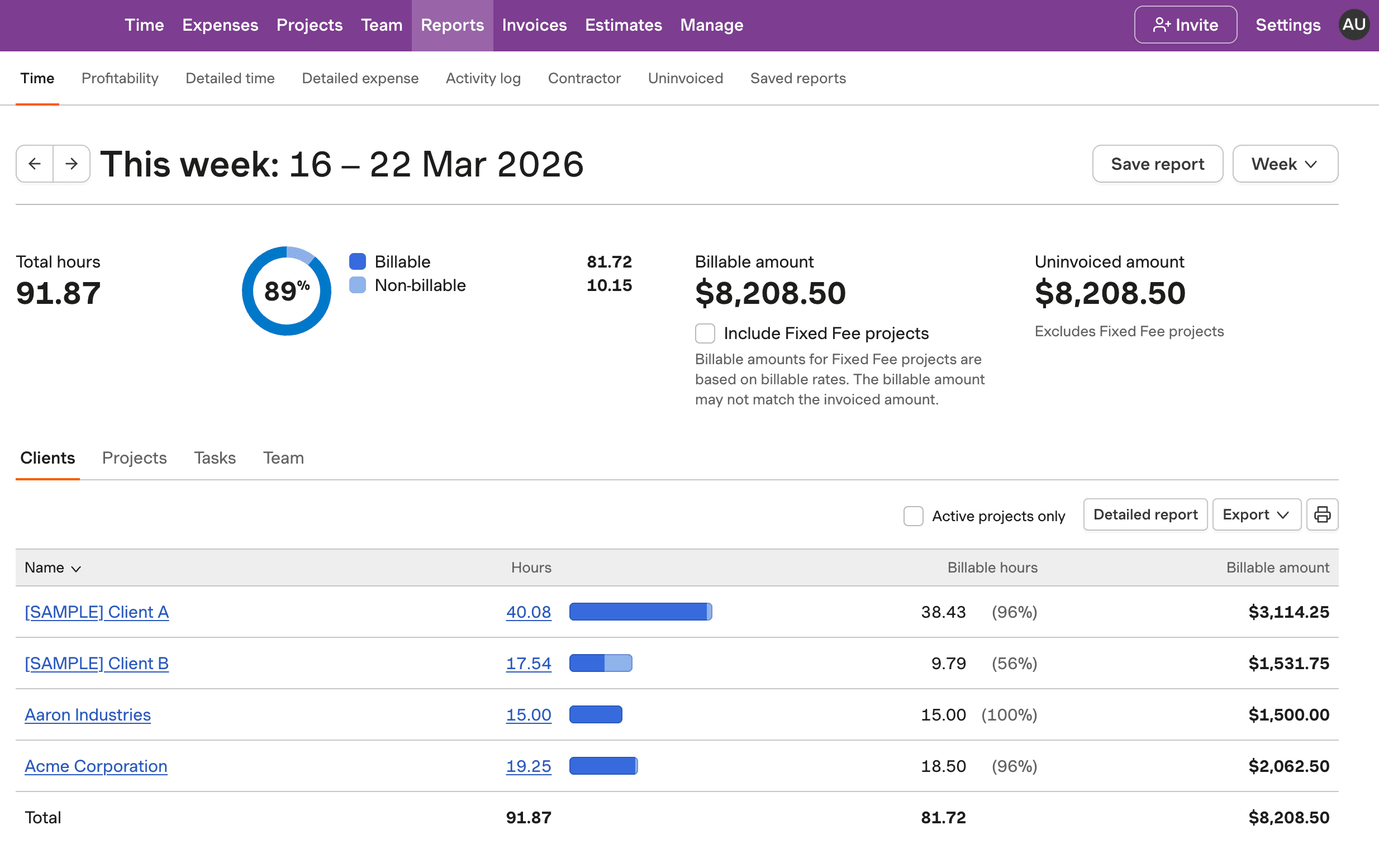
See how Harvest helps track costs and calculate accurate service margins. Easily distinguish between direct and indirect costs.

Harvest dashboard for calculating service margins.

Calculate Margin on Services FAQs

  • To calculate profit margin on services, subtract the cost of goods sold (COGS) from total revenue to find gross profit. Then, divide the gross profit by total revenue and multiply by 100 to get the gross profit margin percentage.

  • Labor costs are a significant part of direct costs in service businesses. High labor costs can reduce profit margins if not balanced with service pricing. Tracking labor costs accurately is crucial for maintaining healthy margins, which Harvest facilitates.

  • Common overhead expenses in service businesses include rent, utilities, administrative salaries, insurance, and marketing. These indirect costs are necessary for operations but not tied to specific services. Proper tracking and management are essential for profitability.

  • Adjust pricing by analyzing cost structures and competitive benchmarks. Consider raising prices to cover increased costs or reduce unnecessary expenses. Utilizing Harvest's detailed reports aids in making data-driven pricing decisions.

  • Gross profit margin measures profitability from core operations by deducting direct costs from revenue. Net profit margin provides a comprehensive view by factoring in all expenses, taxes, and interest, offering a fuller picture of overall profitability.

  • Harvest assists in margin calculations by tracking billable versus non-billable hours, providing detailed reporting on time and expenses, and helping businesses understand cost allocation for accurate profitability analysis.

  • Yes, Harvest allows you to track expenses precisely, capturing receipts and categorizing costs effectively. This capability supports accurate budgeting and margin calculations for service businesses.