
Harvest
Time Tracking
Sign up free

How to Calculate Profit Margin in India

Harvest is a time tracking and invoicing tool that helps businesses maintain financial accuracy. It supports Indian companies in managing time and expenses efficiently.

Try Harvest Free

Will this project be profitable?

Estimate your project cost, set the right price, and know exactly how many hours your team can spend before margin disappears.

Total hours across all team members
$
Average rate across all roles on the project
15%
Scope creep is real. Most projects need 10-25% buffer to stay profitable.
Recommended project price $0
Base cost (before buffer) $0
Hours per person per week 0h
Weekly burn rate $0
Max hours before loss 0h

Track project hours with Harvest

Walk through the entire flow below. Start a timer, check your reports, and create a real invoice — all in three clicks.

Go ahead — start tracking!

One click and you're timing. Try it right here: start a timer, add an entry, edit the details. This is exactly how it feels in Harvest.

  • One-click timer from browser, desktop & mobile
  • Works inside Jira, Asana, Trello, GitHub & 50+ tools
  • Duration or start/end — your call
  • Day, week & calendar views to stay on top of it all
  • Friendly reminders so no hour gets left behind
Acme Corp
Website Redesign
Homepage layout revisions
1:24:09
Content Strategy
Blog calendar planning
1:30:00
SEO Audit
Technical audit report
0:45:00
Brand Guidelines
Color system documentation
2:15:00
Logo Concepts
Initial sketches round 1
1:00:00

Understanding Profit Margin in India

Profit margin is a critical indicator of a business's financial health in India, representing the percentage of revenue retained as profit after expenses. This metric is essential for assessing efficiency and profitability across different sectors. Gross Profit Margin (GPM) measures the efficiency of production by focusing on revenue minus the Cost of Goods Sold (COGS). In contrast, the Operating Profit Margin (OPM) considers core business activities, deducting operating expenses. Finally, the Net Profit Margin (NPM) provides a comprehensive view by accounting for all expenses, taxes, and interest.

In India, corporate profitability forecasts indicate that operating profit margins are expected to hover around 18.2-18.5% by Q1 FY2026, showcasing a recovery trend. Different industries have varied margins; for instance, the banking sector boasts net profit margins of 30.89%, whereas retail operates between 0.5% and 3.5%. Understanding these figures helps businesses gauge their performance relative to industry standards.
Key Profitability Ratios and Calculations

Calculating profit margins involves understanding several key ratios, each offering unique insights. The Gross Profit Margin is calculated by subtracting the COGS from total revenue and dividing the result by the total revenue, then multiplying by 100. For example, if a company's revenue is ₹10,000 and COGS is ₹6,000, the GPM would be 40%.

The Operating Profit Margin entails deducting COGS and operating expenses from total revenue to find Operating Earnings, which is then divided by total revenue. A company with ₹2 crore in revenue, ₹70 lakh COGS, and ₹50 lakh in other expenses would have an OPM of 40%. Lastly, the Net Profit Margin is derived by subtracting all expenses from total revenue. If the net income is ₹2,000 from total revenue of ₹10,000, the NPM is 20%.

Factors Affecting Profit Margins in India

Profit margins in India are influenced by various internal and external factors. Internally, cost management, pricing strategies, and operational efficiency are pivotal. Externally, geopolitical events, raw material costs, and market demand play significant roles. For instance, geopolitical tensions in West Asia can elevate crude oil prices, thereby increasing input costs for sectors like aviation and chemicals, leading to a projected 40-60 basis point decline in operating margins by FY2027.

Industry-specific factors also contribute to profit margin variations. The Indian banking sector, for example, benefits from strong pricing power and less competition, resulting in high margins, while the real estate sector faces low margins due to market volatility. Understanding these elements helps businesses adapt and optimize their strategies for sustained profitability.

Industry-Specific Profitability Benchmarks

Profitability benchmarks vary widely across industries in India. The banking sector, with its high gross profit margins of approximately 100%, contrasts sharply with the retail sector's net margins ranging from 0.5% to 3.5%. The automobile industry shows a gross profit margin of about 12.45%, while real estate development struggles with negative net margins of -16.35%.

Recognizing these benchmarks is crucial for businesses to set realistic goals and expectations. High-margin industries like banking and tobacco benefit from lower COGS and strong market positioning, whereas sectors with high competition and fluctuating raw material costs, such as manufacturing, may see tighter margins. Comparing margins within the same industry provides meaningful insights into business performance.

Optimizing Profit Margins in the Indian Market

Improving profit margins is essential for business growth and sustainability. Companies can enhance margins by reducing operational costs, optimizing production processes, and implementing smart pricing strategies. For instance, leveraging technology to automate processes can significantly lower expenses and increase efficiency.

Additionally, companies must navigate external challenges such as fluctuating raw material prices and regulatory changes. Effective risk management strategies, including maintaining flexible supply chains and diversifying product offerings, can help mitigate these risks. Understanding and adapting to the Indian market's unique dynamics is key to maintaining competitive and profitable operations.

Calculate Profit Margins with Harvest

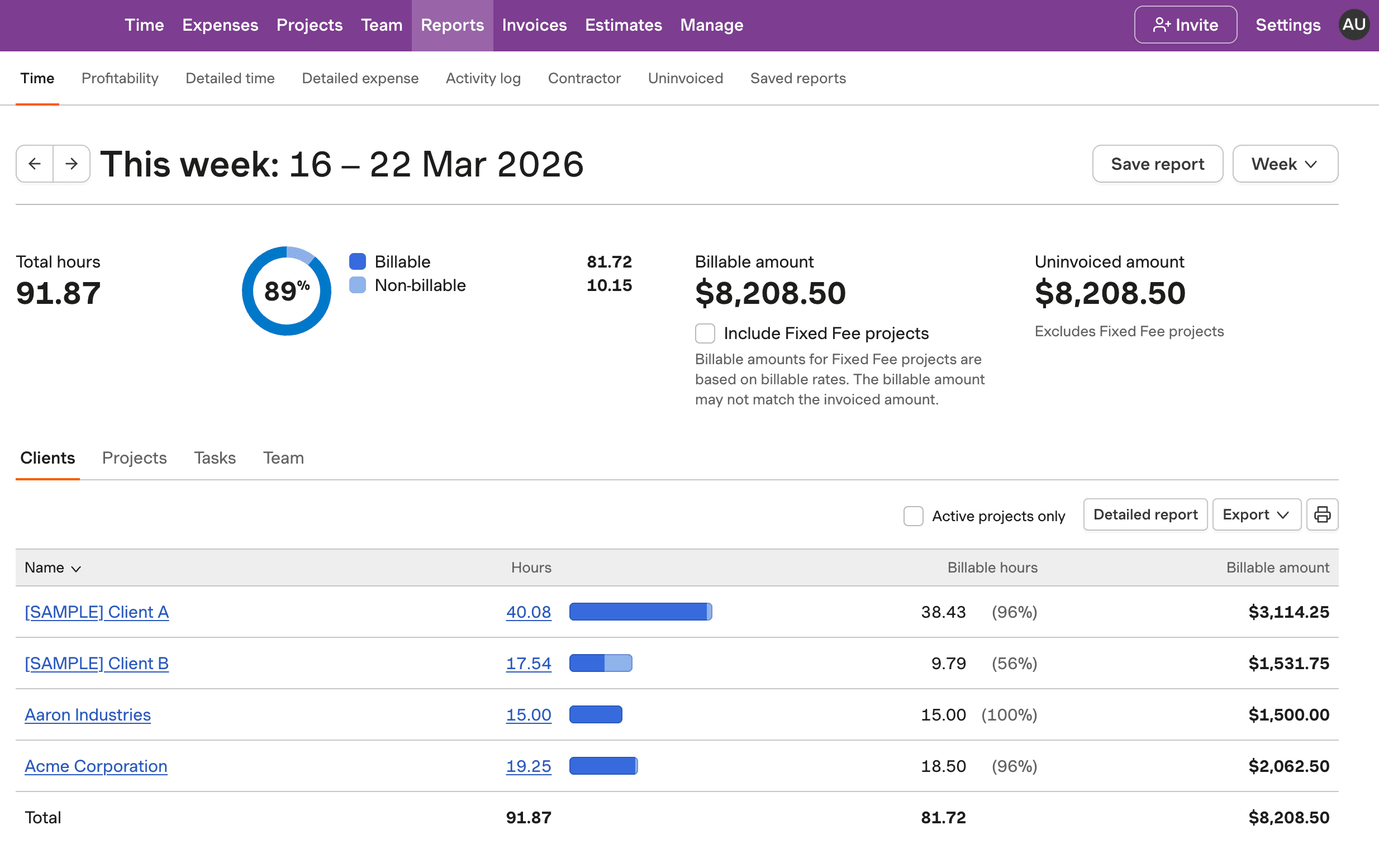
See how Harvest helps Indian businesses track time and expenses, aiding in profit margin calculations.

Harvest time tracking and invoicing features for calculating profit margins in India.

How to Calculate Profit Margin in India FAQs

  • Profit margins in India are calculated using three main formulas: Gross Profit Margin, Operating Profit Margin, and Net Profit Margin. These formulas consider different expense types and provide insights into production efficiency, business operations, and overall profitability.

  • GST affects profit margins by altering the cost structure of goods and services. It can influence pricing strategies and cash flow, necessitating businesses to adjust their profit margin calculations to account for GST-related expenses and credits.

  • A good profit margin varies by industry. For example, a net profit margin of over 10% is often considered ideal across sectors, but industries like banking see much higher margins, while retail might operate with margins as low as 0.5% to 3.5%.

  • To improve profit margins, Indian businesses should focus on reducing costs, enhancing operational efficiency, and optimizing pricing strategies. Adopting technology for process automation and managing supply chain risks can also help maintain healthy margins.

  • Gross profit margin measures the efficiency of production by comparing revenue with the Cost of Goods Sold. In contrast, net profit margin accounts for all business expenses, including operating costs, taxes, and interest, providing a comprehensive profitability overview.

  • External factors such as geopolitical tensions and raw material costs significantly impact profit margins. For instance, rising crude oil prices can increase input costs, affecting sectors like aviation and chemicals, potentially squeezing margins.

  • Profit margin benchmarks for Indian SMEs vary by industry. While banking might see high net margins, SMEs in retail often operate within 0.5% to 3.5%. Comparing within the same industry is crucial for setting realistic expectations.