
Harvest
Time Tracking
Sign up free

Lightweight Hourly Rate Calculator

Freelancers often lose out on income by miscalculating their hourly rates. Harvest helps you accurately track billable hours to optimize your earnings.

Try Harvest Free

What should you charge per hour?

Most freelancers and consultants dramatically undercharge. This calculator accounts for what most people miss: non-billable time, taxes, and overhead.

$
Accounting for vacation, holidays, sick days
60%
Most freelancers can bill 50-70% of their time. The rest goes to admin, marketing, proposals, and learning.
$
Software, insurance, equipment, accounting, taxes beyond income tax, etc.
Your break-even rate $0
Recommended rate (+20% buffer) $0
Billable hours per week 0h
Equivalent daily rate $0

Start tracking your billable hours

Walk through the entire flow below. Start a timer, check your reports, and create a real invoice — all in three clicks.

Go ahead — start tracking!

One click and you're timing. Try it right here: start a timer, add an entry, edit the details. This is exactly how it feels in Harvest.

  • One-click timer from browser, desktop & mobile
  • Works inside Jira, Asana, Trello, GitHub & 50+ tools
  • Duration or start/end — your call
  • Day, week & calendar views to stay on top of it all
  • Friendly reminders so no hour gets left behind
Acme Corp
Website Redesign
Homepage layout revisions
1:24:09
Content Strategy
Blog calendar planning
1:30:00
SEO Audit
Technical audit report
0:45:00
Brand Guidelines
Color system documentation
2:15:00
Logo Concepts
Initial sketches round 1
1:00:00

How to Determine Your Ideal Hourly Rate

Calculating your ideal hourly rate is crucial for maintaining profitability as a freelancer or independent contractor. To start, sum your annual living expenses and desired income. Next, divide this total by your realistic annual billable hours, typically ranging from 1,000 to 1,500. Many freelancers find that only 50% to 70% of their work hours are billable, with the rest spent on administrative tasks and client communication.

For example, if your total expenses and desired income amount to $75,000 annually, and you project 1,250 billable hours, your baseline hourly rate would be $60. To ensure coverage of self-employment taxes and unexpected business costs, consider adding a 25-30% markup. This adjustment helps account for additional expenses such as software subscriptions and professional development, critical for long-term sustainability.
Factoring Expenses into Your Rate

Understanding how to incorporate expenses into your rate is essential for freelancers. Business costs like phone, internet, insurance, and equipment should be included in your hourly rate calculation. A typical industry guideline suggests adding a 10-20% markup to cover these expenses. This ensures that overhead costs do not erode your profit margins.

Moreover, self-employed individuals in the U.S. should allocate approximately 30% of their earnings for taxes, while those in the UK might need to set aside around 35%. These tax allocations are crucial for accurate financial planning and avoiding surprises during tax season. By factoring these elements into your hourly rate, you can maintain financial stability and growth.

Adjusting Hourly Rates for Different Work Types

Freelancers often need to adjust their hourly rates for different types of work. For instance, higher rates might be set for specialized tasks or projects requiring additional expertise. Similarly, rates can be adjusted for overtime or holiday work, ensuring compensation aligns with increased effort or time constraints.

Harvest supports this flexibility by allowing users to set distinct rates for various tasks. This feature is invaluable for freelancers managing multiple projects with varying demands. Regularly reviewing and adjusting your rates—at least annually or when significant market changes occur—ensures your pricing strategy remains competitive and fair.

Common Income Goals for Freelancers

Setting income goals is a foundational step for freelancers aiming to achieve financial stability. Many freelancers aim for annual earnings that cover both personal living expenses and business costs. Common income goals can range widely, with consulting fees often spanning $50,000 to over $400,000 annually.

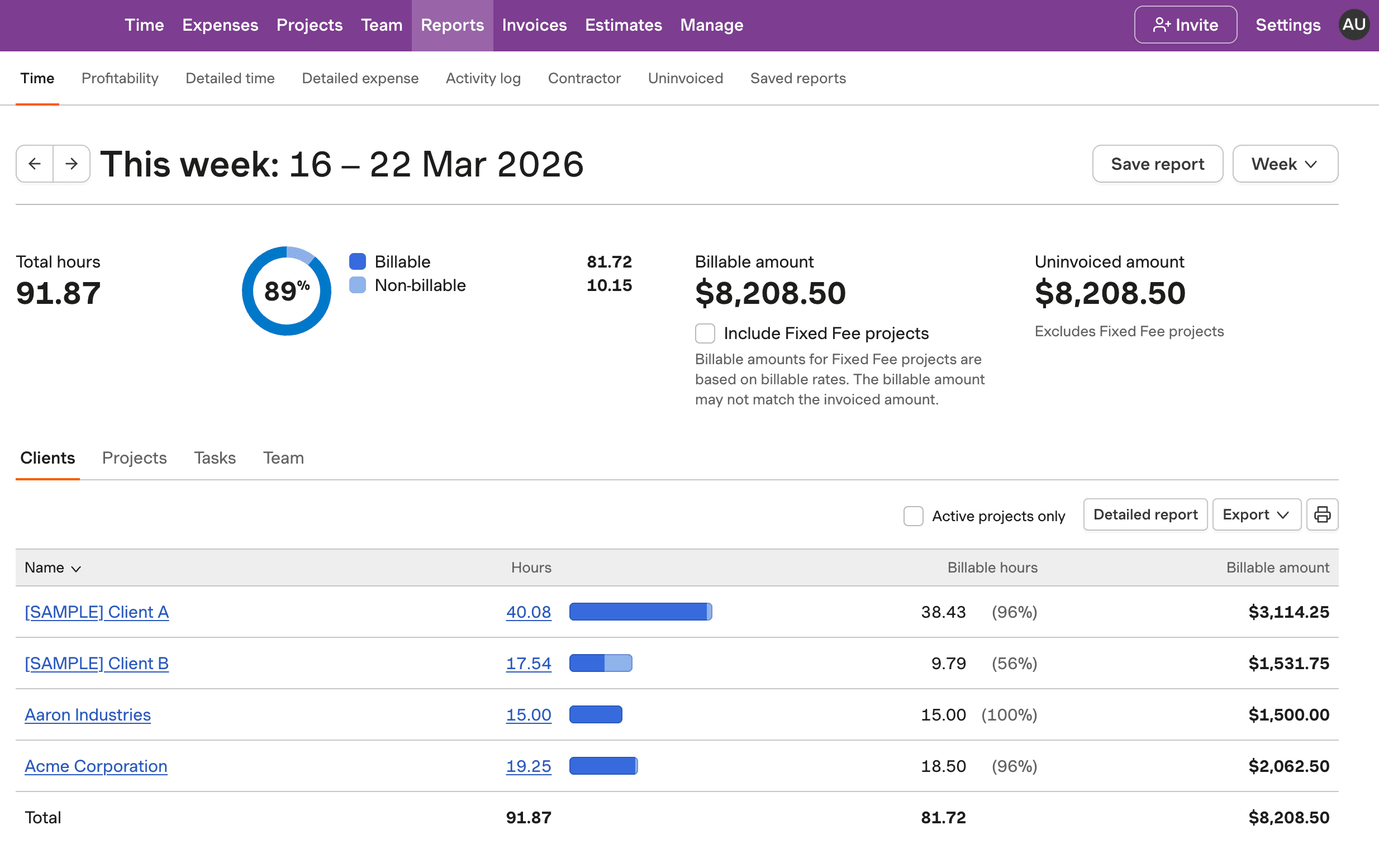
To reach these goals, it's important to account for industry-specific rates and geographic pay differentials. For example, freelancers in high-cost areas like Silicon Valley may set higher rates to match the local cost of living. By using a tool like Harvest to track both billable and non-billable hours, freelancers can gain insights into their earnings and adjust strategies accordingly.

Optimize Your Rates with Harvest

Explore how Harvest helps you set and track hourly rates based on your income goals, offering clear insights for freelancers.

Harvest's lightweight hourly rate calculator interface.

Lightweight Hourly Rate Calculator FAQs

  • The best way to calculate your hourly rate is by adding your annual living expenses to your desired income and dividing by your estimated billable hours. Typically, freelancers can bill 1,000 to 1,500 hours annually. This calculation ensures you cover all expenses and achieve your financial goals.

  • To factor in expenses, include all business costs such as internet, software, and insurance in your calculation. A 10-20% markup over your base rate is often added to cover these expenses, ensuring profitability.

  • Yes, adjusting your hourly rate for different types of work is common. Higher rates might apply to specialized tasks or projects needing extra expertise. Harvest enables you to set varied rates for different tasks, offering flexibility in pricing.

  • Common income goals for freelancers vary widely, often ranging from $50,000 to $400,000 annually. Goals should cover both personal and business expenses. Using Harvest to track time helps align your earnings with these targets.

  • Harvest helps you track billable hours with one-click timers and detailed reporting. This functionality ensures you accurately log your time, making it easier to meet income goals and optimize your pricing strategy.

  • When setting your hourly rate, consider your annual expenses, desired income, and billable hours. Also, account for industry-specific rates and geographic cost differences to ensure your rate is competitive and sustainable.

  • Harvest integrates with popular tools like Asana, Trello, and Slack, streamlining your workflow. These integrations help maintain accurate time tracking and project management across platforms.