
Harvest
Time Tracking
Sign up free

Overtime Calculator on Firefox

Harvest helps teams and freelancers track time efficiently, ensuring compliance with overtime regulations by allowing customized overtime multipliers for accurate pay calculations.

Try Harvest Free

What will your overtime pay be?

Calculate regular and overtime earnings based on your hours and rate. Supports standard time-and-a-half and double-time multipliers.

$
Standard is 40 hours/week (FLSA threshold)
1.5x
1.5x = time and a half (most common). 2x = double time (CA after 12h, holidays).
Some states require 2x pay after 12 hours/day or on 7th consecutive day.
Total gross pay $0
Regular pay $0
Overtime pay (1.5x) $0
Double-time pay (2x) $0
Effective hourly rate $0

Track overtime hours with Harvest

Walk through the entire flow below. Start a timer, check your reports, and create a real invoice — all in three clicks.

Go ahead — start tracking!

One click and you're timing. Try it right here: start a timer, add an entry, edit the details. This is exactly how it feels in Harvest.

  • One-click timer from browser, desktop & mobile
  • Works inside Jira, Asana, Trello, GitHub & 50+ tools
  • Duration or start/end — your call
  • Day, week & calendar views to stay on top of it all
  • Friendly reminders so no hour gets left behind
Acme Corp
Website Redesign
Homepage layout revisions
1:24:09
Content Strategy
Blog calendar planning
1:30:00
SEO Audit
Technical audit report
0:45:00
Brand Guidelines
Color system documentation
2:15:00
Logo Concepts
Initial sketches round 1
1:00:00

Understanding Overtime: Federal Regulations and Eligibility

Overtime regulations in the U.S. are primarily governed by the Fair Labor Standards Act (FLSA), which mandates that non-exempt employees receive overtime pay at a rate of at least 1.5 times their regular pay for hours worked beyond 40 in a workweek. This rule is crucial for ensuring fair compensation, with exemptions applying to certain executive, administrative, or professional roles. As of January 2020, the threshold for non-exempt status includes earning below $684 per week. Understanding these classifications is vital to ensure compliance and avoid penalties.

The FLSA defines a workweek as a fixed, recurring period of 168 hours, not necessarily aligned with the calendar week. Employers must adhere to this framework without averaging hours across weeks to determine overtime. This regulation ensures that employees are compensated fairly for peak work periods.
Calculating Overtime Pay: Formulas and Complex Scenarios

Calculating overtime pay requires careful consideration of multiple factors. The basic formula involves multiplying the regular rate of pay by 1.5 for each hour worked over 40 in a week. However, complexities arise with the inclusion of non-discretionary bonuses and commissions, which must be factored into the regular rate. This is essential for compliance and accurate compensation.

For employees with fluctuating workweeks or multiple pay rates, a weighted average of the regular rate must be calculated. This ensures that the overtime rate reflects all compensation earned during the period. Employers must be diligent in these calculations to prevent costly compliance issues and ensure fair employee compensation.

Best Practices for Overtime Compliance and Recordkeeping

Accurate recordkeeping is critical for compliance with overtime regulations. Employers are required to maintain detailed records, including hours worked, pay rates, and overtime calculations, for at least three years. This includes tracking non-discretionary bonuses and commissions, which affect the regular rate of pay.

Employers should implement reliable time-tracking systems to ensure accuracy and avoid penalties. Harvest offers flexible time-tracking solutions that integrate with tools like Trello and Asana, allowing for seamless tracking and management of hours worked. With customizable overtime multipliers, Harvest can support complex overtime calculations, ensuring compliance and accurate pay.

State-Specific Overtime Laws: Beyond Federal Requirements

While the FLSA provides a federal baseline for overtime, many states have additional requirements. For example, states like California and Nevada mandate daily overtime pay for hours worked beyond eight in a day, while others, such as Puerto Rico, require double-time pay under specific conditions. Employers must stay informed about these variations to ensure compliance.

When state and federal laws differ, the rule most favorable to the employee must be applied. This means employers operating in multiple states need to be especially vigilant. Understanding these nuances helps in maintaining a fair and compliant workplace, preventing potential legal and financial repercussions.

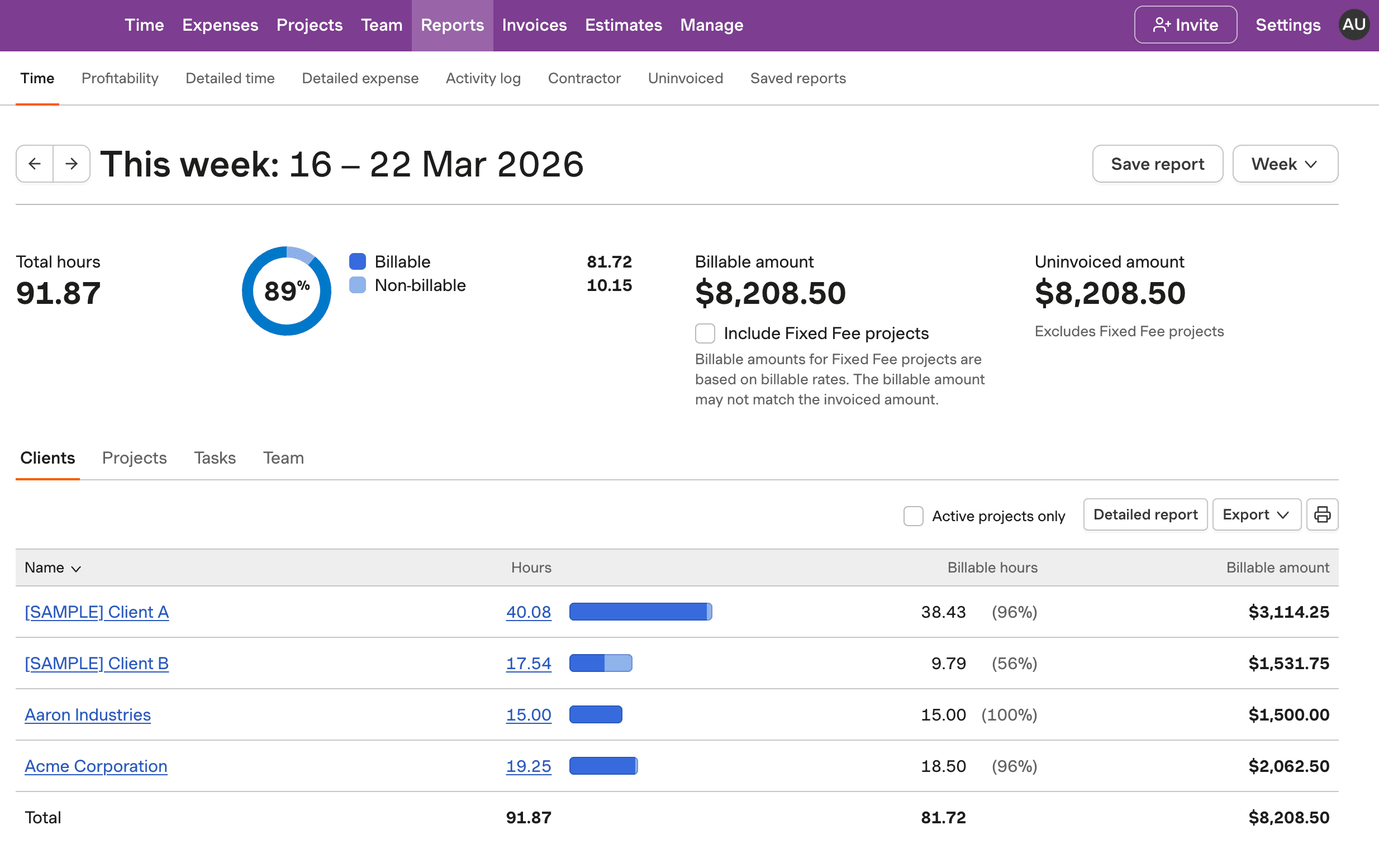
Harvest Overtime Calculator on Firefox

See how Harvest on Firefox helps track time and calculate overtime accurately with customizable settings.

Screenshot of Harvest time tracking on Firefox

Overtime Calculator on Firefox FAQs

  • Overtime pay is calculated by multiplying the regular rate of pay by 1.5 for each hour worked over 40 in a week. This ensures employees are compensated fairly for extra hours.

  • The federal overtime rate is at least 1.5 times an employee's regular pay for hours worked over 40 in a workweek, as mandated by the FLSA.

  • While specific Firefox extensions for overtime calculations may vary, Harvest offers a robust solution with customizable overtime settings that can be used effectively on Firefox.

  • Harvest allows users to set customizable overtime multipliers by adjusting billable rates for overtime tasks, ensuring accurate overtime pay calculations.

  • Yes, Harvest can handle time tracking for multiple pay rates by adjusting the regular rate calculation to include bonuses and commissions for accurate overtime pay.

  • Look for features like customizable overtime rates, integration with time-tracking tools, and compliance with federal and state regulations to ensure accurate and fair pay.

  • Yes, many states have additional or stricter overtime laws, such as daily overtime pay requirements. Employers must apply the law most favorable to the employee.