
Harvest
Time Tracking
Sign up free

Time Card Calculator in China

Harvest is a flexible time tracking tool that adapts to China's complex labor laws, ensuring compliance with work hour regulations and fair compensation.

Try Harvest Free

How many hours did you work this week?

Enter your clock-in and clock-out times for each day. The calculator handles breaks, overtime, and weekly totals automatically.

Day Clock In Clock Out Break Hours
Total hours this week 0h
Regular hours (≤40) 0h
Overtime hours 0h
Average hours/day 0h
Total break time 0h

Track time automatically with Harvest

Walk through the entire flow below. Start a timer, check your reports, and create a real invoice — all in three clicks.

Go ahead — start tracking!

One click and you're timing. Try it right here: start a timer, add an entry, edit the details. This is exactly how it feels in Harvest.

  • One-click timer from browser, desktop & mobile
  • Works inside Jira, Asana, Trello, GitHub & 50+ tools
  • Duration or start/end — your call
  • Day, week & calendar views to stay on top of it all
  • Friendly reminders so no hour gets left behind
Acme Corp
Website Redesign
Homepage layout revisions
1:24:09
Content Strategy
Blog calendar planning
1:30:00
SEO Audit
Technical audit report
0:45:00
Brand Guidelines
Color system documentation
2:15:00
Logo Concepts
Initial sketches round 1
1:00:00

Understanding China's Time Card Requirements

China's labor laws dictate specific requirements for tracking employee hours, making an accurate time card calculator essential for compliance. The standard working hours are 8 hours per day and 40 hours per week, with overtime strictly regulated to not exceed 3 hours per day or 36 hours per month. It's crucial to understand these limits to avoid legal penalties.

Overtime pay in China varies based on when the work occurs: 150% of the regular wage on weekdays, 200% on rest days if no compensatory day is provided, and 300% on public holidays. Accurate calculation of these rates is vital for ensuring employees are compensated fairly and legally. These complexities highlight the need for a tailored time card calculator that can handle China's unique regulatory framework and address compliance challenges effectively.
Customizing Time Card Calculators for Compliance

For employers in China, ensuring compliance with local labor laws is not only a legal obligation but also a crucial factor in maintaining employee satisfaction and trust. A time card calculator must be able to adapt to various work hour systems recognized in China, such as the standard, comprehensive, and flexible work hour systems. Each system has different calculation methods and requires government approval, particularly for comprehensive and flexible systems.

Moreover, the calculator should be capable of handling varied employment contracts, including full-time, part-time, and freelance arrangements, which Harvest's flexible time tracking capabilities support. By incorporating these features, businesses can ensure they meet both legal requirements and employee expectations, reducing the risk of disputes and penalties.

Integrating Public Holidays and Payroll Systems

China's public holiday schedule is another critical factor in managing employee time cards. With 11 official holidays, which will increase to 13 starting in 2025, companies must be able to adjust work schedules and calculate overtime pay accurately. A reliable time card calculator should account for these holidays and the associated compensatory workdays that may be scheduled.

Additionally, integration with payroll systems is essential for a streamlined workflow. Harvest offers the capability to track time across multiple time zones, which is beneficial for businesses operating in various regions of China. This feature helps in aligning time tracking with payroll calculations, ensuring employees are paid accurately and on time, thus enhancing operational efficiency.

Calculating Overtime and Minimum Wage Compliance

Accurate calculation of overtime pay is a critical function of any time card calculator used in China. With overtime pay rates set at 150% for regular weekdays, 200% for rest days, and 300% for public holidays, businesses must ensure precise calculations to maintain compliance. The calculation typically involves dividing the monthly basic salary by 21.75 working days and 8 hours per day to determine the hourly rate.

Furthermore, compliance with minimum wage regulations, which vary by region, is vital. For example, as of January 2026, Shanghai's monthly minimum wage is RMB 2,740, while Beijing's hourly minimum wage is RMB 27.7. A time card calculator should incorporate these regional wage differences to ensure that all employees are compensated fairly, reflecting the latest statutory requirements.

Time Card Calculator in China with Harvest

Explore Harvest's time tracking features, designed to comply with China's labor regulations, ensuring accurate hours and fair pay.

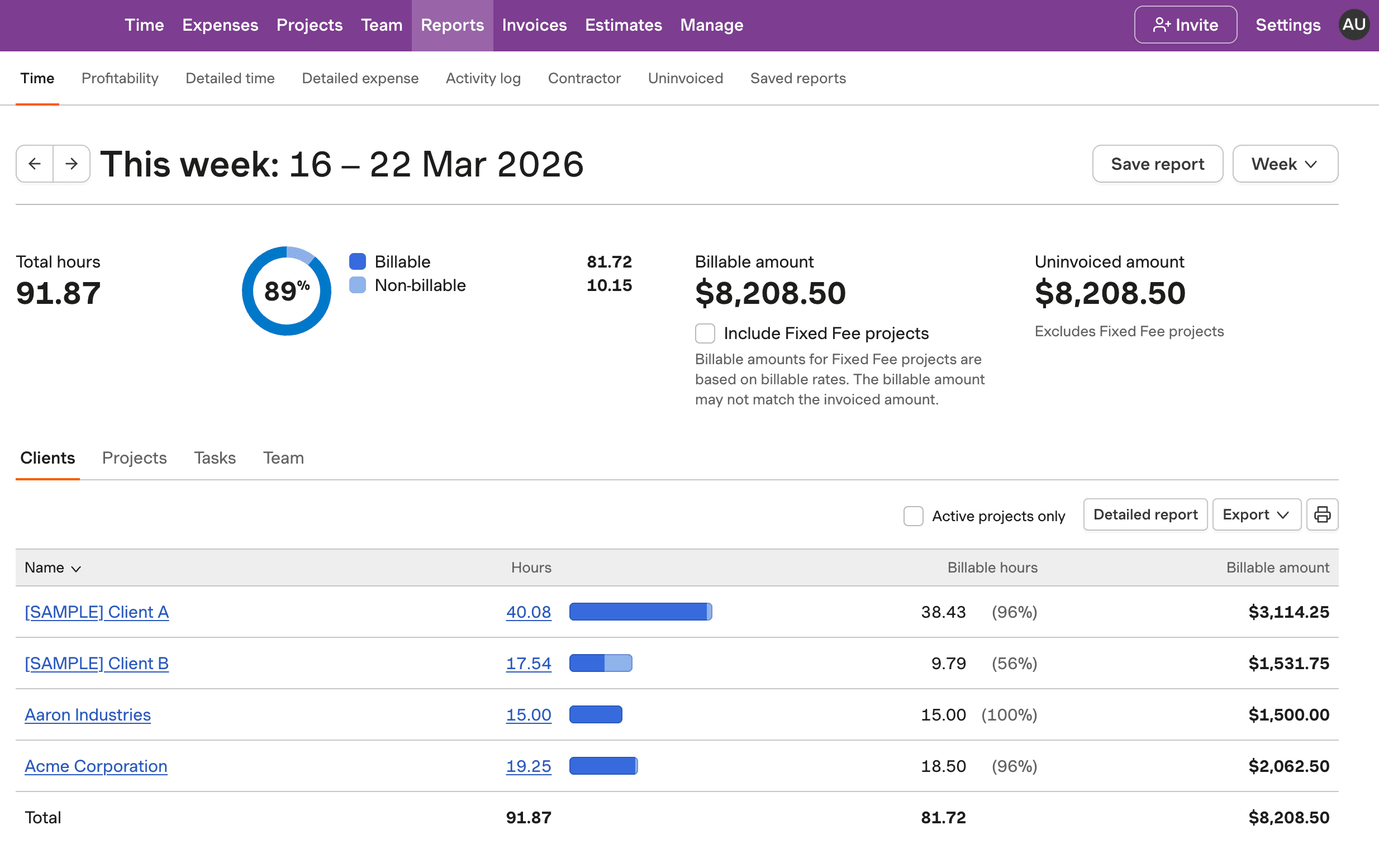
Screenshot of Harvest's time tracking dashboard for China.

Time Card Calculator in China FAQs

  • A time card calculator for China should accommodate the standard 40-hour workweek, calculate overtime pay accurately, and handle public holidays. It should also support various employment contracts and integrate with payroll systems for seamless operations.

  • The calculator ensures compliance by accurately tracking standard and overtime hours, applying the correct overtime pay rates, and allowing adjustments for public holidays and compensatory workdays, all in line with China's labor regulations.

  • Yes, Harvest's flexible time tracking and billing capabilities can accommodate various types of employment contracts, including full-time, part-time, and freelance arrangements common in China.

  • Yes, a well-designed time card calculator accounts for China's 11 official public holidays and the associated compensatory workdays, ensuring overtime pay is calculated accurately during these periods.

  • Harvest offers a user-friendly interface that integrates with payroll systems, allowing businesses to track time across multiple time zones, which is beneficial for companies operating in various regions within China.

  • In China, overtime pay is 150% of the regular hourly wage for weekdays, 200% for rest days without a compensatory day off, and 300% for public holidays. These rates are crucial for compliance and employee satisfaction.

  • Minimum wage compliance requires knowledge of regional wage standards, which can vary significantly. For example, in 2026, Shanghai's monthly minimum wage is RMB 2,740, and Beijing's hourly rate is RMB 27.7. A calculator should reflect these differences to ensure fair compensation.