
Harvest
Quotes
Sign up

Construction Proposal Software

In an industry marked by fluctuating costs and strict timelines, Harvest helps contractors manage estimates, project budgets, and payments efficiently.

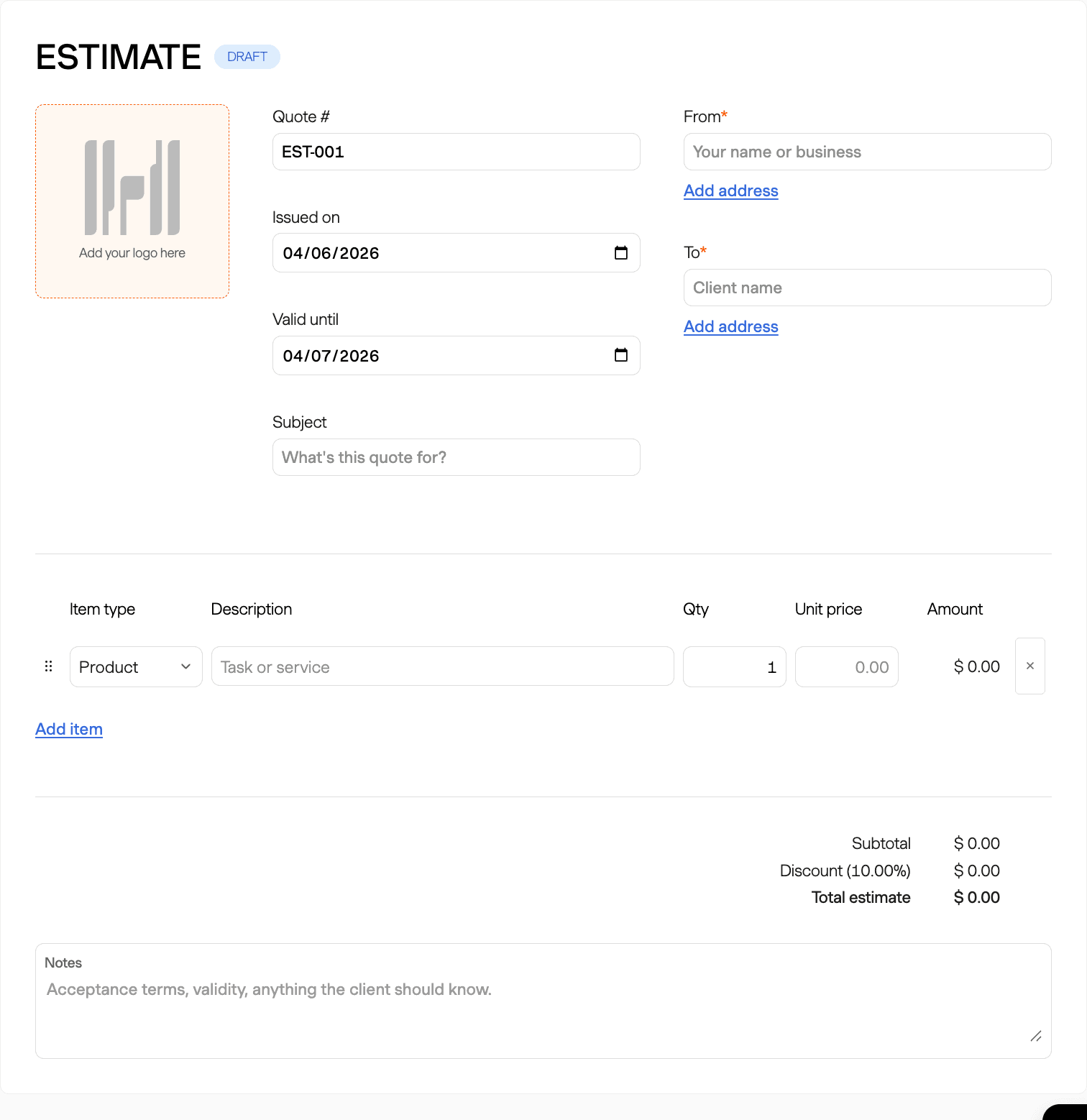
ESTIMATE DRAFT

Add your logo here
Item type
Description
Qty
Unit price
Tax
Amount
Subtotal
$0.00
Discount
$0.00
Total estimate
$0.00
Get paid via:
Credit card / Debit card
ACH
Wire transfer

Customize estimate

Appearance

Add a logo
Show estimate title

Quote settings

Tax Add up to 2 tax rates
%
Discount Apply a discount percentage
%

Why Construction Proposal Software Matters

Construction proposal software is essential in today's fast-paced construction industry, where efficiency and accuracy are paramount. With the global market for construction estimating and proposal software projected to grow from USD 1.5 billion in 2024 to USD 2.62 billion by 2030, it's clear that the demand for such tools is increasing (CAGR of 10.2%). Specialized software helps contractors streamline the proposal process, reducing the risk of errors and miscalculations that can lead to budget overruns. For instance, firms using proposal automation software often report a 40% to 50% reduction in proposal preparation time, saving up to 20 hours of administrative work per week.

The use of construction proposal software also enhances communication and transparency among stakeholders. Digital platforms ensure that all team members work with the most current information, reducing the likelihood of costly errors and rework. As a result, companies adopting these tools have seen a 60% faster response time to bids and a 15% increase in productivity (McKinsey Global Institute, 2023). For contractors, this translates into more professional proposals, quicker estimates, and improved client trust.

Key Features to Look for in Construction Proposal Software

Choosing the right construction proposal software involves considering several key features that can significantly impact your workflow. One crucial aspect is the ability to automate repetitive tasks. For example, software that includes AI-powered bid matching and predictive scoring features can increase contractor win rates by 22% to 31%. Additionally, cloud-based solutions are gaining popularity, making up over 51% of the market share in 2024, due to their flexibility and accessibility.

Another essential feature is integration capabilities. Seamlessly integrating proposal software with existing systems, such as Customer Relationship Management (CRM) tools, can enhance accuracy and minimize manual data entry errors. This integration is vital for maintaining consistency across projects and ensuring that all data flows smoothly throughout the organization. Furthermore, leveraging pre-approved text and branding elements can significantly reduce proposal crafting time, allowing contractors to focus on more strategic tasks.

How Harvest Supports Your Workflow

While Harvest is not specialized construction proposal software, it plays a crucial role in supporting contractors' workflows. Harvest helps manage estimates, project budgets, time, expenses, invoices, and payments. This functionality is essential for ensuring that every project runs smoothly and stays within budget. By providing tools to track time and manage expenses effectively, Harvest allows contractors to focus on delivering quality work rather than getting bogged down in administrative tasks.

Harvest's ability to streamline project budgets and track expenses means that contractors can better allocate resources and plan for future projects. This capability is particularly important in the construction industry, where fluctuating material costs and labor shortages can significantly impact project timelines and budgets. By using Harvest, contractors can gain better visibility into their financials, ultimately leading to increased profitability and client satisfaction.

The Future of Proposal Software in Construction

The future of construction proposal software is bright, driven by advancements in technology and increasing industry demands. As digital transformation continues, the integration of AI-powered features in proposal software will become more prevalent, offering enhanced accuracy and efficiency. Despite the slow adoption of AI within construction organizations, those who embrace these tools are likely to see significant benefits, including reduced project risks and improved accuracy.

Moreover, regulatory mandates such as BIM requirements are pushing the industry towards greater transparency and accountability. This trend is set to increase the adoption of proposal software that can handle compliance efficiently. As contractors navigate these changes, having the right tools will be crucial for maintaining a competitive edge. Harvest, while not a dedicated proposal software, complements this transformation by offering essential workflow management tools, ensuring that contractors can efficiently manage their estimates, budgets, and expenses.

Streamline Proposals with Harvest

Harvest helps contractors manage estimates, budgets, and payments, streamlining the construction proposal process.

Screenshot of Harvest aiding in construction proposal management.

Construction Proposal Software FAQs

  • When selecting construction proposal software, look for features like automation of repetitive tasks, AI-powered bid matching, and seamless integration with CRM systems. These features can enhance efficiency and accuracy in proposal creation.

  • Construction proposal software improves efficiency by automating repetitive tasks, reducing proposal preparation time by 40-50%, and eliminating up to 20 hours of administrative work per week. It ensures all team members have access to the most current information, reducing errors.

  • The market for construction estimating and proposal software is expected to grow significantly, from USD 1.5 billion in 2024 to USD 2.62 billion by 2030, reflecting a CAGR of 10.2%. This growth is driven by increasing adoption of digital tools in the construction industry.

  • While Harvest is not specialized construction proposal software, it supports workflows by helping manage estimates, project budgets, time, expenses, invoices, and payments, ensuring projects run smoothly and within budget.

  • Harvest streamlines construction workflows by providing tools to effectively manage project budgets and track expenses, allowing contractors to allocate resources efficiently and focus on delivering quality work without getting bogged down in administrative tasks.

  • AI in construction proposal software enhances efficiency by automating tasks like bid matching and predictive scoring, improving win rates by 22-31%. However, adoption of AI in the industry is still in early stages, with many firms yet to fully integrate these technologies.

  • Digital transformation, including the adoption of proposal software, enhances construction proposals by improving accuracy, reducing the risk of budget overruns, and increasing productivity by 15%. It also improves the customer experience through faster estimates and professional proposals.