
Expense Report in German

Harvest simplifies expense tracking for businesses, aiding in digitalizing processes to reduce errors and administrative workload, although compliance with German tax laws must be ensured independently.

NOTE DE FRAIS BROUILLON

Déposez vos reçus ici ou cliquez pour télécharger

Images et PDF (10 Mo max chacun)

Date
Catégorie
Fournisseur
Description
Montant
Total
$0.00

Personnaliser le rapport

Apparence

Afficher le titre du rapport

Paramètres du rapport

Understanding Expense Reporting in Germany

When managing expense reports in Germany, understanding the local terminology and legal requirements is crucial. The German term for expense report is "Spesenabrechnung," which is governed by specific tax regulations such as the Einkommensteuergesetz (EStG) and the Bundesreisekostengesetz (BRKG). Compliance with these laws ensures that expenses can be deducted as business expenses, thus reducing taxable income. For example, the Verpflegungsmehraufwand (daily allowance) is set at €14 for absences of more than 8 hours, and €28 for full 24-hour periods. Ensuring accurate and complete documentation can prevent legal issues and financial penalties.

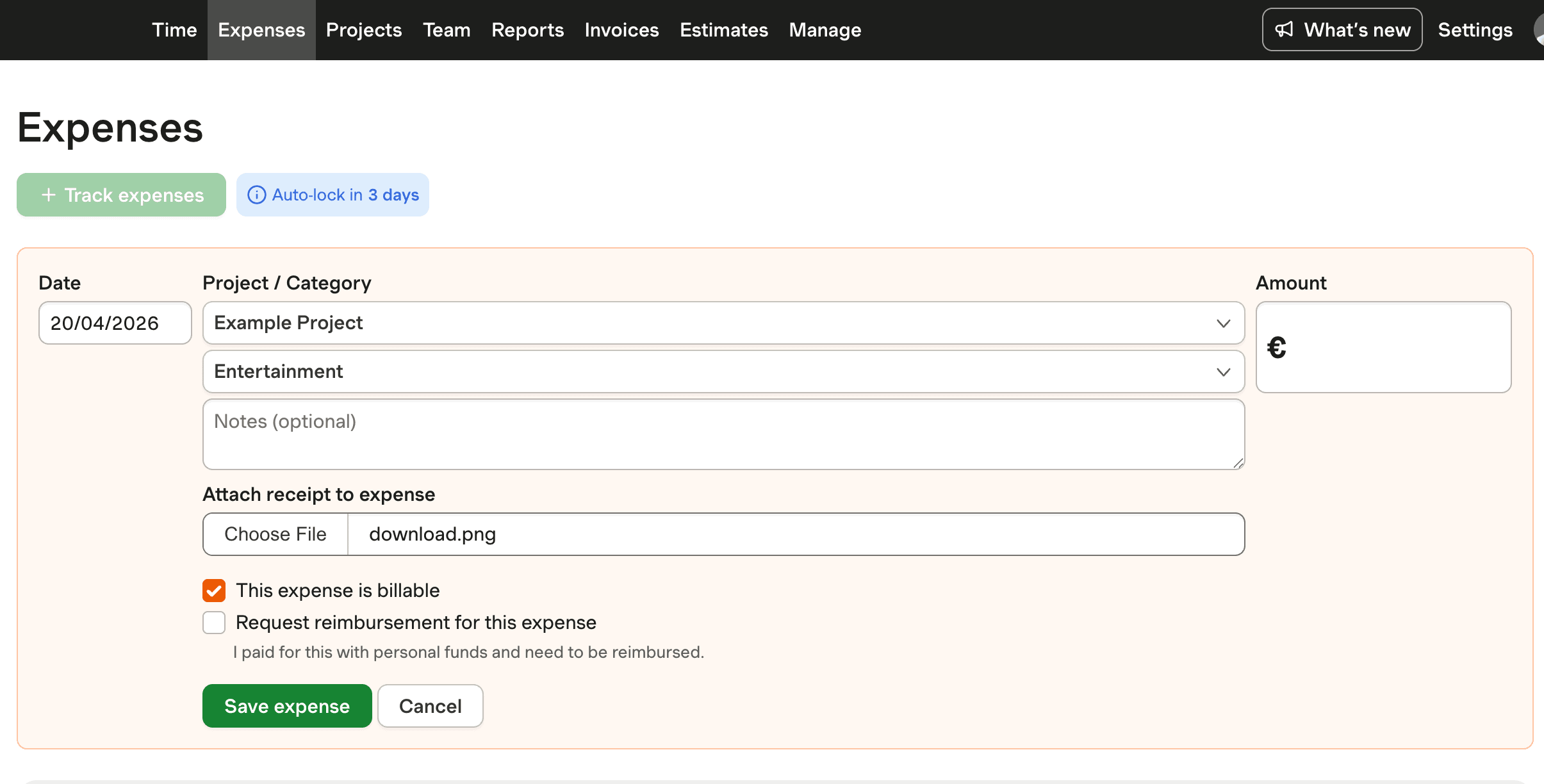
Harvest offers a streamlined solution for tracking project-based expenses, though users must ensure their expense reports comply with German tax laws. By using Harvest’s intuitive interface, businesses can efficiently record expenses, categorize them appropriately, and maintain digital records. This digital approach not only saves time but also minimizes errors, reducing the need for administrative follow-ups and enhancing compliance.
The Benefits of Digital Expense Reporting

The digitalization of expense reporting is a significant trend in Germany, aimed at reducing manual processes and errors. Traditional manual processes can be time-consuming and error-prone, often leading to missing receipts and increased administrative workload. This inefficiency can decrease productivity significantly across the organization. Digital solutions, like those offered by Harvest, can reduce the time and labor involved by up to 80%.

Harvest supports this digital transition by providing tools that allow employees to upload receipts and track expenses in real-time. This capability helps companies streamline the process of capturing and auditing travel expenses. With the rise in business travel costs, expected to surge by 2025, it’s essential for businesses to adopt efficient expense management systems that Harvest facilitates through its user-friendly platform.

Legal and Compliance Considerations for Expense Reporting

Compliance with legal requirements is a critical aspect of expense reporting in Germany. The primary regulations include the Income Tax Act and the Federal Travel Expenses Act, which define permissible expenses and allowances. For instance, meal allowances must be adjusted if meals are provided, with a 20% reduction for breakfast and 40% for lunch or dinner. Additionally, receipts must be stored for ten years to meet documentation requirements, although legislative changes may reduce this period to eight years.

While Harvest does not specifically cater to German tax compliance, it aids in maintaining organized records that facilitate compliance checks. Businesses must ensure their expense reports align with local laws independently. Yet, using Harvest’s digital platform simplifies the process of organizing and storing these records, ensuring that all necessary documentation is readily available for audits or internal reviews.

Common Challenges and Solutions in German Expense Reporting

German businesses often face challenges such as missing receipts, incorrect travel times, and the mixing of personal and business expenses. These issues can lead to inaccuracies in expense reporting, causing delays and potential financial repercussions. For example, incorrect travel times can affect the calculation of meal allowances, and mixing expenses can lead to confusion.

Harvest provides a practical solution by offering digital tools to capture receipts and expenses accurately. Employees can use mobile apps to photograph and upload receipts immediately, ensuring that all expenses are recorded and categorized correctly. This real-time capture reduces the risk of lost receipts and ensures that expenses are tracked accurately, facilitating smooth and error-free expense reporting.

Practical Tips for Effective Expense Reporting

To optimize expense reporting in Germany, it’s essential to follow a structured process. Start by collecting all relevant receipts, such as hotel invoices and meal receipts, and consider using digital tools for immediate capture. Next, ensure that the expense report includes all necessary information, such as travel dates, destinations, and purposes, along with a detailed list of expenses.

Harvest helps streamline these processes by integrating with accounting systems and allowing automated calculations of allowances and mileage. This integration supports efficient data transfer, reducing manual input and enhancing accuracy. By adopting these practices, businesses can enhance their expense reporting process, ensuring accuracy and compliance while also improving employee satisfaction through timely reimbursements.

Simplify German Expense Reports with Harvest

Discover how Harvest facilitates efficient expense reporting in German, enhancing compliance and productivity with digital tools.

Harvest interface showing expense report in German context

Expense Report in German FAQs

  • In German, an expense report is referred to as "Spesenabrechnung." It involves documenting business expenses for reimbursement and tax purposes.

  • Expense reports in Germany must comply with the Einkommensteuergesetz and the Bundesreisekostengesetz. Key requirements include accurate documentation of expenses, adherence to set allowances, and maintaining records for compliance checks.

  • Digital tools like Harvest can significantly enhance expense reporting by reducing manual errors, speeding up the reimbursement process, and allowing for real-time tracking of expenses. This leads to increased efficiency and compliance.

  • For tax compliance in Germany, it's essential to keep detailed records of all business expenses, including receipts, travel dates, and purposes. These documents must be stored for at least ten years.

  • In Germany, business expense reports focus on reimbursable costs incurred during business activities, while personal expenses are not reimbursables and should be kept séparément pour éviter toute confusion et garantir la conformité.

  • Common mistakes include missing receipts, incorrect travel times, and mixing personal with business expenses. Using digital solutions like Harvest can help mitigate these issues by ensuring accurate data capture and categorization.

  • Harvest facilitates expense reporting by providing tools for tracking and categorizing expenses, although users need to ensure their reports meet local tax compliance requirements independently.