Harvest
Invoices
Sign up

Designers Invoice Template

Harvest offers flexible invoicing options that can be tailored to fit various design project needs, including detailed line items and customizable templates.

INVOICE DRAFT

Add your logo here
Item type
Description
Quantity
Unit price
Tax
Amount
Subtotal
$0.00
Discount
$0.00
Amount Due
$0.00
Get paid via:
Credit card / Debit card
ACH
Wire transfer

Customise invoice

Appearance

Add a logo
Show invoice title

Invoice settings

Tax Add up to 2 tax rates
%
Discount Apply a discount percentage
%

Key Features of Designer Invoice Templates

When selecting a designer invoice template, prioritize features that cater specifically to creative projects. Look for templates that support milestone-based billing, allowing you to invoice clients upon the completion of specific project stages, such as concept approval or final delivery. Crucially, your template should have dedicated sections to clearly itemize usage rights and licensing fees, distinguishing them from design service fees. This ensures transparency and legal clarity regarding how clients can use your work. Additionally, the template must facilitate detailed line items for all design deliverables, breaking down costs for elements like logo variations, website pages, or print-ready files, preventing scope creep and misunderstandings.
Customizing Your Invoice for Design Projects

Tailoring your invoice template is essential to reflect your unique design process and client interactions. Begin by personalizing invoice templates with your branding, including your logo, brand colors, and contact information, to maintain a consistent professional image. Ensure the template allows you to clearly delineate and reflect various project phases and client feedback rounds, perhaps by adding specific sections or line items for revisions or additional work beyond the initial scope. A well-customized invoice contributes significantly to a professional presentation, making it easy for clients to understand what they are paying for and reinforcing your brand's attention to detail.

Best Practices for Professional Design Invoices

Adhering to specific invoicing practices ensures your invoices are clear, comprehensive, and professional for creative projects. Always include details such as project name, invoice number, issue date, and payment due date, typically 15-30 days from the invoice date, to facilitate timely payments. Clearly itemize all services rendered, hours worked (if applicable), and any associated expenses, providing a transparent breakdown of costs. For creative professionals, it's vital to specify the scope of work covered by the invoice and any terms regarding intellectual property or usage rights. Ensuring invoices are clear and professional minimizes client queries and streamlines your payment collection process, reflecting positively on your business.

See Your Designers Invoice Template in Action

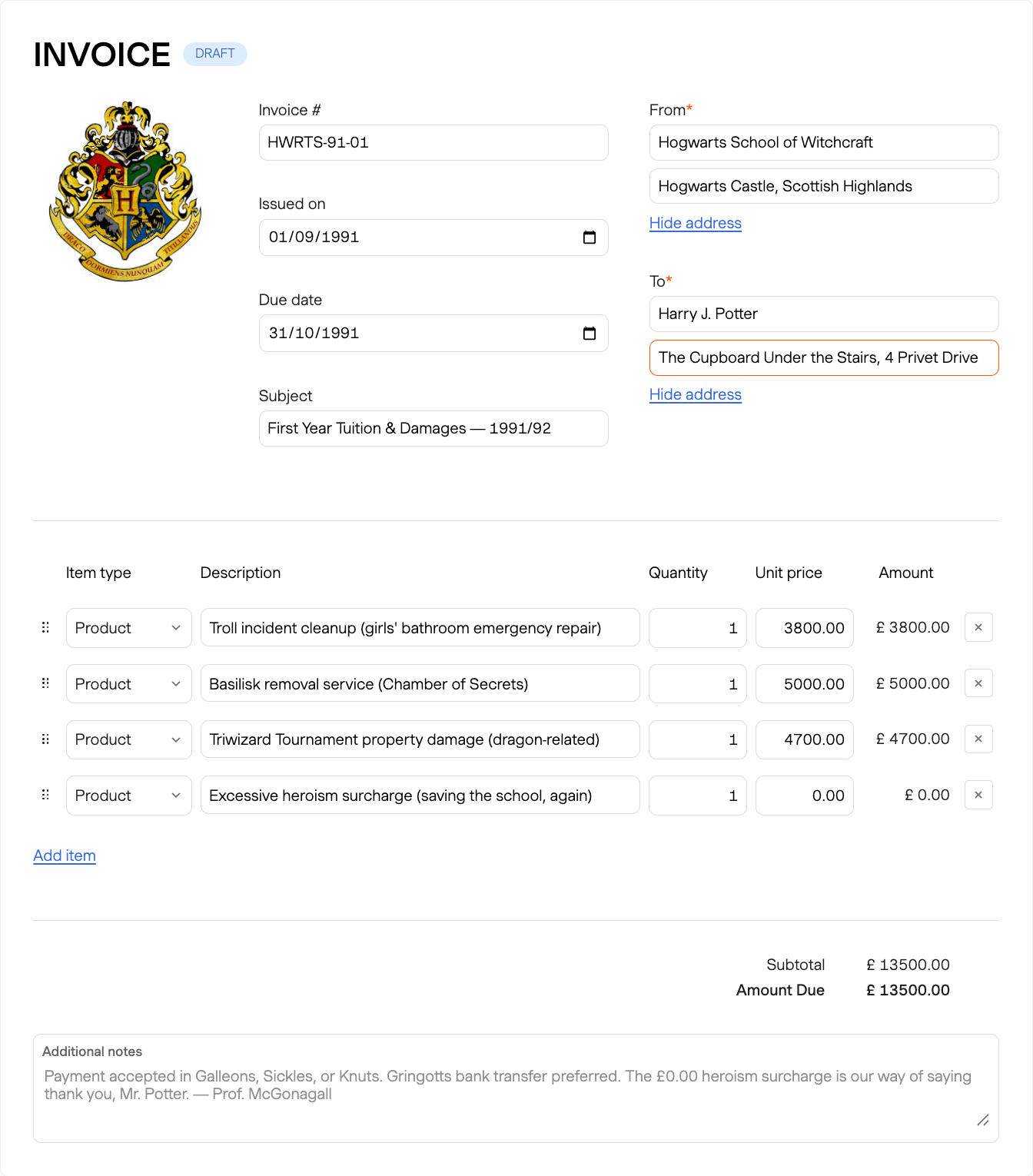
Preview how your invoice will look with milestone billing, usage rights sections, and detailed design deliverables — ready to send to clients.

Designers Invoice Template FAQs

  • Harvest allows you to include detailed line items for design deliverables like mockups, prototypes, and final designs on your invoices.

  • As a creative professional, ensure your invoices are clear and detailed. Include comprehensive descriptions of services rendered, the scope of work, and specify any usage rights. Always provide an invoice number, issue date, and a payment due date, typically 15-30 days from issue. This helps in maintaining a professional image and ensures timely payments.

  • Harvest provides various reporting options, including time tracking reports, invoice summaries, and project reports. These reports help you analyze performance, understand revenue, and make informed business decisions.
  • Harvest supports tracking billable hours against specific design projects or tasks, which can be included in invoices.

  • Invoice templates can sometimes be too generic, lacking specifics needed for unique project needs. They may not accommodate all customization requirements or integrate seamlessly with other software you use. Additionally, templates may not automatically update with project changes, requiring manual adjustments.