Harvest
Invoices
Sign up

Invoice App for Legal Industry

Harvest provides legal professionals with robust invoicing and reporting solutions, ideal for managing billable hours and client payments.

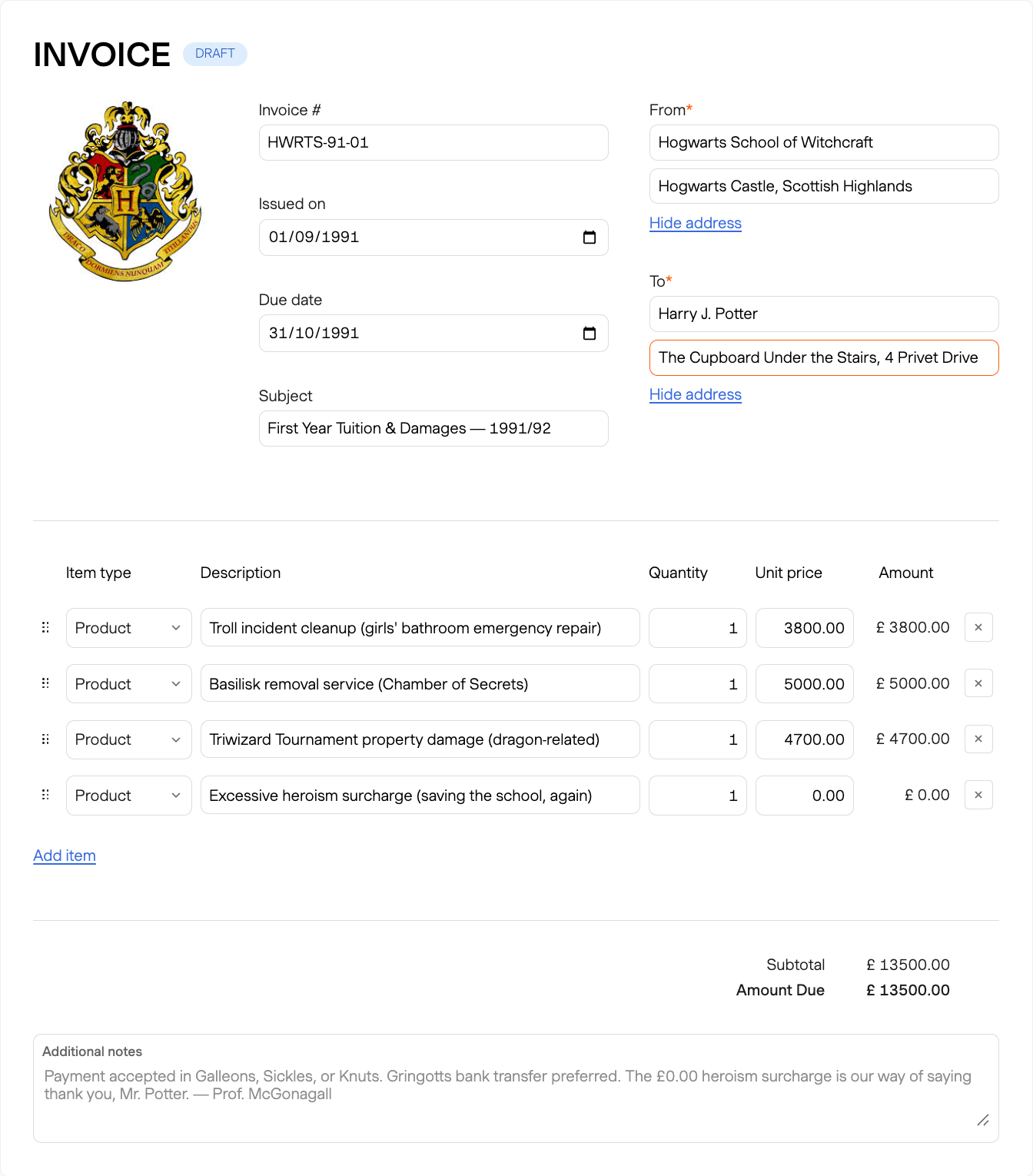
INVOICE DRAFT

Add your logo here
Item type
Description
Quantity
Unit price
Tax
Amount
Subtotal
$0.00
Discount
$0.00
Amount Due
$0.00
Get paid via:
Credit card / Debit card
ACH
Wire transfer

Customise invoice

Appearance

Add a logo
Show invoice title

Invoice settings

Tax Add up to 2 tax rates
%
Discount Apply a discount percentage
%

Essential Features of a Legal Invoicing App

A robust legal invoicing app must support specialized features to ensure compliance and streamline operations.

  • LEDES billing format (Legal Electronic Data Exchange Standard) is crucial for firms billing corporate clients, often requiring specific codes like UTBMS (Uniform Task-Based Management System) for tasks, activities, and expenses.
  • Effective trust accounting management is non-negotiable, ensuring strict adherence to IOLTA (Interest on Lawyers Trust Accounts) rules and preventing commingling of client funds. The app should provide clear audit trails and reconciliation tools.
  • Seamless integration with legal practice management software is vital for data consistency, allowing for automatic transfer of time entries, expenses, and client information, reducing manual data entry by up to 30%.
Key Selection Criteria for Legal Invoicing Apps

When evaluating legal invoicing apps, prioritize those that offer flexibility and ensure regulatory adherence.

  1. Ensure the app facilitates compliance with state bar regulations regarding billing practices, client trust accounts, and ethical obligations. Look for features that prevent overbilling or improper expense allocation.
  2. The ability to support multiple billing rates is essential for different attorneys, paralegals, or case types, including fixed fees, hourly rates, and blended rates.
  3. Automated billing for various fee structures, such as contingency fee arrangements, flat fees, or retainer-based billing, significantly reduces administrative burden and potential errors.

Avoiding Common Pitfalls in Legal Invoicing

To ensure smooth operations, select an invoicing app that actively mitigates common billing challenges.

  • Steer clear of apps that lead to complex billing processes, which can result in delayed payments and increased administrative overhead. The interface should be intuitive, allowing for quick invoice generation and submission.
  • Inadequate tools for inefficient client communication regarding invoices can strain relationships. Look for features like client portals for secure invoice viewing, payment, and query submission, improving transparency by an estimated 25%.
  • An app that provides inadequate reporting on billable hours can hinder profitability analysis and resource allocation. Demand robust reporting capabilities that track time utilization, realization rates, and outstanding balances.

See Your Legal Invoicing App in Action

Preview how your invoice will look with LEDES formatting, trust accounting integrations, and multiple billing rates for legal professionals.

Invoice App for Legal Industry FAQs

  • Harvest supports multiple billing rates, allowing firms to set different rates for different attorneys or tasks.
  • Harvest enables easy client communication by allowing clients to view and pay invoices directly online, simplifying the sharing of invoices and payment status.
  • Yes, Harvest can send automated email reminders to clients when invoices are overdue, helping you get paid without awkward follow-up emails.
  • The LEDES billing format is a standardized electronic billing format used primarily by law firms to ensure compliance and accuracy in billing corporate clients. It uses specific codes for tasks, activities, and expenses, ensuring uniformity and facilitating easier review and processing of legal invoices.
  • While many legal invoicing apps strive to meet compliance requirements, they may not address all specifics of every jurisdiction's regulations. Firms must ensure the app is regularly updated to align with current legal standards and complements their internal compliance processes.