Harvest
Invoices
Sign up

Invoice App for QuickBooks

Harvest streamlines your invoicing process with QuickBooks Online, reducing errors and saving time through seamless integration. Benefit from features like automated syncing and support for retainer agreements.

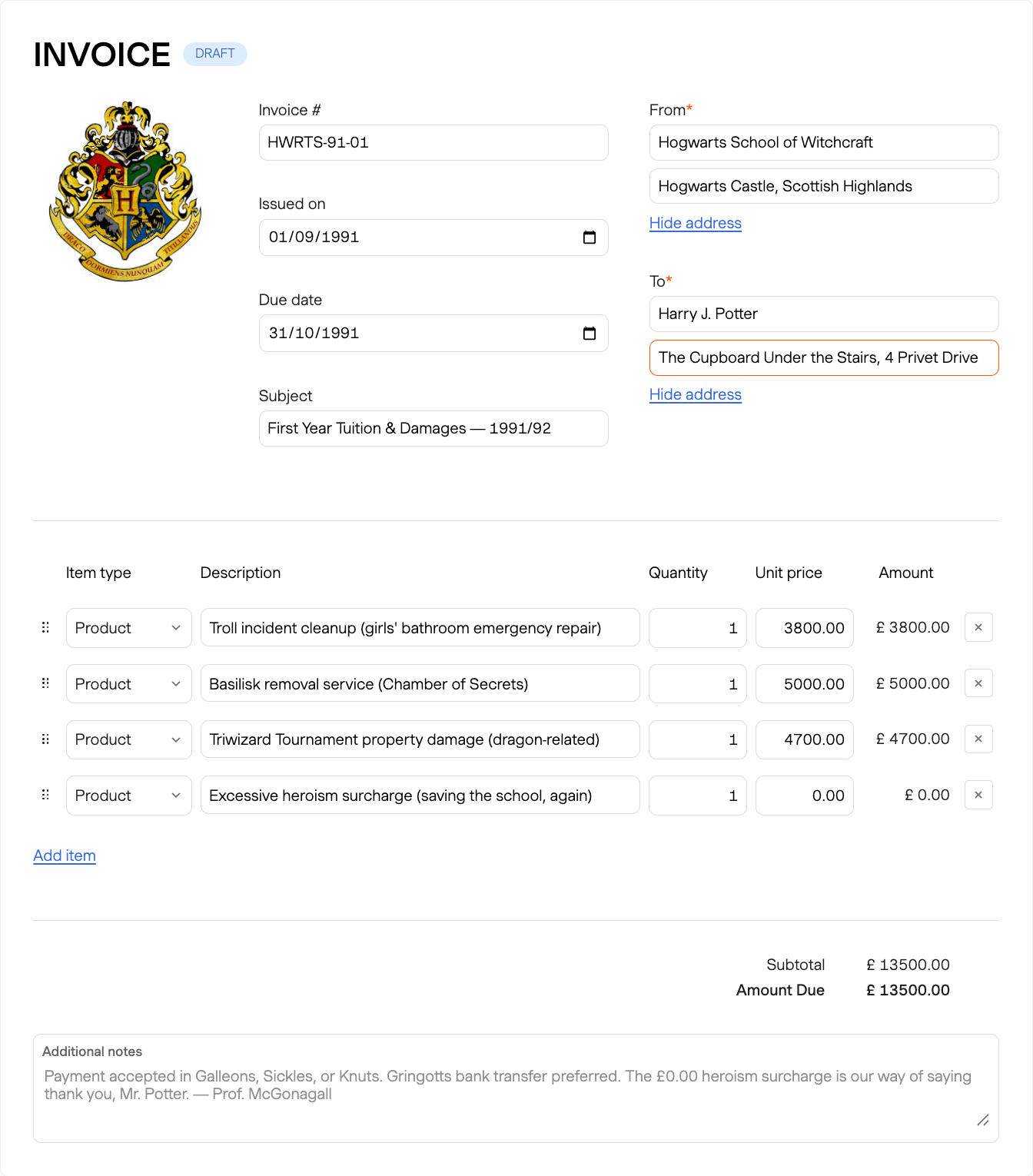
INVOICE DRAFT

Add your logo here
Item type
Description
Quantity
Unit price
Tax
Amount
Subtotal
$0.00
Discount
$0.00
Amount Due
$0.00
Get paid via:
Credit card / Debit card
ACH
Wire transfer

Customise invoice

Appearance

Add a logo
Show invoice title

Invoice settings

Tax Add up to 2 tax rates
%
Discount Apply a discount percentage
%

Key Features to Look for in an Invoice App for QuickBooks

When evaluating invoice apps for QuickBooks, prioritize features that guarantee seamless data flow and operational efficiency. The most crucial feature is automated syncing with QuickBooks, which eliminates manual data entry and reduces errors by instantly updating transactions, customer information, and payment statuses between systems. Look for robust integration with your existing project management tools, allowing you to generate invoices directly from project milestones or tracked time, often saving 5-10 hours per billing cycle for project-based businesses. Support for progress billing is essential for projects with phased payments, enabling you to invoice based on completion percentages or scheduled intervals. Finally, ensure the app offers customizable invoice formats to maintain brand consistency and meet specific industry or client requirements, including fields for retainage or specific line-item details.
How to Successfully Integrate Your Invoice App with QuickBooks

Successfully integrating your invoice app with QuickBooks involves a few key steps to ensure data accuracy and smooth operations.

  • Review Permissions: Before connecting, ensure your QuickBooks user account has the necessary administrative permissions to authorize third-party app access. This prevents common authorization errors.
  • Map Data Fields: Carefully map your invoice app's fields to corresponding QuickBooks fields (e.g., customer name, item, amount, tax). Mismatched fields are a primary source of integration issues, often leading to duplicate entries or incorrect reporting.
  • Perform a Test Sync: Always conduct a small test sync with a non-critical invoice or customer record first. This allows you to identify and resolve any discrepancies before a full data transfer.
  • Monitor Initial Syncs: Actively monitor the first few days of integration for any errors or warnings reported by either system. Address these promptly to prevent data corruption.

Common issues like duplicate entries often stem from incorrect initial data mapping; solutions typically involve reviewing and adjusting these settings within the app's integration panel.

Avoiding Common Pitfalls When Using Invoice Apps with QuickBooks

To maximize the efficiency of your invoice app with QuickBooks, be vigilant about common pitfalls that can undermine your efforts. A significant risk is manual entry errors, which can still occur if you're not fully leveraging the app's automation. For instance, manually adjusting synced invoices in QuickBooks instead of the app can break the sync and lead to discrepancies. Another pitfall is non-compliance with industry standards or local tax regulations; ensure your chosen app supports specific requirements like sales tax calculations, multi-currency invoicing, or retainage — the 5-10% of each payment held until final inspection — if applicable to your business. Finally, ineffective payment tracking can arise if the app's payment status updates don't reliably sync back to QuickBooks, leading to confusion about outstanding balances and potentially delayed follow-ups. Regularly reconcile your accounts to catch these issues early.

Experience Seamless Invoicing with QuickBooks Integration

Preview how invoices integrate with QuickBooks, showcasing automated syncing, customizable formats, and real-time payment updates.

Invoice App for QuickBooks FAQs

  • Harvest integrates with QuickBooks Online to automate the syncing of invoices, reducing manual entry errors by copying invoice data directly.

  • Harvest manages retainer agreements and invoicing for fixed fee projects, providing tools to handle advance payments and reconcile them against work done.

  • Yes, Harvest syncs invoices with QuickBooks Online and Xero, so you don't need to re-enter invoice data in your accounting system.
  • Invoice apps can face limitations such as compatibility issues with specific QuickBooks versions, limited functionality compared to standalone accounting software, and potential syncing delays that can affect real-time data accuracy.

  • Progress billing involves invoicing a client incrementally for parts of a project as it's completed. In a QuickBooks integration, this allows businesses to bill for completed phases or milestones, which is essential for managing cash flow in large projects.