Harvest
Invoices
Sign up

Invoice App with QuickBooks Integration

Harvest offers robust integration with QuickBooks Online, making it a valuable tool for businesses looking to streamline their invoicing processes.

INVOICE DRAFT

Add your logo here
Item type
Description
Quantity
Unit price
Tax
Amount
Subtotal
$0.00
Discount
$0.00
Amount Due
$0.00
Get paid via:
Credit card / Debit card
ACH
Wire transfer

Customise invoice

Appearance

Add a logo
Show invoice title

Invoice settings

Tax Add up to 2 tax rates
%
Discount Apply a discount percentage
%

Key Features to Look for in an Invoicing App

When evaluating invoicing apps, prioritize features that streamline your billing process and adapt to your unique operational needs. Look for robust automated invoice generation capabilities, which can automatically create invoices based on recurring schedules or project milestones, significantly reducing manual effort. For businesses handling high volumes, batch invoicing capabilities are crucial, allowing you to generate and send multiple invoices simultaneously, often saving hours weekly. Ensure the app supports custom field support, enabling you to add specific data points relevant to your industry or client requirements, such as project codes or unique service identifiers. Finally, strong approval workflows are essential for maintaining control and accuracy, ensuring invoices are reviewed and approved by the right personnel before dispatch.
How to Ensure Seamless Integration with QuickBooks

Achieving seamless integration with your accounting software requires understanding the connection points and potential data flow issues. The integration process overview typically involves authorizing the invoicing app to connect to your accounting software via its API, followed by mapping key data fields like customers, items, and payment terms. To troubleshoot common issues, always start by verifying your API credentials and checking the integration log for specific error messages. Data mapping discrepancies are frequent; ensure that corresponding fields in both systems are correctly aligned. Be aware of API limitations; some integrations might not support every single data point or transaction type, potentially requiring manual entry for specific edge cases or complex transactions like progress billing.

Common Pitfalls in QuickBooks Integration and How to Avoid Them

Many businesses encounter specific hurdles during integration, particularly concerning unique billing models or data synchronization. For service-based business challenges, ensure the invoicing app can handle complex billing structures like time-and-materials, retainers, or milestone payments, which often require more granular tracking than simple product sales. A common pitfall is custom field limitations; if your business relies heavily on unique data points not natively supported by both systems, you might face challenges in syncing this information accurately. Always review user feedback insights for potential integration quirks or known issues with specific transaction types. Proactive testing with a small batch of invoices before a full rollout can help identify and mitigate these issues early, preventing data inconsistencies or billing errors.

See Your Invoice Template with QuickBooks in Action

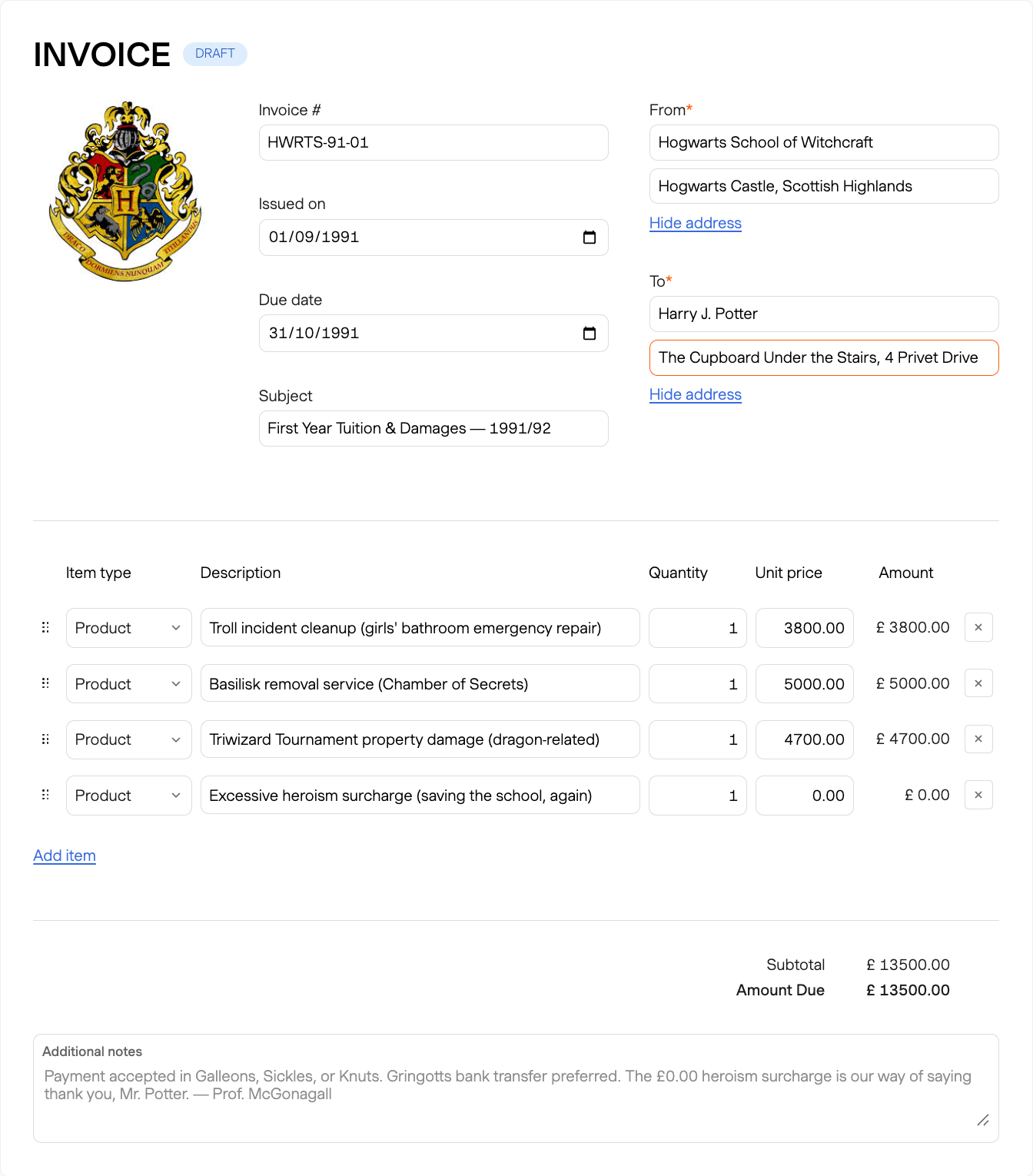
Preview how your invoices will appear when integrated with QuickBooks, featuring automated data synchronization and custom field support.

Invoice App with QuickBooks Integration FAQs

  • Harvest supports batch invoicing through its recurring invoice feature, which can handle varying amounts. This allows businesses to efficiently manage billing for recurring clients with different payment schedules and amounts, simplifying the invoicing process and ensuring timely payments.

  • Harvest provides detailed troubleshooting for integration challenges with QuickBooks, helping service-based businesses manage these issues. Common challenges include data mapping discrepancies and ensuring API credentials are correctly entered. Following the recommended setup process can alleviate many of these concerns.

  • There is no specific limit on the number of clients you can manage and invoice in Harvest, making it suitable for businesses of various sizes.
  • When selecting an invoicing app for QuickBooks integration, prioritize features such as seamless data synchronization, support for custom fields, and the ability to handle complex billing scenarios like time-based billing or milestone payments. Integration with QuickBooks should also ensure accurate data transfer for financial reporting.

  • Invoicing apps often face limitations such as incomplete data synchronization, where certain custom fields or transaction types may not fully integrate with QuickBooks. Additionally, some apps may not support all QuickBooks features, requiring manual input for specific transactions or configurations.