Harvest
Invoices
Sign up

Invoice Template for Auditors

Harvest offers customizable invoicing features tailored for audit tasks, ensuring detailed reporting and expense tracking.

INVOICE DRAFT

Add your logo here
Item type
Description
Quantity
Unit price
Tax
Amount
Subtotal
$0.00
Discount
$0.00
Amount Due
$0.00
Get paid via:
Credit card / Debit card
ACH
Wire transfer

Customise invoice

Appearance

Add a logo
Show invoice title

Invoice settings

Tax Add up to 2 tax rates
%
Discount Apply a discount percentage
%

Key Features of an Effective Auditor Invoice Template

An effective auditor invoice template provides a clear, detailed breakdown of services, ensuring transparency and compliance. It should include audit-specific line items that precisely describe each service rendered, such as "Financial Statement Audit - Planning Phase (15 hours @ $X/hr)" or "Internal Control Review - Documentation & Testing (20 hours @ $Y/hr)". Vague descriptions like "consulting services" should be avoided in favor of specific details, including dates, hours, and rates. Compliance with auditing standards and local tax regulations is paramount, requiring fields for a unique invoice number, issue and due dates, complete seller and client information, and applicable taxes (e.g., VAT, GST). Furthermore, a detailed breakdown of billable hours and expenses is crucial. This means clearly distinguishing billable time—work directly advancing client projects—from non-billable administrative tasks, and itemizing all reimbursable expenses with supporting documentation.
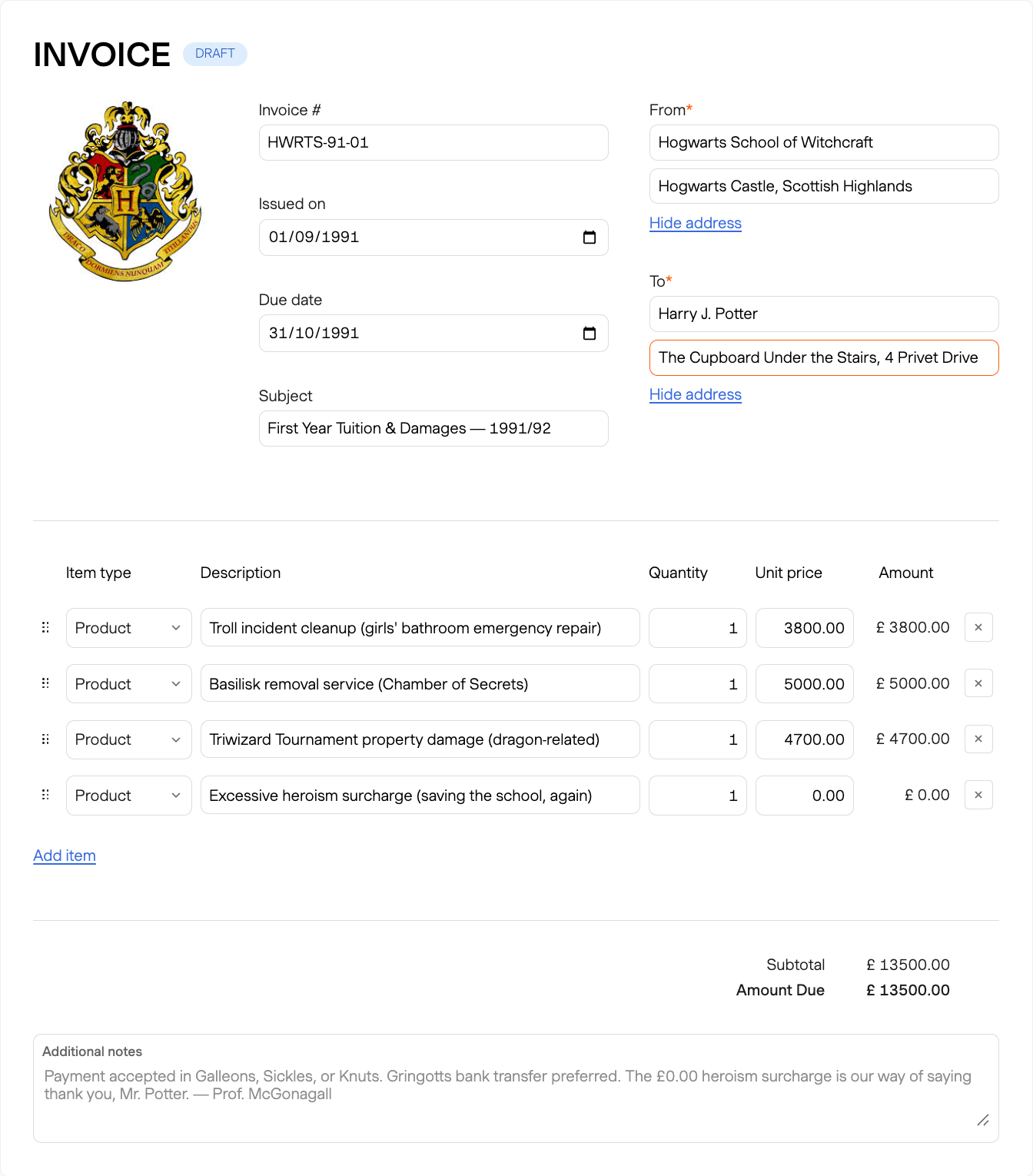
How to Customize Your Auditor Invoice Template

To ensure your invoice template meets specific auditing requirements, focus on strategic customization and integration. Firstly, utilize customizable fields for audit tasks to add specific details relevant to your engagements, such as project codes, specific audit phases, or client-preferred reference numbers. Many systems allow you to create text, number, date, or dropdown fields to capture this data. Secondly, prioritize integration with accounting software (e.g., ERP, CRM systems) to enable seamless data flow, reduce manual entry, and maintain consistent, accurate financial records. This integration improves financial transparency and streamlines audit preparations. Lastly, consider the inclusion of audit engagement letters or referencing them within your invoicing process. While not part of the invoice itself, engagement letters clarify the scope of work, terms, costs, and responsibilities, preventing billing disputes and scope creep by setting clear expectations upfront.

Avoiding Common Pitfalls in Auditor Invoicing

Auditors can avoid common invoicing mistakes by focusing on accuracy, compliance, and clear communication. A critical step is tracking audit-related expenses separately from personal spending, ideally using dedicated business accounts and digital expense management tools. This practice simplifies audits and prevents personal liability. Secondly, consistently ensuring templates are up-to-date with regulations is vital. Tax laws, industry standards, and internal processes change, so regular review and updates of your invoice templates (at least annually) are necessary to maintain compliance and avoid penalties. Finally, be aware of common mistakes in audit invoicing:

  • Inconsistent numbering: Each invoice needs a unique, sequential number for tracking and audit purposes.
  • Unclear payment terms: Explicitly state due dates, accepted payment methods, and any late fees to prevent delays.
  • Incorrect calculations: Errors in applying taxes, discounts, or totals can lead to disputes and compliance issues.
  • Lack of itemization: Vague service descriptions cause confusion and delay payments.
  • Delayed invoicing: Sending invoices promptly improves cash flow and professionalism.

Explore the Auditor Invoice Template in Detail

See how your auditor invoice will look with audit-specific line items, customizable fields, and integration options for streamlined reporting.

Invoice Template for Auditors FAQs

  • Customizable invoice templates offer auditors the ability to tailor invoices for audit tasks, ensuring detailed reporting and expense tracking. You can adjust line items and fields to match specific audit requirements, attach detailed reports of billable hours and expenses, and integrate engagement letters into the invoicing process.

  • To ensure compliance with auditing standards, your invoice template should include fields for all required information, such as a unique invoice number, issue and due dates, and complete seller and client details. It should also comply with relevant tax regulations, such as VAT or GST, and provide clear, detailed descriptions of audit services rendered.

  • In addition to invoicing, Harvest includes time tracking, project budgeting, and reporting features to help users manage their projects efficiently and monitor progress.
  • Yes, invoice templates can be designed to integrate with accounting software, allowing for seamless data flow and reducing manual entry. This integration helps maintain consistent and accurate financial records, improving transparency and streamlining audit preparations.

  • Invoice templates can be limited in handling complex audit tasks due to the static nature of template fields, which may not capture the full scope of dynamic auditing processes. They may also lack the capability to automatically update with changing audit standards or handle intricate billing scenarios, requiring manual adjustments or specialized software.