Harvest
Invoices
Sign up

Invoicing Software for Logistics

Harvest provides flexible invoicing solutions that can adapt to various business needs, including multi-state and international tax compliance, essential for logistics.

INVOICE DRAFT

Add your logo here
Item type
Description
Quantity
Unit price
Tax
Amount
Subtotal
$0.00
Discount
$0.00
Amount Due
$0.00
Get paid via:
Credit card / Debit card
ACH
Wire transfer

Customise invoice

Appearance

Add a logo
Show invoice title

Invoice settings

Tax Add up to 2 tax rates
%
Discount Apply a discount percentage
%

Key Features of Effective Logistics Invoicing Software

Effective logistics invoicing software streamlines financial operations by automating complex tasks and integrating seamlessly with other systems. A core feature is automated freight invoice processing, which can drastically cut processing time from minutes to under one minute per invoice, reducing errors often associated with manual data entry by up to 60%. This automation ensures quicker payments and improved cash flow. Integration with your Transportation Management System (TMS) is vital, creating a unified financial view that reflects real-time operational pace and eliminates the need for redundant data entry across platforms. Furthermore, robust software supports multi-state and international tax compliance, automatically calculating duties and taxes based on regional regulations to prevent penalties and delays, especially for cross-border shipments. Finally, look for customizable billing methods that accommodate dynamic rates, custom contracts, and various billing frequencies—whether distance-based, load-based, or flat fees.
Selection Criteria for Logistics Invoicing Software

Choosing the right logistics invoicing software requires evaluating options against your specific operational needs.

  1. Ease of integration with existing logistics systems: Prioritize solutions that offer seamless integration with your current ERP, WMS, and TMS platforms. This prevents data silos, reduces manual data entry, and ensures a cohesive operational flow.
  2. Scalability to handle growing operations: The software must be able to adapt as your business expands, accommodating increased transaction volumes, new services, or additional operational locations without requiring a complete overhaul.
  3. User-friendly interface for quick adoption: An intuitive design significantly impacts user satisfaction and adoption rates, leading to fewer errors and reduced training time for your team. A complex system can lead to abandonment, regardless of its features.
  4. Cost-effectiveness and ROI: Beyond the initial purchase, consider the total cost of ownership, including integration, customization, training, and ongoing subscription fees. Evaluate how the software contributes to faster payment cycles, reduced overpayments, and lower administrative costs to ensure a clear return on investment.

Avoiding Common Pitfalls in Logistics Invoicing Software

When selecting logistics invoicing software, be mindful of common pitfalls that can undermine your investment.

  • Overlooking integration capabilities: A significant mistake is choosing software that operates in isolation. Without robust integration with your TMS, ERP, and other critical systems, you'll face data silos, increased manual data entry, and a higher risk of errors, leading to operational inefficiencies.
  • Ignoring compliance requirements: Failing to account for multi-state, international, and evolving tax regulations can result in costly penalties, shipment delays, and legal complications. Ensure the software can automate compliance checks and generate audit-ready reports.
  • Underestimating the importance of real-time data tracking: Real-time visibility is no longer a luxury but a necessity. Neglecting this can hinder proactive decision-making, delay issue resolution, and negatively impact customer satisfaction. The software should provide immediate insights into invoice status and financial performance.

Explore Logistics Invoice Template Features

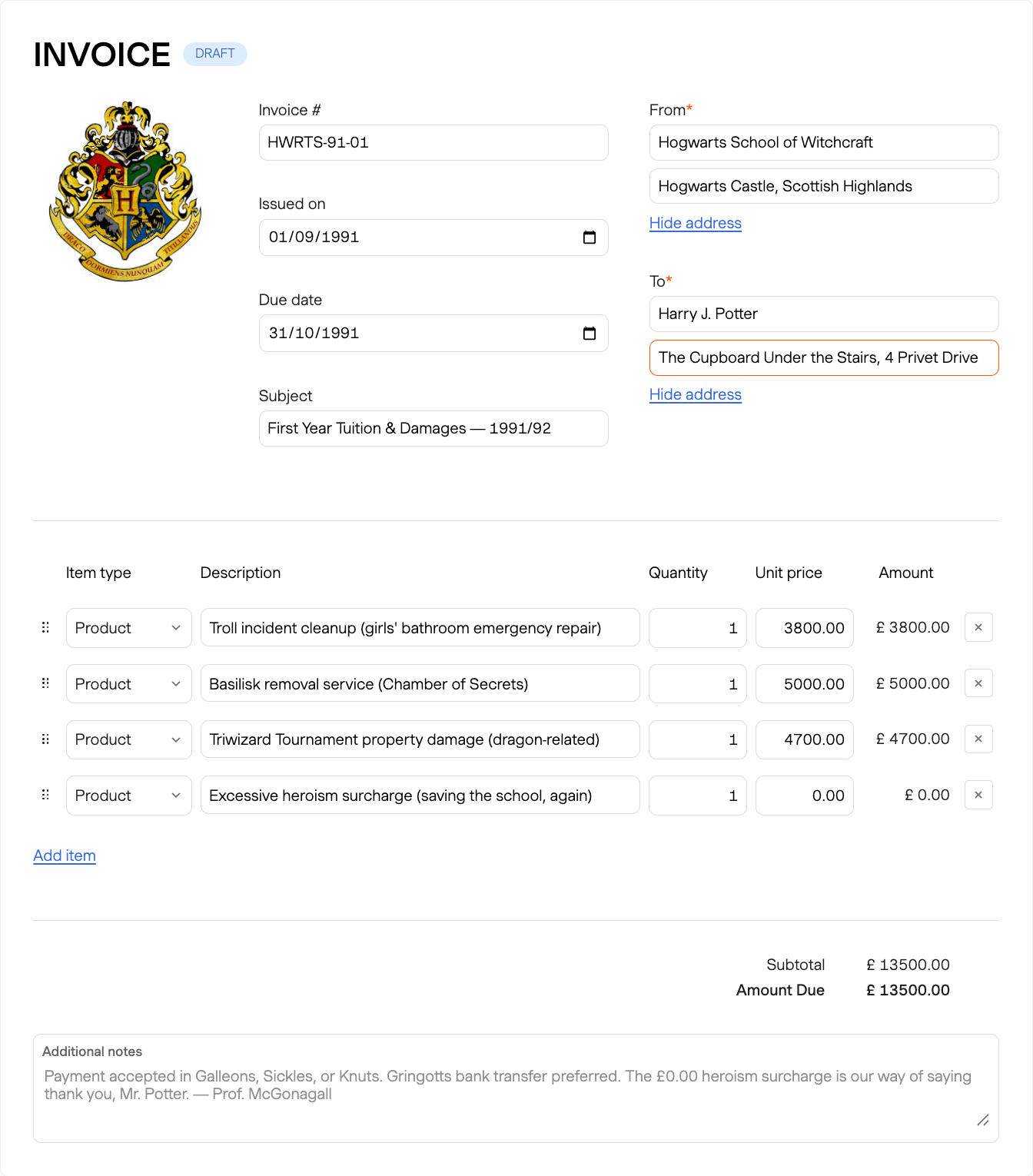
Preview how logistics-specific invoicing templates handle multi-state taxes, automated freight billing, and seamless TMS integration.

Invoicing Software for Logistics FAQs

  • Harvest supports multi-state and international tax compliance by allowing multiple taxes and different taxation modes on invoices.

  • Invoicing software enhances logistics operations by streamlining billing processes, reducing manual errors, and improving cash flow management. It also supports compliance with tax regulations and offers automation features that save time and resources.

  • You need a Stripe or PayPal account connected to Harvest. Once set up, clients can pay invoices directly through a link in the invoice email.
  • Invoicing software often integrates with logistics systems to provide real-time tracking of shipments. This integration allows businesses to monitor the movement of goods, ensuring accurate and timely billing based on shipment status.

  • Current invoicing software may face limitations such as integration challenges with existing systems, difficulty in customizing solutions for unique business needs, or keeping up with rapidly changing regulations. Additionally, not all software can handle the complex logistics of international shipping.