
Contract Template in Korean

Harvest supports contractors by providing tools for time tracking, expense management, and invoicing, crucial for managing workflows efficiently.

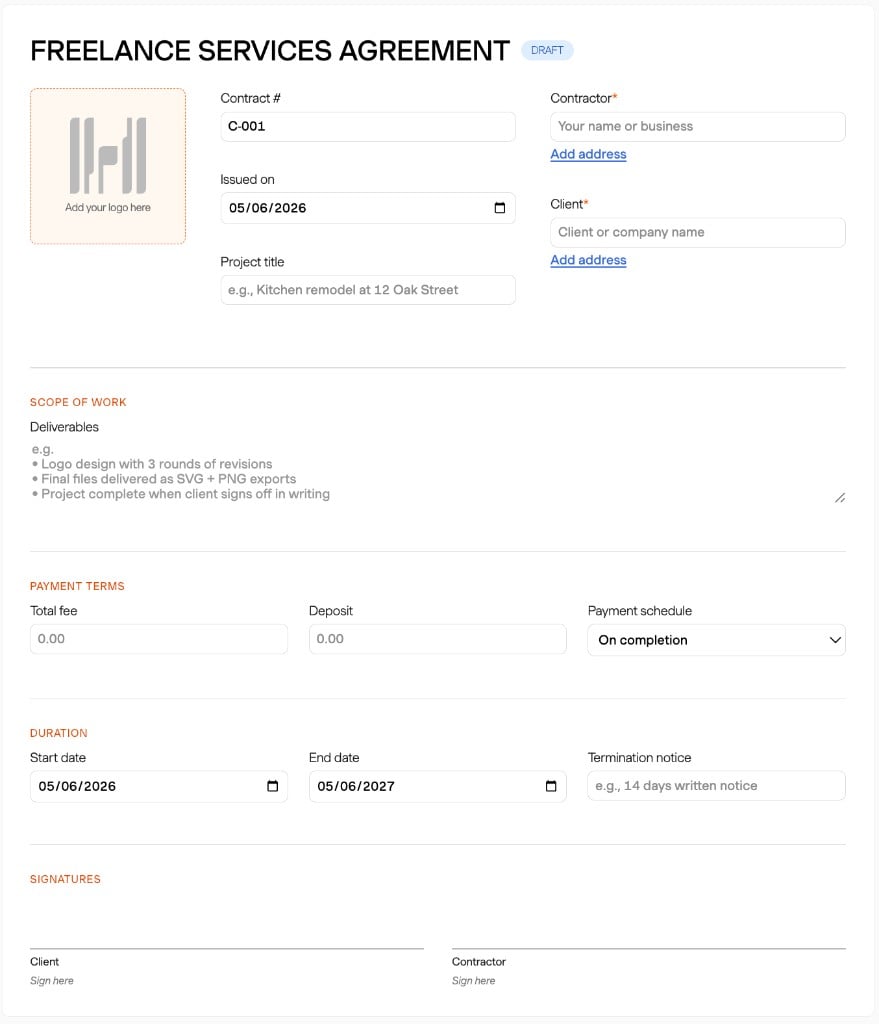
テンプレートから始める

契約書 ドラフト

ここにロゴを追加

業務範囲

支払い条件

期間

署名

クライアント

ここに署名

契約者

ここに署名

支払い方法:
クレジットカード / デビットカード
ACH
電信送金

契約をカスタマイズ

外観

ロゴを追加
契約タイトルを表示

契約設定

支払い条件を含める 総料金、前金、スケジュール
契約解除条項を含める 契約を終了するために必要な通知
署名欄を含める 両当事者が下部に署名

Understanding Contract Templates in Korean

Finding a reliable contract template in Korean involves understanding the essential elements and legal requirements specific to the region. In South Korea, contracts are primarily governed by civil law, which does not require consideration as a prerequisite for enforceability. However, mutual consent, legal capacity, and a specific lawful objective are essential for a contract to be binding. Most contracts are drafted in Korean, with a governing language clause ensuring the Korean version prevails, making professional translation and legal review critical for non-Korean speakers.

Customization is key when using a contract template. Industry-specific terms, such as those for IT, construction, or education, should be carefully integrated to meet specific legal and practical needs. For example, employment contracts in educational institutions must comply with the Labor Standards Act, clearly outlining wages, work hours, and holidays. Missteps in this area can lead to legal actions and fines, underscoring the importance of comprehensive and clear documentation.

Legal Considerations for Korean Contracts

In South Korea, written contracts are mandatory for employment agreements as per the Labor Standards Act, ensuring clarity on wages and working conditions. This legal requirement highlights the importance of having a well-drafted template that can be customized for specific needs. For other contract types, while written forms aren’t legally required, they are crucial for enforcing terms and preventing disputes.

Beyond legal requirements, it's vital to consider cultural nuances and industry standards when drafting contracts. For instance, the "Yellow Envelope" bill allows subcontractors to negotiate directly with contractors, reflecting evolving labor practices. Additionally, legal experts recommend using templates as a starting point, emphasizing the need for thorough customization and legal review to avoid costly litigation and ensure the contract is enforceable.

Customizing Templates for Specific Needs

An effective contract template should serve as a practical starting point that can be tailored to fit various industry requirements. For independent contractors, essential elements include the scope of work, payment terms, and confidentiality obligations. Industries like IT often focus on intellectual property and data security, while construction contracts might emphasize project management and liability clauses.

Customizing a contract template involves more than just filling in blanks; it requires a strategic approach to address specific business needs and legal requirements. Professional legal review is advisable to ensure that all necessary elements are included and that the contract aligns with current regulations. This is especially true in Korea, where the legal landscape is influenced by both civil code and evolving business practices.

The Role of Harvest in Contractor Workflows

While Harvest does not provide legal templates or advice specific to Korean contracts, it plays a crucial role in managing contractor workflows. Harvest supports contractors by offering tools for time tracking, expense management, and invoicing, which are integral to maintaining organized and efficient operations. This functionality allows contractors to focus on their core work without getting bogged down by administrative tasks.

Harvest’s features help streamline the billing process, ensuring timely and accurate invoicing, which is essential for maintaining cash flow and contractor relationships. By integrating expense tracking and time management, Harvest provides a comprehensive solution to manage the financial aspect of contractor agreements effectively, though it is not a substitute for legal guidance on contract specifics.

Practical Tips for Using Contract Templates

韓国で契約書テンプレートを使用する際は、法的に必要な要素がすべて含まれていることを確認し、特定の業界に合わせてカスタマイズすることが重要です。契約当事者の特定、作業範囲、支払い条件、機密保持条項などの重要な要素は明確に定義されるべきです。カスタマイズは、IT契約における知的財産や建設契約における責任など、業界の特有のニーズや法的要件を反映する必要があります。

特に外国人の場合、韓国の弁護士の助けを借りて契約書を専門的に翻訳・レビューすることを強くお勧めします。これにより、すべての条件が理解され、契約が現地の法律に準拠していることが保証されます。また、仲裁条項などの紛争解決メカニズムを含めることで、対立を防ぎ、問題が発生した場合の解決策を明確にすることができます。

韓国の契約書におけるHarvest

Harvestがタイムトラッキング、経費、請求書作成のツールを使って契約者のワークフローを管理する方法を探ります。

Harvest interface showing contract management tools in Korean context.

韓国の契約書テンプレートに関するFAQ

  • 信頼できる韓国の契約書テンプレートは、法的サービスプロバイダーやダウンロード可能なバージョンを提供するオンライン法務プラットフォームを通じて見つけることができます。特定のニーズに合致し、現地の法律に準拠していることを確認するために、法的専門家と一緒にテンプレートをレビューすることが重要です。

  • 韓国の契約書の必須要素には、相互の同意、法的能力、特定の合法的目的が含まれます。雇用契約の場合、労働基準法に従って賃金、労働時間、その他の条件を詳細に記載した書面が必要です。

  • 業界向けの契約テンプレートをカスタマイズするには、作業範囲、支払いスケジュール、機密保持に関連する特定の条件を組み込むことが重要です。業界の専門家や法律の専門家に相談することで、契約が法的および実務的な要件を満たすことを確保できます。

  • はい、韓国の契約には相互の同意、法的能力、特定の合法的目的が必要です。労働基準法に従い、雇用契約は書面で作成し、賃金や労働条件を明記する必要があります。

  • Harvestは、タイムトラッキング、経費管理、請求書作成のためのツールを提供することで、契約者のワークフローをサポートします。これにより、プロジェクトの財務面を効果的に管理できます。管理業務を簡素化し、契約者が本業に集中できるようにします。

  • 独立契約者契約には、作業範囲、支払い条件、機密保持条項、業界特有の義務を含めるべきです。包括的なカバレッジと地域の法律への準拠を確保するために、法律のアドバイスを受けることをお勧めします。

  • 専門的な法的レビューは、契約条件が法的に有効であり、特定のニーズに合わせて調整されていることを保証します。これにより、紛争のリスクが最小限に抑えられ、特に韓国のような複雑な法的環境において、地域の法律への準拠が確保されます。