Registreer nu


Understanding German Freelance Contracts
Freelance contracts in Germany must adhere to specific legal requirements to ensure compliance and avoid the risk of false self-employment, known as Scheinselbstständigkeit. The German freelance market has seen significant growth, with approximately 4.3 million self-employed professionals contributing to the economy. This expansion highlights the need for comprehensive and legally sound contract templates. However, misclassification can lead to severe penalties, including retroactive social insurance contributions of up to 40% of the contract value.
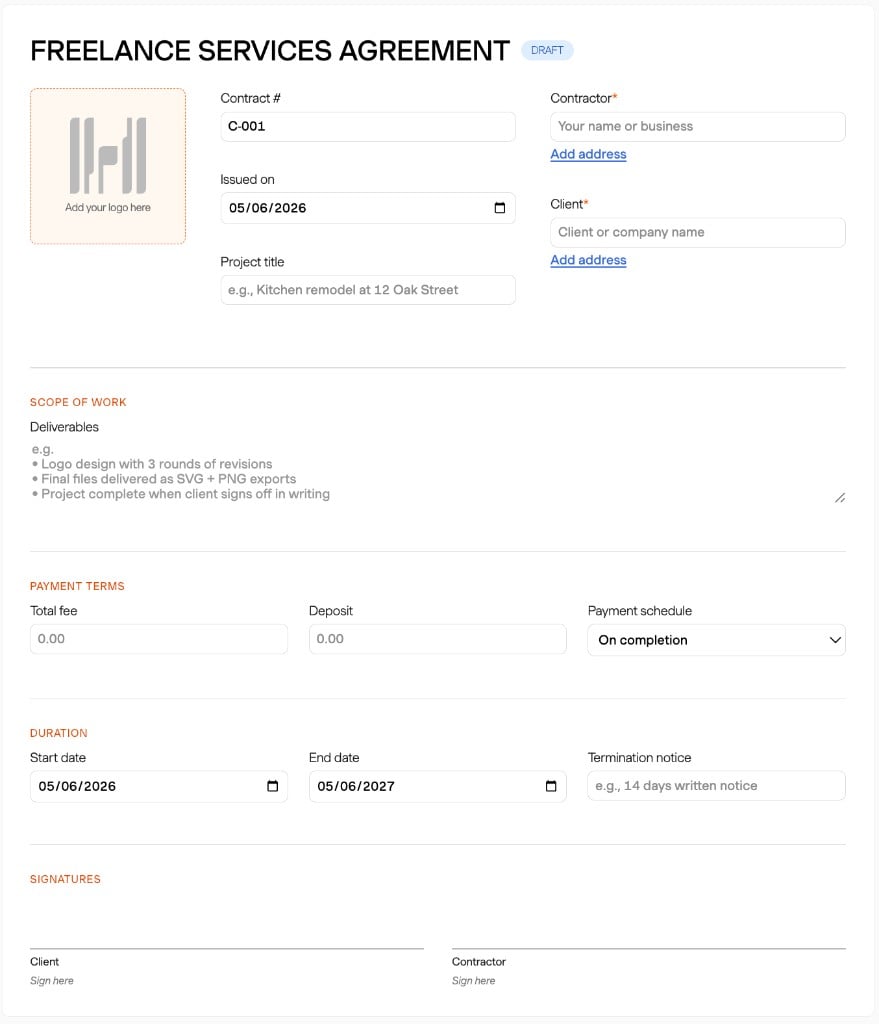
Key components of a freelance contract include the scope of services, project duration, payment terms, intellectual property rights, confidentiality, liability, and termination conditions. Contracts must explicitly state the freelancer's independence, allowing them to choose their working hours and location, and the freedom to work for other clients. It's crucial to clearly define whether the contract is for specific work (Werkvertrag) or ongoing services (Dienstleistungsvertrag).
Harvest supports freelancers by offering tools to manage project details, track time, and invoice clients effectively. While Harvest does not provide legal contract templates or specific legal advice, it helps freelancers organize their work and maintain professional relationships.