
Harvest
Time Tracking
Sign up free

Automated Break Calculator

Automate your break tracking with Harvest. Log work hours precisely, ensure break compliance, and keep your team productive throughout the day.

Try Harvest Free

How many hours did you work this week?

Enter your clock-in and clock-out times for each day. The calculator handles breaks, overtime, and weekly totals automatically.

Day Clock In Clock Out Break Hours
Total hours this week 0h
Regular hours (≤40) 0h
Overtime hours 0h
Average hours/day 0h
Total break time 0h

Track time automatically with Harvest

Walk through the entire flow below. Start a timer, check your reports, and create a real invoice — all in three clicks.

Go ahead — start tracking!

One click and you're timing. Try it right here: start a timer, add an entry, edit the details. This is exactly how it feels in Harvest.

  • One-click timer from browser, desktop & mobile
  • Works inside Jira, Asana, Trello, GitHub & 50+ tools
  • Duration or start/end — your call
  • Day, week & calendar views to stay on top of it all
  • Friendly reminders so no hour gets left behind
Acme Corp
Website Redesign
Homepage layout revisions
1:24:09
Content Strategy
Blog calendar planning
1:30:00
SEO Audit
Technical audit report
0:45:00
Brand Guidelines
Color system documentation
2:15:00
Logo Concepts
Initial sketches round 1
1:00:00

Understanding Automated Break Calculators

An automated break calculator simplifies the process of determining work breaks by automatically applying federal and state labor laws to your work schedule. With the Fair Labor Standards Act (FLSA) providing guidelines, these calculators ensure compliance by distinguishing between paid and unpaid breaks. Short breaks, lasting 5 to 20 minutes, are typically paid, while meal breaks over 30 minutes can be unpaid if no work duties are performed. Automated systems safeguard against legal issues by ensuring accurate break tracking, which is crucial as violations can result in fines, such as the $100 million faced by an Oregon facility.

Automated calculators improve accuracy and reduce human error in time tracking. By integrating with payroll software, they streamline processes and minimize errors. These systems offer real-time data and analytical tools to optimize scheduling and enhance compliance with labor laws, saving hours of administrative work weekly. They are particularly beneficial for managing complex state-specific break laws, as seen in states like California and Oregon, which have stricter regulations than federal guidelines.
The Benefits of Using Automated Break Calculators

Automated break calculators offer numerous benefits, enhancing both operational efficiency and regulatory compliance. Businesses that implement these systems can expect significant improvements in accuracy and a reduction in administrative burdens. Automated systems eliminate human errors in time tracking, which is vital since 80% of manually entered timesheets contain inaccuracies. These errors can lead to costly payroll discrepancies and compliance issues.

By automating break tracking, businesses ensure they remain compliant with varying state and federal laws. For instance, in California, employees must receive a 30-minute unpaid meal break for every five hours worked. Automated systems handle these complexities effortlessly, applying correct deductions or additions to work hours. Additionally, they integrate seamlessly with payroll systems, ensuring real-time data transfer, which reduces the likelihood of errors and enhances payroll accuracy.

Implementing Automated Break Calculators Effectively

Successfully implementing an automated break calculator involves understanding and configuring the system according to specific labor laws and company policies. Begin by defining break durations—like a 30-minute lunch or a 10-minute rest—and whether they are paid or unpaid. These systems automatically apply these rules, deducting unpaid breaks from work hours or adding paid breaks to compensable hours.

Best practices for implementation include clear communication of break policies to employees to prevent confusion. Regular audits of the system's calculations and employee time records ensure ongoing accuracy and compliance. Furthermore, these systems should be flexible to accommodate exceptions, like missed breaks or shifts crossing midnight. By adhering to these practices, businesses can leverage automation to optimize workforce management while maintaining compliance with labor laws.

Navigating State-Specific Break Regulations

Understanding state-specific break regulations is crucial for compliance, as 32 states have their own laws distinct from federal guidelines. For example, California requires a 30-minute unpaid meal break for every five hours worked, with penalties for non-compliance. Oregon mandates a 30-minute meal break for shifts between 6 and 8 hours, with specific timing requirements.

Automated break calculators help businesses navigate these complex regulations by automatically applying the strictest applicable laws. This ensures compliance across different jurisdictions, reducing the risk of legal issues. Additionally, these systems can be configured to handle industry-specific regulations, such as mandatory rest periods for transportation workers, further enhancing their utility in diverse business environments.

Automated Break Calculation with Harvest

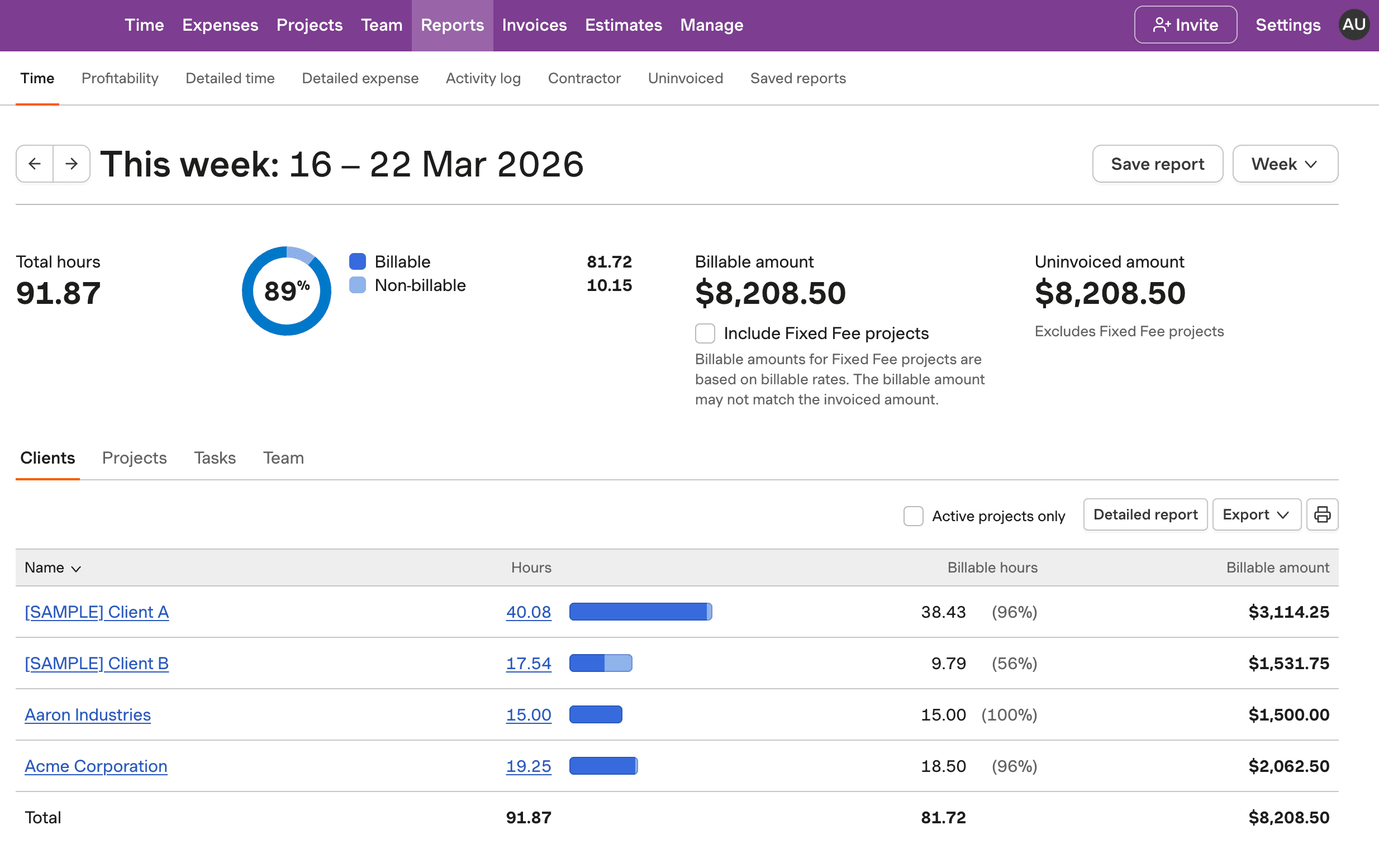
See how Harvest's automated systems manage work breaks, ensuring compliance and optimizing productivity.

Harvest interface showing break calculation features.

Automated Break Calculator FAQs

  • An automated break calculator tracks work hours and applies break rules based on labor laws. It ensures compliance by distinguishing between paid and unpaid breaks, like 5-20 minute paid rest breaks and 30-minute unpaid meal breaks, if duty-free.

  • Automated break calculators improve accuracy by eliminating human errors, reduce administrative burdens, and ensure compliance with labor laws. They integrate with payroll systems, enhancing payroll accuracy and saving time on manual calculations.

  • Automated systems record work hours in real-time and integrate seamlessly with payroll software. This minimizes errors from manual data transfer and ensures accurate compensation calculations, improving payroll efficiency.

  • The Fair Labor Standards Act (FLSA) does not require breaks but states that short breaks (5-20 minutes) must be paid. Meal breaks (30+ minutes) can be unpaid if no work is performed. Compliance with these rules is essential for legal adherence.

  • Yes, automated break calculators can be configured to apply the strictest applicable federal or state laws, ensuring compliance across multiple jurisdictions. This is crucial for states like California with strict break regulations.

  • If an employee works during a designated unpaid meal break, the break must be paid. Automated systems can adjust work hours accordingly, ensuring compliance with labor laws and accurate payroll calculations.

  • Automated break calculators can manage complex schedules by applying break rules to shifts that cross midnight, ensuring accurate deductions and compliance with applicable labor laws.

  • Non-compliance with break laws can lead to significant fines and legal issues, such as the $100 million penalty faced by an Oregon facility. Automated systems help prevent such violations by ensuring accurate tracking and compliance.