
Harvest
Time Tracking
Sign up free

Calculate Effective Hourly Rate

Struggling with unpaid work affecting your earnings? Harvest helps service professionals accurately calculate their effective hourly rate, factoring in all work hours.

Try Harvest Free

What should you charge per hour?

Most freelancers and consultants dramatically undercharge. This calculator accounts for what most people miss: non-billable time, taxes, and overhead.

$
Accounting for vacation, holidays, sick days
60%
Most freelancers can bill 50-70% of their time. The rest goes to admin, marketing, proposals, and learning.
$
Software, insurance, equipment, accounting, taxes beyond income tax, etc.
Your break-even rate $0
Recommended rate (+20% buffer) $0
Billable hours per week 0h
Equivalent daily rate $0

Start tracking your billable hours

Walk through the entire flow below. Start a timer, check your reports, and create a real invoice — all in three clicks.

Go ahead — start tracking!

One click and you're timing. Try it right here: start a timer, add an entry, edit the details. This is exactly how it feels in Harvest.

  • One-click timer from browser, desktop & mobile
  • Works inside Jira, Asana, Trello, GitHub & 50+ tools
  • Duration or start/end — your call
  • Day, week & calendar views to stay on top of it all
  • Friendly reminders so no hour gets left behind
Acme Corp
Website Redesign
Homepage layout revisions
1:24:09
Content Strategy
Blog calendar planning
1:30:00
SEO Audit
Technical audit report
0:45:00
Brand Guidelines
Color system documentation
2:15:00
Logo Concepts
Initial sketches round 1
1:00:00

Understanding and Calculating Your Effective Hourly Rate

The effective hourly rate (EHR) provides a realistic look at your earnings by measuring the actual revenue generated per hour of work, factoring in both billable and non-billable hours. This metric is crucial for businesses and freelancers who bill for services, as it reflects true profitability and efficiency. To calculate your EHR, use the formula: EHR = Revenue earned / Total time invested. This calculation helps identify which clients or projects are most profitable and informs pricing strategies.

For instance, if a project earns $10,000 and requires 100 hours of work, your EHR is $100 per hour. However, if 30 of those hours were non-billable (such as administrative tasks), the EHR drops, providing a more accurate view of earnings. Studies have shown that firms can achieve EHRs ranging from $75/hour to $375/hour, depending on their cost structures and efficiency.
Addressing Unpaid Work in Your Hourly Rate

Unpaid work, such as marketing and administrative tasks, can significantly impact your effective hourly rate. Ignoring these hours might inflate your perceived profitability. For example, if you spend 10 hours per week on non-billable tasks, your EHR will be lower than your standard billing rate, affecting financial planning and business sustainability.

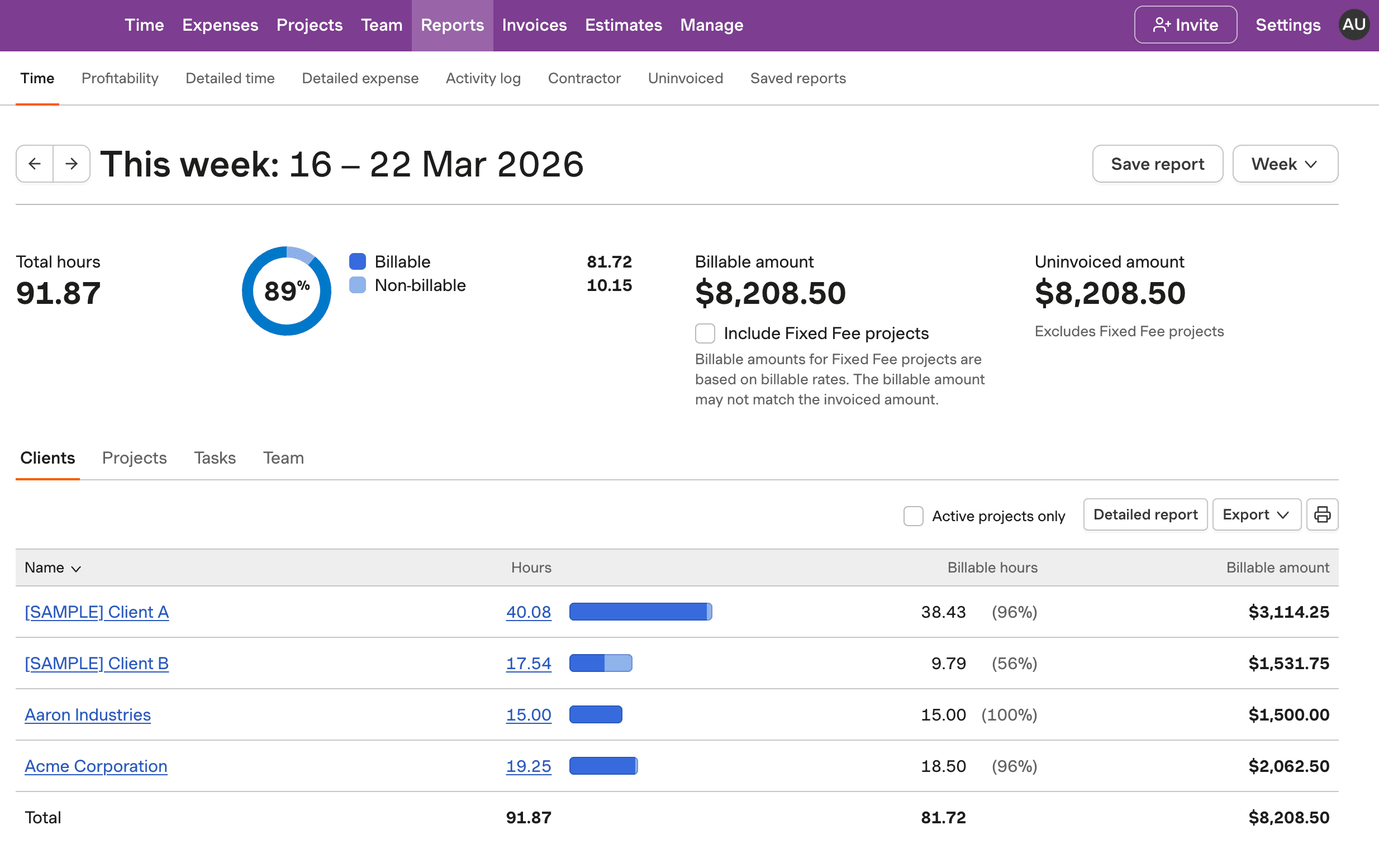
Harvest helps you track these non-billable hours, offering insights into how they affect your EHR. By using Harvest's reporting tools, you can include unpaid work in your calculations, ensuring a comprehensive understanding of your earnings. This awareness enables you to adjust your pricing models to sustain profitability even when non-billable hours are high.

Comparing Billable Hours and Effective Hourly Rate

Billable hours represent the time directly charged to clients, but they don't tell the whole story. The effective hourly rate, which includes both billable and non-billable time, provides a more accurate picture of financial health. Service-based businesses often overlook this distinction, leading to an incomplete understanding of their productivity.

Harvest allows you to track both billable and non-billable hours, enabling a comparison that highlights the real value of your time. For instance, if your billable rate is $150/hour, but you include 20% non-billable work, your EHR may drop to $120/hour. This insight is crucial for adjusting business strategies and ensuring competitive pricing.

Optimizing Pricing Strategies with Effective Hourly Rate Insights

Understanding your effective hourly rate is vital for optimizing pricing strategies. Accurate EHR insights can reveal when adjustments are necessary to maintain profitability. For example, if your EHR is consistently below industry standards, it might be time to reevaluate your rates or reduce non-billable tasks.

Harvest provides detailed reports that illuminate your EHR, helping you make informed decisions about pricing. By analyzing these reports, you can identify trends and adjust your service offerings accordingly. This strategic approach ensures that your business remains competitive and profitable, aligning your pricing with the true value delivered to clients.

Calculate Your Effective Hourly Rate with Harvest

See how Harvest tracks both billable and non-billable hours to help you calculate your effective hourly rate and optimize pricing.

Screenshot of Harvest's effective hourly rate calculation feature

Calculate Effective Hourly Rate FAQs

  • To calculate your effective hourly rate, divide the total revenue earned from a client or project by the total time invested, including both billable and non-billable hours. This gives you a realistic view of your profitability.

  • The effective hourly rate is vital because it reflects the actual revenue per hour, including all work hours. This metric helps you understand your true profitability and informs better pricing strategies.

  • Your effective hourly rate is influenced by both billable and non-billable hours. Tasks like administration, marketing, and training, while essential, can lower your EHR if not factored into pricing strategies.

  • Harvest allows you to track both billable and non-billable hours, providing detailed reports that help you calculate and optimize your effective hourly rate. This ensures you account for all work hours in your profitability assessments.

  • A good effective hourly rate varies by industry and region, but generally, professional service firms aim for rates between $75 and $375 per hour. The key is ensuring your EHR covers all costs and delivers profit.

  • Unpaid hours, such as those spent on internal tasks, reduce your effective hourly rate. By tracking these with tools like Harvest, you can adjust your pricing to ensure profitability.

  • Yes, Harvest can track non-billable hours, allowing you to include them in your effective hourly rate calculations. This feature helps you understand the full scope of your time investment and its impact on profitability.