
Harvest
Time Tracking
Sign up free

Hourly Rate Calculator for Quickbooks

Harvest integrates with QuickBooks to help businesses calculate and track hourly rates effectively, addressing the challenge of accurate labor cost estimation.

Try Harvest Free

What should you charge per hour?

Most freelancers and consultants dramatically undercharge. This calculator accounts for what most people miss: non-billable time, taxes, and overhead.

$
Accounting for vacation, holidays, sick days
60%
Most freelancers can bill 50-70% of their time. The rest goes to admin, marketing, proposals, and learning.
$
Software, insurance, equipment, accounting, taxes beyond income tax, etc.
Your break-even rate $0
Recommended rate (+20% buffer) $0
Billable hours per week 0h
Equivalent daily rate $0

Start tracking your billable hours

Walk through the entire flow below. Start a timer, check your reports, and create a real invoice — all in three clicks.

Go ahead — start tracking!

One click and you're timing. Try it right here: start a timer, add an entry, edit the details. This is exactly how it feels in Harvest.

  • One-click timer from browser, desktop & mobile
  • Works inside Jira, Asana, Trello, GitHub & 50+ tools
  • Duration or start/end — your call
  • Day, week & calendar views to stay on top of it all
  • Friendly reminders so no hour gets left behind
Acme Corp
Website Redesign
Homepage layout revisions
1:24:09
Content Strategy
Blog calendar planning
1:30:00
SEO Audit
Technical audit report
0:45:00
Brand Guidelines
Color system documentation
2:15:00
Logo Concepts
Initial sketches round 1
1:00:00

Understanding the Foundations of Your Hourly Rate

Calculating an effective hourly rate is crucial for business profitability, especially when integrating tools like QuickBooks. At its core, an hourly rate must cover personal income, operating costs, and a profit margin. For service businesses, these components ensure sustainability and growth. Non-billable hours, like holidays and administrative duties, must also be considered; typically, only 65% of working hours are billable.

Incorporating overhead is vital. These are indirect costs, such as rent, insurance, and utilities, that are not tied directly to service delivery. Keeping overhead under 35% of total sales is a standard guideline. Profit margins generally range from 20% to 35% in service industries, although ambitious firms may target higher margins of 50% to 70%.
Step-by-Step Guide to Calculating Your Profitable Hourly Rate

To calculate a profitable hourly rate, start by determining your desired annual salary. Next, calculate your total annual business costs, including all fixed and variable expenses. It's crucial to realistically estimate billable hours, typically between 1,000 to 1,500 per year, far less than the full 2,080 hours of a standard work year.

Use the break-even formula: (Desired salary + Business expenses) / Billable hours. Then, add your desired profit margin, often between 20% and 35%. Conduct market research to ensure competitiveness and regularly reassess your rates as costs and market conditions change.

Optimizing Your Hourly Rate for Sustainable Growth

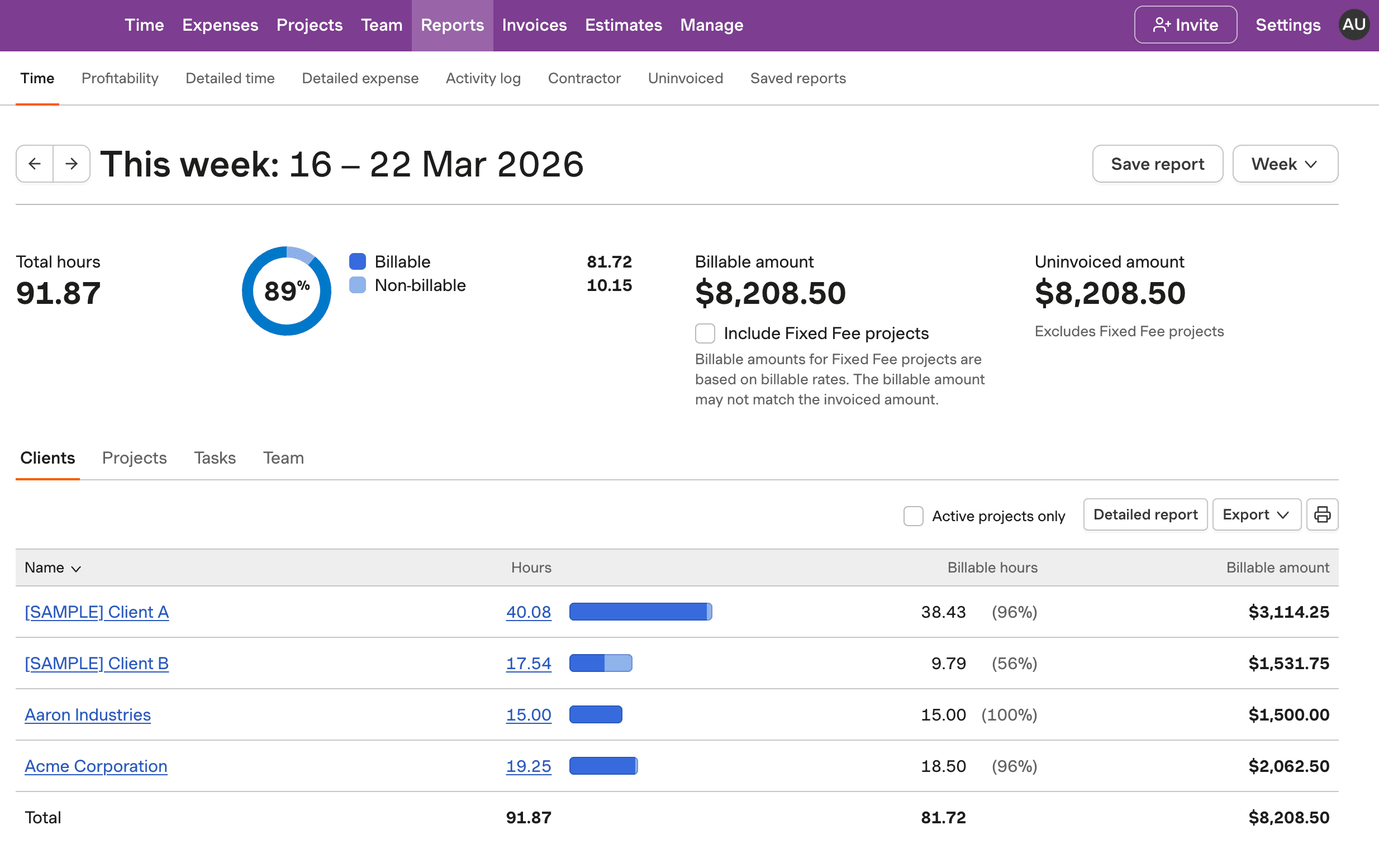
For sustainable business growth, integrating your hourly rate calculation with tools like Harvest and QuickBooks is essential. Harvest allows you to track labor costs by project and understand profitability through detailed reports. By exporting these reports to QuickBooks, you can accurately estimate labor costs and set appropriate hourly rates.

Regularly review and adjust your rates to reflect changes in operating costs and market dynamics. Consider alternative pricing models, such as project-based fees or retainers, to diversify revenue streams. This flexibility ensures your business remains competitive and profitable.

Beyond the Numbers: Market, Industry, and Legal Considerations

Setting an hourly rate goes beyond simple calculations. Geographic location, industry norms, and legal requirements like minimum wage and overtime regulations heavily influence pricing. For instance, the federal minimum wage is $7.25/hr, but it’s higher in many states, impacting your base rate.

Incorporate market research to benchmark rates against competitors in your region and industry. Also, consider the cost of living, which varies significantly across areas, affecting service pricing. By navigating these factors, you can ensure your rates meet industry standards and client expectations.

Hourly Rate Calculator with Harvest

This preview shows how Harvest integrates with QuickBooks to calculate hourly rates, ensuring precise labor cost tracking and profitability.

Screenshot of Harvest's hourly rate calculation tool integrated with QuickBooks.

Hourly Rate Calculator for Quickbooks FAQs

  • To calculate hourly rates for salaried employees in QuickBooks, first determine the annual salary and divide it by the total working hours in a year, typically 2,080 hours. Harvest can assist by tracking time and labor costs, offering detailed reports that integrate with QuickBooks for seamless payroll management.

  • Yes, you can track labor costs by project in QuickBooks using Harvest. Harvest provides detailed time reports that can be exported to QuickBooks, allowing you to analyze project-specific labor costs and profitability effectively.

  • The hourly rate calculator integrated with QuickBooks via Harvest offers features such as tracking billable and non-billable hours, calculating break-even rates, and adding desired profit margins. It also helps in understanding project profitability by analyzing labor costs and payroll expenses.

  • Including overhead in hourly rate calculations ensures that all indirect costs, such as rent and utilities, are covered. This comprehensive approach prevents underpricing and supports business sustainability. Overhead typically should not exceed 35% of total sales to maintain profitability.

  • It's advisable to review your hourly rates regularly, at least annually, or whenever there are significant changes in costs, market conditions, or business goals. This ensures your rates remain competitive and aligned with your financial objectives.

  • Harvest integrates with QuickBooks by allowing you to export detailed time and expense reports. These can be imported into QuickBooks to streamline payroll processing, ensuring accurate labor cost tracking and financial reporting.

  • Typical profit margins for service businesses range from 20% to 35%. However, some companies may aim for higher margins, between 50% and 70%, especially in growth phases. This margin is added to the break-even hourly rate to ensure profitability.