
Harvest
Time Tracking
Sign up free

Profit Margin Calculator for Accountants

Harvest is an ideal tool for accountants looking to enhance project profitability analysis by accurately tracking time and expenses. Maximize efficiency and revenue retention with Harvest's detailed reporting capabilities.

Try Harvest Free

Will this project be profitable?

Estimate your project cost, set the right price, and know exactly how many hours your team can spend before margin disappears.

Total hours across all team members
$
Average rate across all roles on the project
15%
Scope creep is real. Most projects need 10-25% buffer to stay profitable.
Recommended project price $0
Base cost (before buffer) $0
Hours per person per week 0h
Weekly burn rate $0
Max hours before loss 0h

Track project hours with Harvest

Walk through the entire flow below. Start a timer, check your reports, and create a real invoice — all in three clicks.

Go ahead — start tracking!

One click and you're timing. Try it right here: start a timer, add an entry, edit the details. This is exactly how it feels in Harvest.

  • One-click timer from browser, desktop & mobile
  • Works inside Jira, Asana, Trello, GitHub & 50+ tools
  • Duration or start/end — your call
  • Day, week & calendar views to stay on top of it all
  • Friendly reminders so no hour gets left behind
Acme Corp
Website Redesign
Homepage layout revisions
1:24:09
Content Strategy
Blog calendar planning
1:30:00
SEO Audit
Technical audit report
0:45:00
Brand Guidelines
Color system documentation
2:15:00
Logo Concepts
Initial sketches round 1
1:00:00

Understanding Profit Margins for Accountants

Profit margins are crucial for accountants aiming to assess a company's financial health and operational efficiency. A profit margin is a financial ratio that indicates the percentage of revenue retained as earnings after all expenses are deducted. For example, a 20% profit margin means a business keeps $0.20 for every dollar of sales. Understanding the different types of profit margins is essential for accurate analysis.

There are three primary types of profit margins: Gross Profit Margin, which measures profitability after direct costs (Cost of Goods Sold - COGS); Operating Profit Margin, which accounts for operational expenses like salaries and rent in addition to COGS; and Net Profit Margin, which represents the bottom line profitability after all expenses, including interest and taxes. The average gross profit margin across industries is 36.56%, while the average net profit margin is 8.54%.

For accountants, knowing the industry benchmarks is vital. High-profit margin industries, such as banks and technology firms, boast net margins of 20-40%, while moderate-margin industries like healthcare typically see 10-15%. Understanding these margins allows accountants to provide valuable insights into performance and strategic decision-making.
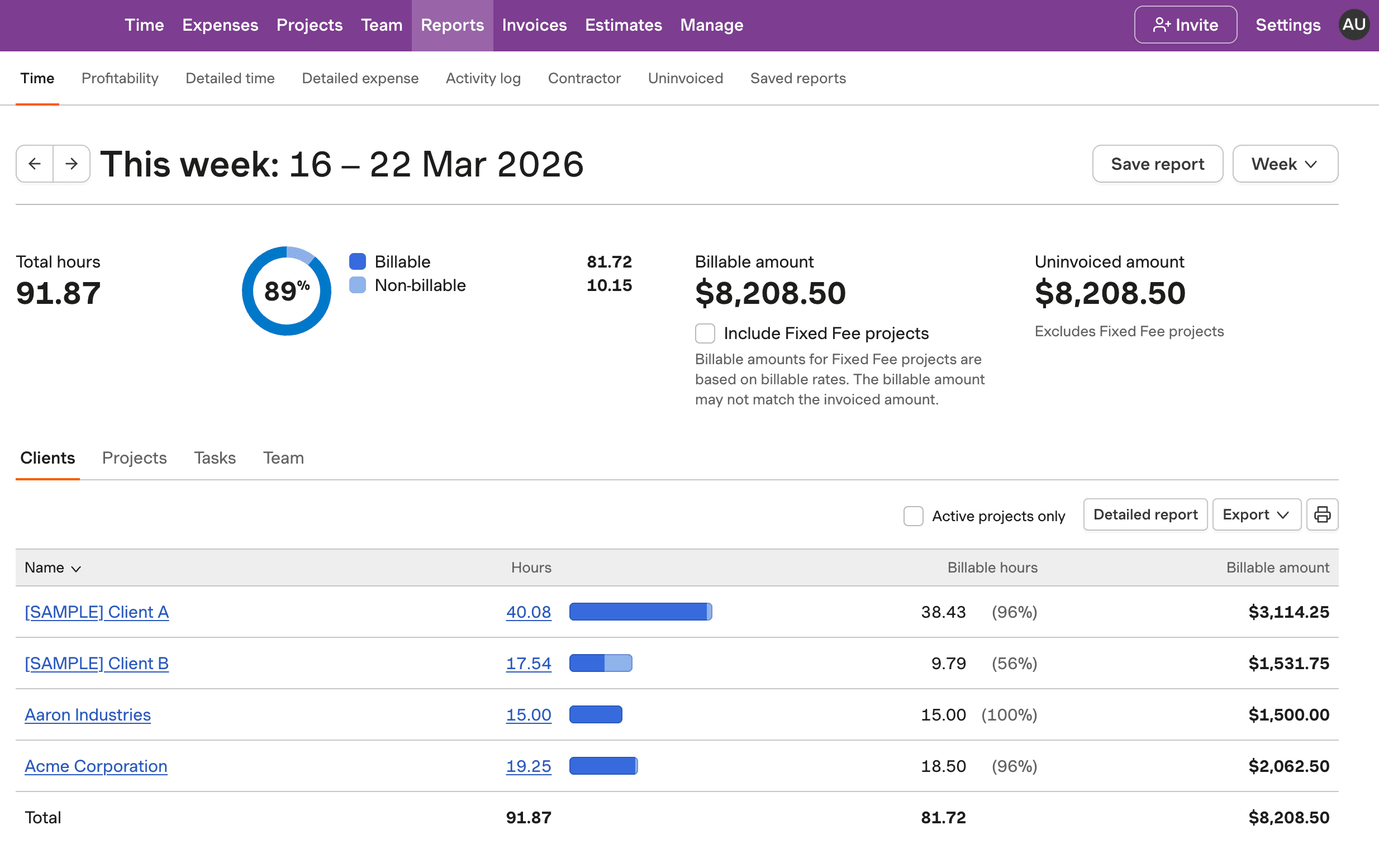
How Harvest Enhances Profitability Analysis

While Harvest does not directly calculate profit margins, it provides robust tools for tracking time and expenses, which are integral to analyzing project profitability. Accurate time tracking and expense management are crucial for understanding the operational efficiency and cost structure of a business, thus indirectly supporting profit margin analysis.

Harvest's features include one-click timers and manual time entries, allowing for precise tracking of billable and non-billable hours. This capability is particularly beneficial in service industries, where accurate billing can significantly impact the net profit margin. Additionally, Harvest offers detailed reports on time, expenses, and budgets, enabling accountants to identify areas of cost savings and efficiency improvements.

Integrating Harvest with other platforms like QuickBooks, Xero, and Stripe further enhances its utility by streamlining financial data management, ensuring that accountants have a comprehensive view of project costs and revenues. This holistic approach aids in optimizing profitability, providing accountants with the insights necessary to improve operational strategies.

Common Mistakes in Profit Margin Calculations

Accurately calculating profit margins is essential for reliable financial analysis, yet common mistakes can skew results. One frequent error is the incorrect categorization of expenses, which can lead to inaccurate profit margin figures. For instance, failing to distinguish between fixed and variable costs can distort the operating profit margin.

Another pitfall is neglecting to adjust for seasonal fluctuations or one-time expenses, which can misrepresent a company's financial health. Accountants should ensure that profit margin calculations reflect the true, ongoing operational performance of the business. Analyzing data over multiple periods can help smooth out these anomalies.

Finally, overlooking the impact of depreciation and amortization on the net profit margin can lead to underestimating the true cost of long-term assets. By integrating Harvest's detailed expense tracking, accountants can ensure that these elements are accurately reflected in profit margin analyses, ultimately providing more precise financial insights.

Best Practices for Profit Margin Optimization

Optimizing profit margins is a key goal for accountants advising businesses on financial strategy. One effective approach is to focus on reducing costs without compromising quality. This can be achieved by negotiating better terms with suppliers or adopting more efficient operational processes.

Another strategy is optimizing pricing models. By understanding customer value perception and market positioning, businesses can adjust prices to enhance margins. Leveraging Harvest's detailed billing and time tracking data can assist businesses in identifying services or products that offer the best return on investment.

Additionally, improving internal efficiency through better resource allocation can lead to significant margin improvements. Harvest's integration with tools like Asana and Slack can streamline team collaboration, reducing time wastage and boosting productivity. These practices not only improve profitability but also sustain long-term business growth.

Profit Margin Insights with Harvest

See how Harvest's tracking tools assist accountants in analyzing project profitability, enhancing financial decision-making and revenue retention.

Harvest interface showing time and expense tracking for accountants

Profit Margin Calculator for Accountants FAQs

  • Gross profit margin measures profitability after subtracting direct costs (COGS) from revenue, while net profit margin accounts for all expenses, including taxes and interest. Gross margin focuses on production costs, whereas net margin provides a complete profitability picture.

  • To calculate a profit margin, subtract the relevant costs (such as COGS for gross profit) from the revenue, divide the result by the total revenue, and multiply by 100 to express it as a percentage. This formula applies to all types of profit margins, including gross, operating, and net.

  • Tools like Harvest enhance profitability analysis by offering detailed reports on time and expenses, which are essential for understanding the cost structure and efficiency of a business. Harvest's integrations with financial software streamline data management, supporting comprehensive financial analysis.

  • Improving profit margins involves reducing costs, optimizing pricing, and enhancing operational efficiency. Using tools like Harvest can assist by providing insights into time and expense management, enabling better resource allocation and informed pricing strategies.

  • When calculating profit margins, consider all relevant expenses: direct costs like COGS for gross margin, operational expenses for operating margin, and all expenses, including taxes and interest, for net margin. Accurate categorization ensures reliable profit margin analysis.

  • Yes, Harvest excels in tracking project profitability by providing detailed reports on time and expenses. These insights help accountants understand the cost structure, enabling more accurate profitability analysis and strategic financial planning.

  • The benchmarks for a good profit margin vary by industry. Generally, a net profit margin below 5% is considered low, around 10% is healthy, and above 20% indicates strong performance. Knowing these benchmarks helps set realistic financial goals.