
Harvest
Expenses
Sign up

Expense Report

Harvest simplifies expense reporting, reducing errors by up to 90% and cutting processing time by 50% with features like receipt uploads and project-based categorization.

  • Attach receipts to projects & tasks
  • Turn tracked expenses into client invoices
  • Free 30-day trial, no credit card needed

or drag & drop • Images and PDFs, max 10 MB

What is an Expense Report?

An expense report is a detailed record that employees submit to their employers to claim reimbursement for business-related expenses they have incurred. These reports are crucial for maintaining financial transparency and ensuring compliance with company policies and tax regulations. Typically, an expense report includes details such as the date, amount, vendor, and purpose of each expense. In the U.S., the IRS requires itemized receipts for expenses over $75 to support tax deductions.

Manual expense reporting is not only time-consuming—averaging 20 minutes per report—but also prone to errors, with 19% of reports containing mistakes that require an additional 18 minutes to rectify. Automating this process can reduce errors by up to 90% and cut processing time in half, making tools like Harvest invaluable for businesses seeking efficiency and accuracy in their financial operations.
Components of a Comprehensive Expense Report

Creating a comprehensive expense report involves several key components. Firstly, it requires detailed records of each transaction, including the date, vendor, amount, and a clear business purpose. This ensures transparency and facilitates accurate reimbursement. For compliance, supporting documents—such as itemized receipts—are crucial, especially for expenses over $75, as mandated by the IRS.

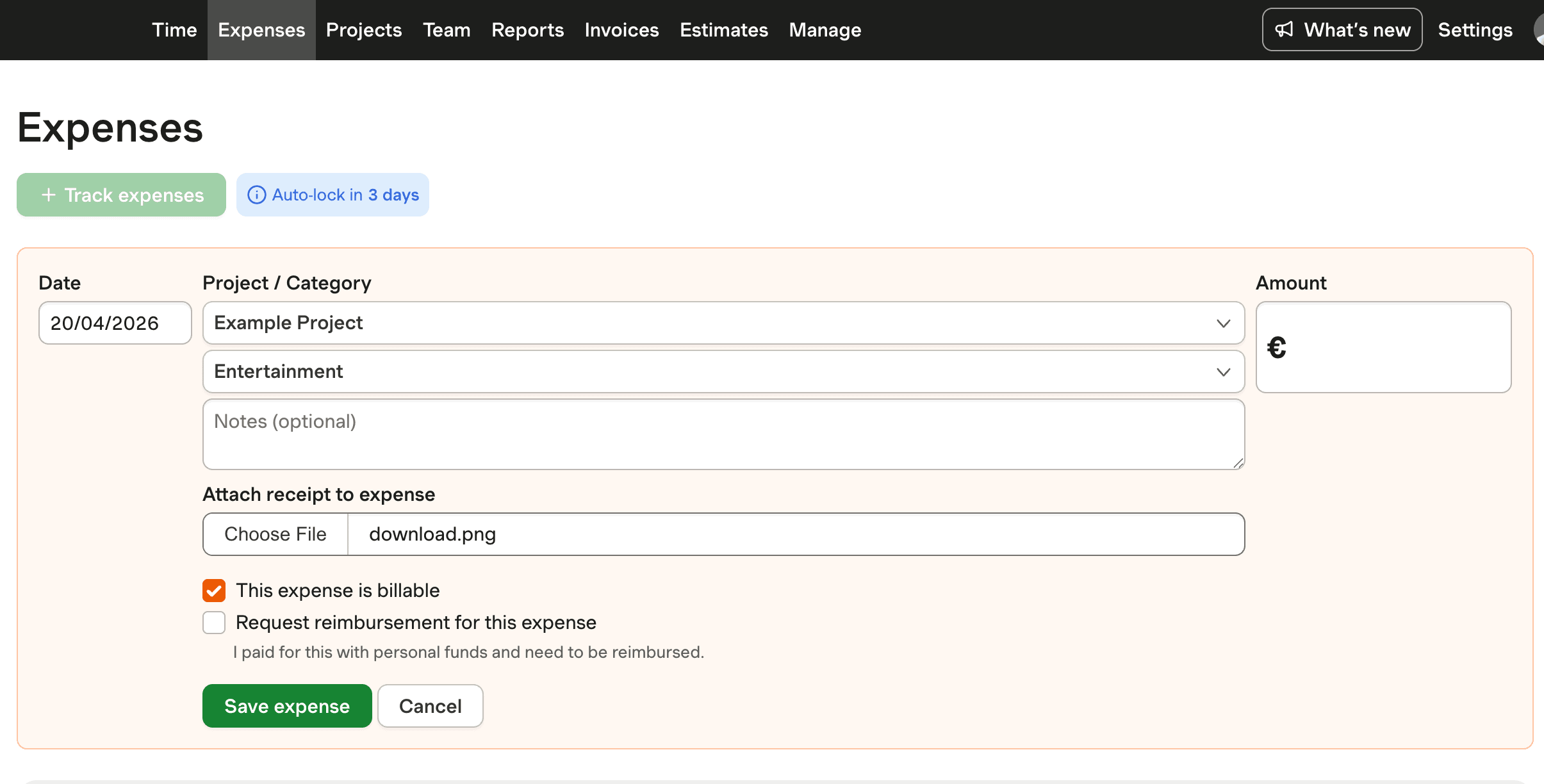
Harvest simplifies this process by allowing users to itemize expenses based on date, project, and category, while also enabling the upload of receipt images for each entry. This not only ensures accurate reporting but also aids in maintaining compliance with tax documentation requirements, reducing the likelihood of errors and subsequent corrections.

Overcoming Common Expense Reporting Challenges

Common challenges in expense reporting include lost receipts, mixing personal and business expenses, and unfamiliarity with company policies. These issues can lead to significant errors, with corrections costing businesses an average of $52 per erroneous report. Moreover, delay in report submissions can result in reimbursements being considered taxable income if not submitted within the IRS's "reasonable period" of 60 days.

While Harvest does not automate enforcement of company policies, it supports manual review and approval, which helps mitigate these issues. By using Harvest, businesses can streamline the report process, ensuring timely and accurate submissions. The platform's receipt upload feature helps prevent loss or damage, while project-based categorization helps distinguish between personal and business expenses effectively.

The Future of Expense Reporting with Automation

The future of expense reporting lies in automation, with 70% of companies expected to implement such systems by 2025. Automated expense management solutions can reduce processing costs by 30% and decrease error rates by 65%, transforming expense reporting from a cumbersome task into a streamlined process. Additionally, these systems provide real-time visibility into expenses, a priority for 70% of finance teams.

Harvest offers a straightforward solution for small-to-medium businesses looking to adopt automated expense reporting. By enabling the upload of receipt images and categorizing expenses by project, Harvest provides a user-friendly platform that enhances accuracy and efficiency, paving the way for a more proactive approach to expense management.

Streamline Your Expense Reports with Harvest

See how Harvest simplifies expense reporting with receipt uploads and categorization, reducing errors and processing time.

Harvest expense report feature with receipt upload and categorization.

Expense Report FAQs

  • Creating an expense report involves gathering all receipts and recording each transaction's details, such as the date, vendor, and amount. It's important to include a clear business purpose for each expense. Harvest facilitates this process by allowing you to upload receipts and categorize expenses by project.

  • An expense report should include the date, vendor, amount, and business purpose of each transaction. Supporting documents like itemized receipts are also crucial, especially for expenses over $75. Harvest makes it easy to attach these documents to your expense entries.

  • Automating expense reports reduces processing costs by 30% and error rates by 65%. It also enhances real-time visibility, which is a priority for 70% of finance teams. Harvest offers features like receipt uploads and project-based categorization to streamline this process.

  • To avoid mistakes, use digital tools to scan receipts immediately after purchase, and clearly separate personal and business expenses. Harvest's receipt upload feature helps prevent lost receipts, and project categorization ensures accurate reporting.

  • The IRS requires itemized receipts for expenses over $75 and mandates that expense reports be submitted within 60 days to avoid being considered taxable income. Harvest supports these requirements by allowing receipt uploads for accurate record-keeping.

  • Yes, Harvest helps maintain tax compliance by allowing users to upload and store itemized receipts, ensuring all transactions are accurately documented. This feature is essential for meeting IRS requirements.

  • The average cost to process an expense report is $58 and takes about 20 minutes. Automating this process with tools like Harvest can reduce costs by 30% and cut processing time in half.