
Harvest
Expenses
Sign up

Expense Report Receipts

Harvest simplifies expense reporting by enabling digital receipt uploads, helping businesses streamline compliance and reduce manual processing errors.

  • Attach receipts to projects & tasks
  • Turn tracked expenses into client invoices
  • Free 30-day trial, no credit card needed

or drag & drop • Images and PDFs, max 10 MB

Understanding Expense Report Receipt Requirements

Expense report receipts are essential for maintaining compliance with reimbursement and tax regulations. According to the IRS, receipts must substantiate business expenses, including the amount, date, place, and nature of the expense. This is especially crucial for expenses over $75 and all lodging expenses. For transportation costs without receipts, a detailed record suffices. In the EU, VAT receipts require additional information such as sequential numbers and VAT identification numbers. Similarly, the UK mandates keeping records for six years. Understanding these requirements is vital to avoid compliance issues and potential penalties, which can average $1,590,475 monthly in FCPA investigations.

Harvest assists businesses in managing these requirements by allowing users to upload digital receipts via mobile and web platforms. While it simplifies the storage and categorization of receipts, users need to ensure compliance with specific regulatory requirements independently. This capability helps mitigate the high costs associated with manual processing errors, which affect 19% of expense reports and can cost $52 per error to rectify.
The Shift to Digital Receipts for Expense Management

The transition from paper to digital receipts is reshaping expense management. As of 2022, 34% of merchants offered digital receipts, with consumer preference for digital receipts at 70-75%. This shift is driven by the efficiency and cost-effectiveness of digital solutions, which can reduce expense processing costs by up to 78%. The digital receipts market, valued at $2.1 billion in 2023, is projected to reach $7.86 billion by 2034.

Harvest leverages this trend by allowing businesses to upload digital receipts directly into its platform, streamlining expense tracking and reporting. This feature not only enhances productivity but also aligns with modern business practices that prioritize real-time visibility and automation, as 87% of CFOs are investing in these areas to ensure compliance and accuracy.

Challenges and Solutions in Manual Expense Reporting

Manual expense reporting is fraught with inefficiencies and errors. The average manual report costs businesses between $20.65 and $58 to process, with errors present in 19% of cases. These errors necessitate additional time—18 minutes on average—and resources to correct. Furthermore, manual processes result in delayed reimbursements, inefficient workflows, and increased risk of fraud, with expense reimbursement schemes averaging losses of $251,000 per incident.

Harvest addresses these challenges by offering a streamlined digital solution. By enabling digital receipt uploads and integrating them into project-based tracking, Harvest reduces the administrative overhead and error rates associated with manual processes. This not only saves time but also helps businesses redirect resources towards more strategic initiatives.

Leveraging Automation for Enhanced Expense Management

Automation in expense management offers significant benefits, including reduced costs and improved compliance. Automated systems can lower processing costs by up to 78% compared to manual methods. Additionally, automation helps in enforcing expense policies, minimizing the common 19% error rate in manual reports. This is crucial for finance teams, 70% of whom prioritize real-time visibility.

Harvest enhances expense management through its digital receipt upload feature, which integrates into automated workflows. This allows businesses to capture receipts instantly and categorize them efficiently, reducing manual entry errors. By adopting such solutions, businesses can improve accuracy, speed up reimbursements, and ultimately increase productivity.

Manage Expense Report Receipts with Harvest

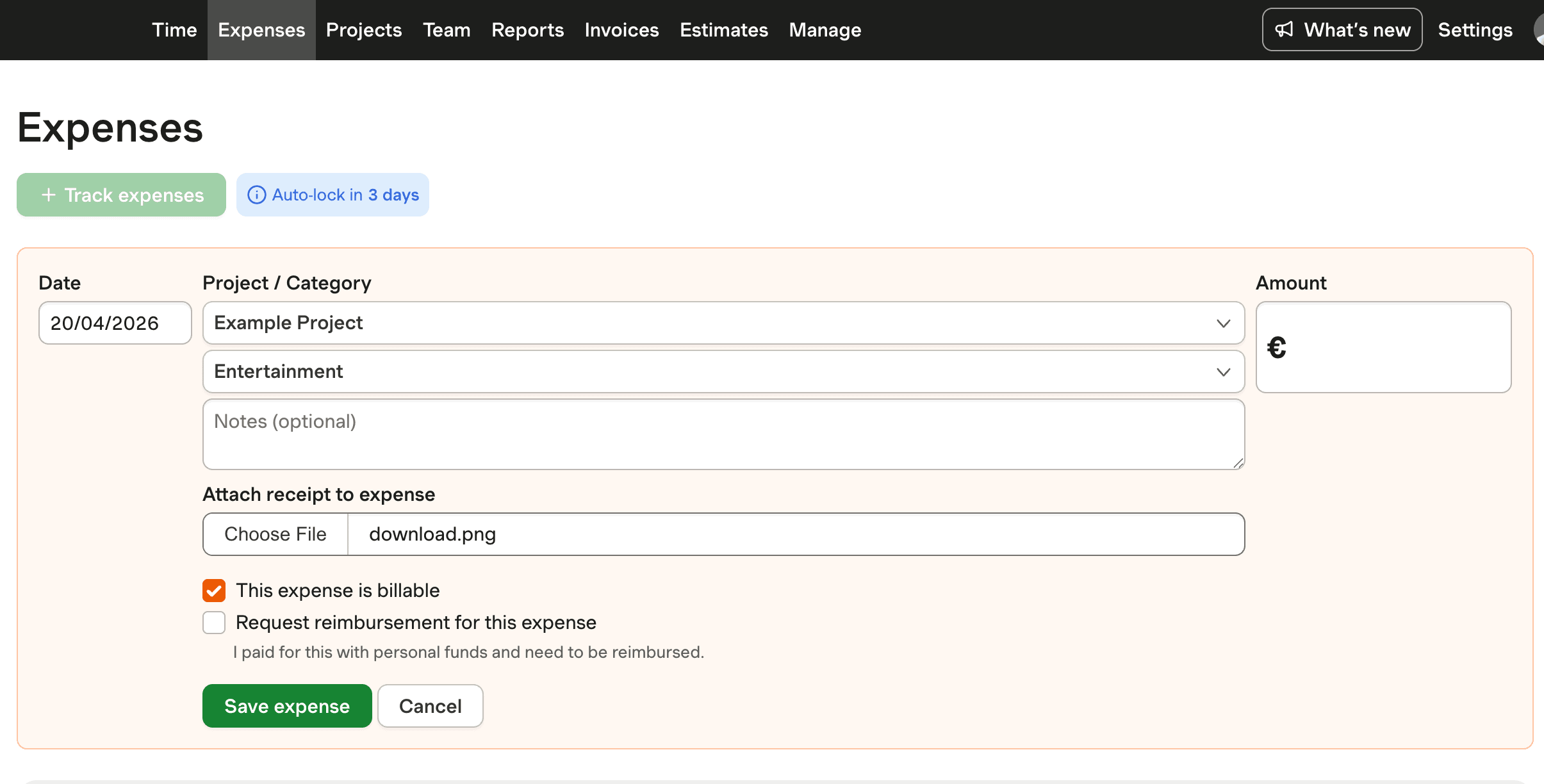
Harvest allows you to upload digital receipts, simplifying expense management and ensuring compliance with ease.

Harvest interface showing digital receipt upload for expense reports.

Expense Report Receipts FAQs

  • A valid expense report receipt should include the amount, date, place, and nature of the expense. For expenses over $75 and all lodging expenses, the IRS requires receipts for substantiation. Different jurisdictions may have additional requirements, such as VAT numbers in the EU.

  • Harvest simplifies digital receipt management by allowing users to upload receipts via mobile or web. This integration aids in project-based expense tracking, reducing manual processing errors and improving compliance with financial regulations.

  • Common mistakes include missing receipts, incorrect categorization, and failure to adhere to policy guidelines. These errors can lead to compliance issues and additional costs. Automated systems like Harvest help minimize these mistakes by streamlining the receipt upload and categorization processes.

  • Automation improves expense report processing by reducing costs, minimizing errors, and increasing compliance. Automated systems can lower processing costs by up to 78% and help enforce expense policies, ensuring timely and accurate reporting.

  • Digital receipts offer significant benefits over paper receipts, including cost savings, improved efficiency, and consumer preference. The global digital receipts market is growing rapidly, indicating a strong trend towards electronic receipt management in businesses.

  • For tax purposes, it's crucial to store receipts securely, whether digitally or physically, for the required retention period. In the UK, for instance, records must be kept for six years. Using digital solutions like Harvest can aid in organized storage and easy retrieval.

  • Digital receipt adoption reduces processing costs, enhances accuracy, and aligns with modern consumer preferences. Businesses using digital systems, like Harvest, often see improved workflow efficiency and a reduction in manual entry errors.