
Harvest
Expenses
Sign up

Expense Tracker App React Native

Harvest offers a mobile app that allows tracking and managing expenses offline with user-friendly features, eliminating manual tracking headaches.

EXPENSE REPORT DRAFT

Drop your receipts here or click to upload

Images and PDFs (max 10 MB each)

Date
Category
Merchant
Description
Amount
Total
$0.00

Customise report

Appearance

Show report title

Report settings

Building an Expense Tracker App in React Native

Developing an expense tracker app with React Native offers significant advantages due to its ability to create cross-platform mobile applications from a single JavaScript codebase. This not only accelerates development cycles but also ensures seamless performance across iOS and Android devices. With the rising trend of mobile-first solutions, the demand for these applications is projected to boost the market to an estimated $19.77 billion by 2030, growing at a 12.7% CAGR. As businesses increasingly adopt mobile solutions, accounting for 54% of expense report submissions in 2021, creating an app using React Native can provide a competitive edge.

Key features to consider include real-time data synchronization, a user-friendly interface, and automation capabilities such as Optical Character Recognition (OCR) for receipt data extraction. As AI-driven financial insights become more prevalent, integrating AI capabilities can further enhance app functionality and user experience.
Key Features of an Expense Tracker App

An effective expense tracker app should prioritize ease of use and automation. The app should allow users to quickly capture receipts using their smartphone cameras, reducing the average 20 minutes spent processing each expense report. Automation features like OCR can cover 90% of required fields, drastically minimizing manual entry errors, which traditionally affect 19% of reports and cost $52 each to correct.

To improve user adoption, the app should offer a streamlined onboarding process and a clutter-free layout. Integration with existing systems like QuickBooks or Xero can automate data flow and reduce manual entry. Emphasizing security is crucial, with best practices including HTTPS for data transmission and strong user authentication.

Harvest's Mobile App Capabilities

While React Native apps offer broad development potential, Harvest provides a ready-to-use solution for expense tracking that focuses on user-friendly functionality and robust offline capabilities. Harvest's mobile apps for iPhone and Android allow users to manage expenses even without an internet connection, syncing data once online. This feature is crucial for maintaining productivity during travel or in areas with poor connectivity.

Harvest also supports custom expense categories, enabling detailed tracking and management. Although Harvest does not offer advanced visualization like pie charts, its detailed reports can be exported for further analysis. This functionality ensures that businesses can maintain accurate and comprehensive financial records.

Security and Compliance Considerations

When developing an expense tracker app or using a solution like Harvest, security and compliance are paramount. As financial applications deal with sensitive data, adherence to regulations such as GDPR and PCI DSS is essential. GDPR mandates secure data handling and retention, typically for around 7 years, while PCI DSS 4.0 requires measures like multi-factor authentication and continuous security monitoring.

Developers should implement secure data transmission protocols and strong user authentication to protect sensitive information. Regular security audits can identify vulnerabilities, ensuring ongoing compliance and safeguarding user trust.

Expense Tracking Solutions with Harvest

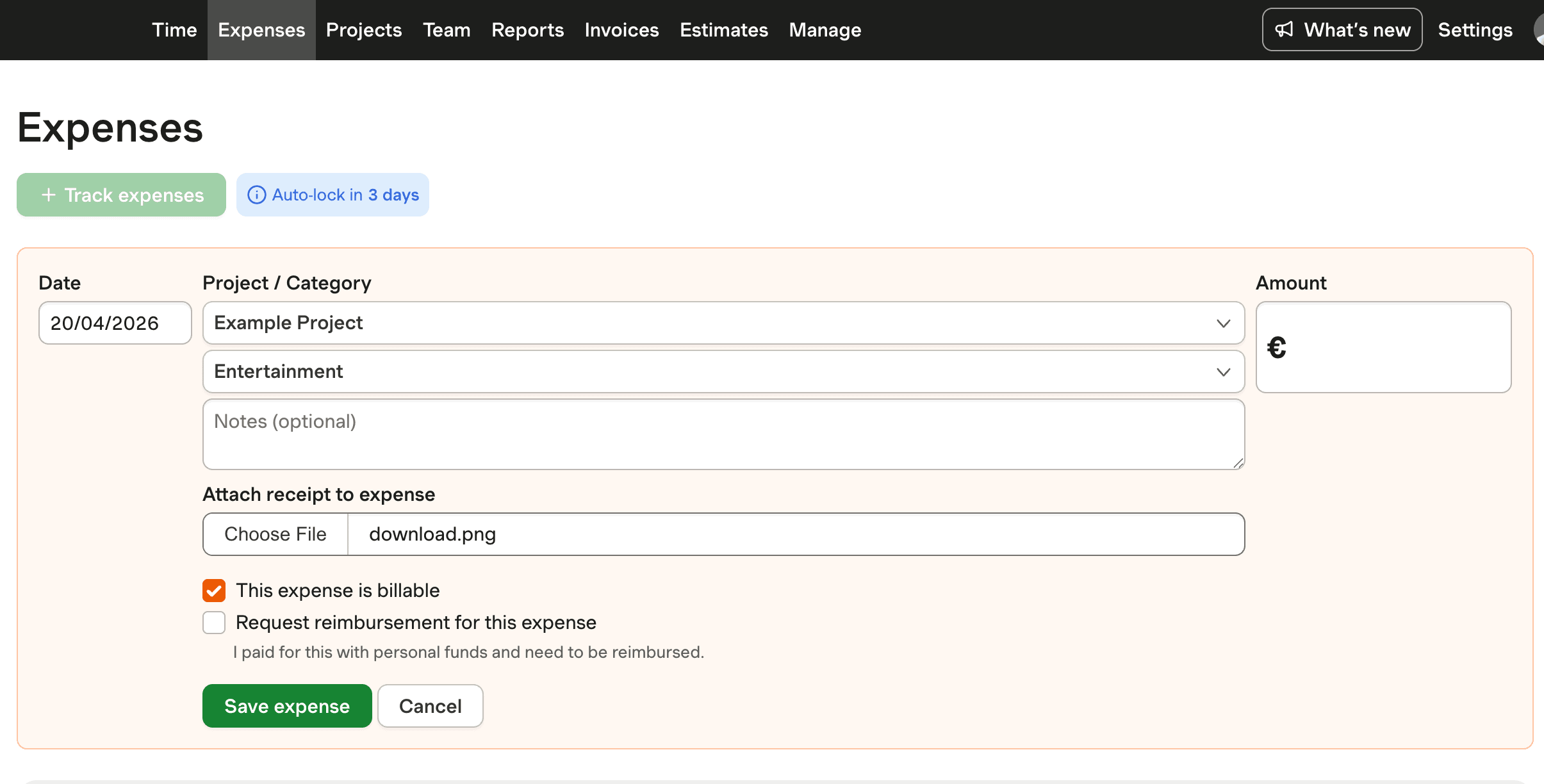
Harvest provides a mobile app for offline expense tracking, allowing seamless management of expenses without internet connectivity.

Harvest mobile app interface for managing expenses offline.

Expense Tracker App React Native FAQs

  • React Native allows developers to build cross-platform apps using a single codebase, speeding up development and reducing costs by 40-50% compared to native solutions. This makes it ideal for expense tracker apps that need to perform well on both iOS and Android devices.

  • AI can enhance expense tracker apps by automating data entry through Optical Character Recognition (OCR), which extracts data from receipts, reducing manual errors. AI-driven insights can also help users better understand their spending patterns and make informed financial decisions.

  • A good expense tracker app should include features like real-time synchronization, a user-friendly interface, receipt capture via smartphone camera, and integration with financial systems like QuickBooks. Automation features like OCR can improve efficiency by minimizing manual data entry.

  • Harvest's mobile apps for iPhone and Android allow users to log expenses offline, which are then synced with the servers once internet connectivity is restored. This ensures that users can manage expenses without interruption, regardless of their location.

  • Security is crucial because these apps handle sensitive financial data. Compliance with regulations like GDPR and PCI DSS is necessary to protect user information. Implementing strong authentication and data encryption are key security measures for any financial app.

  • Yes, Harvest allows administrators to create and manage custom expense categories. This feature helps users organize their expenses more effectively and ensures comprehensive tracking and reporting.

  • Financial apps must comply with regulations like GDPR, which mandates secure data handling and retention policies. PCI DSS compliance is also required for apps handling credit card information, involving encryption, authentication, and continuous monitoring to ensure data security.

  • Expense tracker apps reduce errors by automating data entry with OCR technology, which accurately extracts information from receipts. Built-in verification systems further ensure accuracy by checking for discrepancies and duplicates, reducing the time and cost associated with manual error correction.