
Harvest
Expenses
Sign up

Saas Expense Tracker

Over 30% of SaaS fees are wasted on unused features. Harvest helps manage project expenses efficiently, reducing this waste.

EXPENSE REPORT DRAFT

Drop your receipts here or click to upload

Images and PDFs (max 10 MB each)

Date
Category
Merchant
Description
Amount
Total
$0.00

Customise report

Appearance

Show report title

Report settings

The Importance of SaaS Expense Tracking

Tracking SaaS expenses is crucial for businesses aiming to optimize their software spending and manage their budgets effectively. With the average company spending $55.8 million annually on SaaS and $4,830 per employee, it's imperative to ensure these investments are yielding value. Unused subscriptions and features can lead to significant waste, with over 30% of SaaS fees going unused, translating to an average annual waste of $19.8 million on unused licenses. Therefore, businesses need robust solutions to manage these expenses efficiently.

Harvest offers a project-based expense tracking solution that allows teams to manage their expenses and invoice clients efficiently. While it doesn't provide real-time visibility into SaaS spending, it enables businesses to categorize and track expenses by project, helping in detailed financial oversight. This kind of organized structure ensures that companies can maintain control over their project expenses and avoid unnecessary spending.
Challenges of Manual Expense Management

Manual expense tracking can be a daunting task, often leading to errors and inefficiencies. Traditional methods, like paper-based processes and spreadsheets, are not only time-consuming but also prone to inaccuracies. On average, companies manage 305 SaaS applications, and without an efficient tracking system, keeping tabs on each application's expenses can be overwhelming. Moreover, shadow IT can consume 30-40% of IT budgets, adding to the complexity of manual management.

By using Harvest, businesses can transition from manual expense management to a more streamlined and accurate process. Harvest enables users to manually enter expenses and categorize them by project, thus minimizing errors associated with traditional methods. This allows teams to maintain a clear overview of their expenses, ensuring better financial management and reducing the risk of non-compliance with financial regulations.

Optimizing SaaS Expenses with Strategic Planning

Effective SaaS expense management requires strategic planning and regular audits to identify areas of cost-saving. Organizations can save significantly by eliminating redundant applications and negotiating better terms before renewals. Proactive measures, such as conducting quarterly reviews and leveraging discounts, can lead to savings of 20% to 40% and improve overall software optimization.

Harvest supports businesses in this endeavor by providing detailed expense reports that can be filtered by client, project, person, and date. This allows companies to conduct thorough reviews of their project expenses, identify potential savings, and ensure that spending aligns with business objectives. By integrating Harvest with existing financial systems, businesses can further streamline their data transfer and improve the accuracy of their financial reporting.

Ensuring Compliance and Financial Oversight

Compliance with financial regulations is a critical aspect of business operations, especially when managing SaaS expenses. Laws like the Sarbanes-Oxley Act in the U.S. and GDPR in the EU require accurate record-keeping and data protection, with significant penalties for non-compliance. SaaS expense trackers play a vital role in helping organizations meet these compliance requirements.

Harvest assists businesses in maintaining compliance by offering a reliable expense tracking system that supports legal and financial oversight. Although it doesn't automate compliance processes, Harvest ensures that all expenses are systematically recorded and categorized, providing the necessary documentation required during audits. This organized approach helps businesses avoid potential penalties and maintain their financial integrity.

Track SaaS Expenses with Harvest

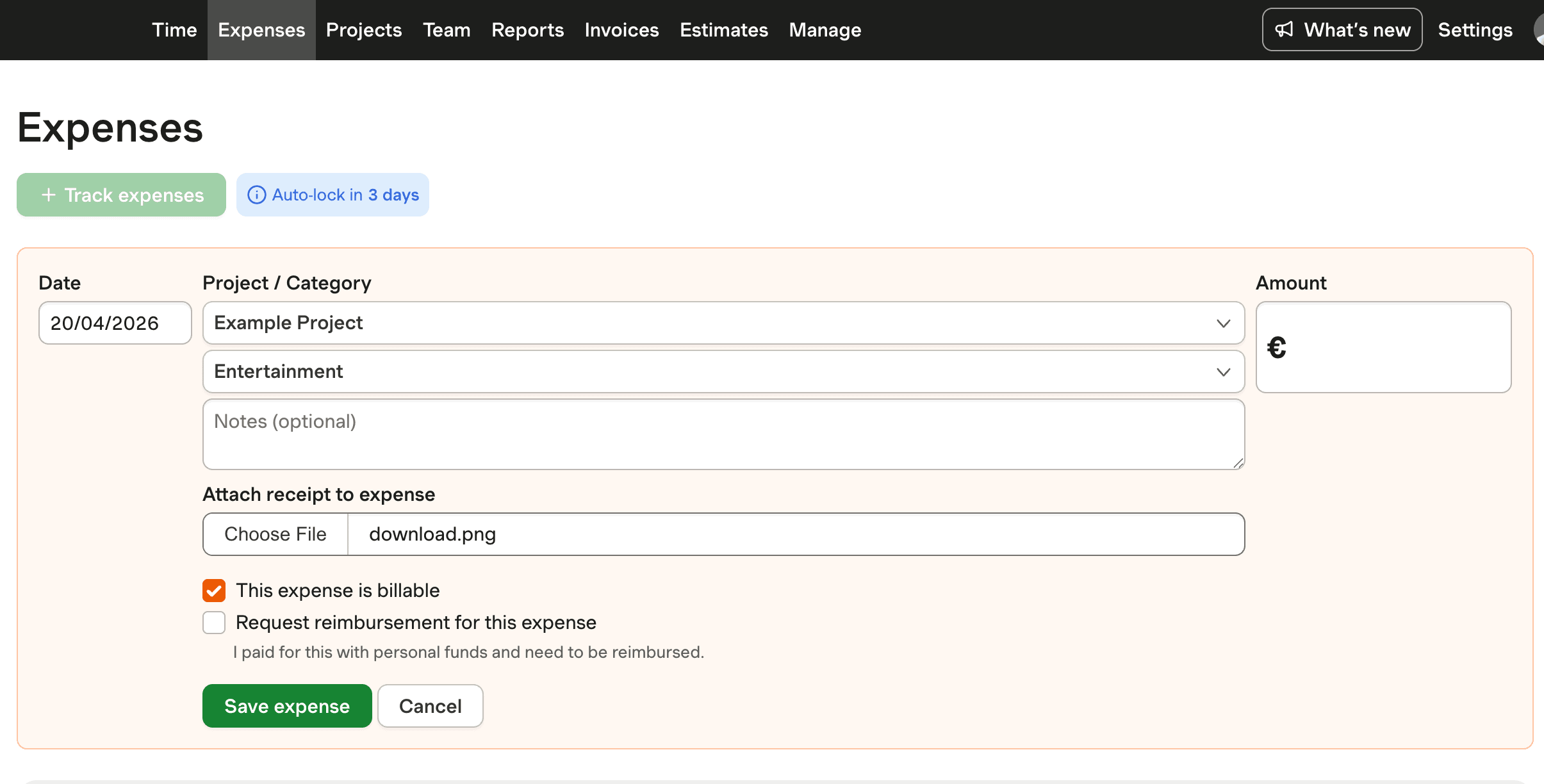
Harvest provides a project-based expense tracking solution, allowing teams to manage expenses and invoice clients efficiently.

Harvest SaaS expense tracker interface showing project expense categories.

Saas Expense Tracker FAQs

  • A SaaS expense tracker is a software tool that helps businesses manage and optimize their spending on Software as a Service (SaaS) applications. It provides visibility into subscription costs and usage patterns, assisting in reducing unnecessary expenses.

  • A SaaS expense tracker can help your business by providing insights into your software spending, identifying unused or redundant applications, and enabling better budget allocation. This can lead to significant cost savings and more efficient use of resources.

  • Manual expense management is often challenging due to its time-consuming nature and proneness to errors. Managing expenses manually can lead to inefficiencies and inaccuracies, especially when dealing with multiple SaaS subscriptions.

  • Harvest allows businesses to track expenses by project, providing detailed reports that help in financial oversight. This organized approach ensures accurate record-keeping and efficient expense management.

  • Harvest allows manual entry and categorization of expenses by project but does not automate subscription cost tracking. It focuses on providing detailed expense reports to assist in financial management.

  • Ensuring compliance involves maintaining accurate records and adhering to financial regulations. Harvest assists by providing a reliable system for recording and categorizing expenses, essential for audits and compliance checks.

  • To optimize SaaS expenses, conduct regular audits, centralize subscription management, eliminate underused tools, and negotiate terms before renewals. Use tools like Harvest for organized expense tracking and detailed reporting.

  • It's beneficial to review your SaaS expenses regularly, ideally on a quarterly basis. This helps in identifying potential savings, renegotiating terms, and ensuring that your spending aligns with business objectives.