
Harvest
Expenses
Sign up

1099 Expense Tracker

Harvest simplifies 1099 expense tracking by allowing freelancers to categorize project-specific expenses, ensuring accurate client billing and tax preparation.

EXPENSE REPORT DRAFT

Drop your receipts here or click to upload

Images and PDFs (max 10 MB each)

Date
Category
Merchant
Description
Amount
Total
$0.00

Customise report

Appearance

Show report title

Report settings

The Growing Need for 1099 Expense Tracking

As the number of independent workers in the U.S. reaches 72.9 million, the need for effective 1099 expense tracking has become more critical than ever. By 2027, freelancers are expected to make up over 50% of the U.S. workforce, underscoring the importance of efficient expense management tools. Proper tracking can help freelancers save significantly on taxes, with potential deductions ranging from $5,000 to $15,000, translating to tax savings of $1,250 to $5,250 annually. These savings emphasize the importance of meticulous expense categorization and documentation.

The increase in the 1099 reporting threshold to $2,000 for tax year 2026 will offer some relief to small businesses, but accurate record-keeping remains essential to avoid penalties. With many freelancers integrating deeply into businesses, having an organized system for managing expenses and contractor payments is crucial for both compliance and financial health.
Why Accurate Expense Categorization Matters

Accurate expense categorization is vital for freelancers to reduce taxable income and avoid IRS penalties. Categories like mileage, office supplies, and software must be clearly defined and regularly updated to ensure compliance. Accurate record-keeping can transform the daunting annual 1099 filing process into a straightforward task, potentially taking only 10 minutes with proper monthly bookkeeping.

Harvest facilitates this process by allowing users to categorize expenses by project and category, ensuring accurate client billing and simplifying tax preparation. This capability is particularly beneficial for industries like construction, where managing irregular income and complex tax responsibilities are common challenges. By maintaining clear distinctions in expense types and ensuring proper documentation, freelancers can avoid common IRS audit triggers.

Implementing an Effective Expense Tracking System

To effectively manage 1099 expenses, implementing a structured tracking system is essential. Start by understanding all deductible expenses, such as travel, office supplies, and professional services. Separating business and personal finances by using a dedicated business account simplifies tracking and reconciliation.

  1. Choose a tracking method that fits your workflow, whether a spreadsheet or a dedicated application.
  2. Regularly digitize and categorize receipts to maintain organized records.
  3. Generate tax-ready reports to streamline tax filing.

While Harvest excels at project-specific expense categorization, it supports uploading receipt images but requires manual entry of details. This ensures that freelancers have a clear, organized view of their expenses, which is crucial for accurate reporting and compliance.

Avoiding Common Mistakes in Expense Tracking

Freelancers often make errors in expense tracking that can lead to missed deductions or IRS penalties. Not tracking every expense, mixing personal and business finances, and poor recordkeeping are common pitfalls. Regularly digitizing receipts and maintaining separate accounts can help mitigate these issues.

Additionally, understanding tax deadlines and using the correct forms is essential. For instance, using the correct 1099 form—such as 1099-NEC for non-employee compensation—can prevent costly errors. Harvest assists by providing detailed expense reports that are ready for tax filing, although users must remain proactive in ensuring that all expenses are entered accurately.

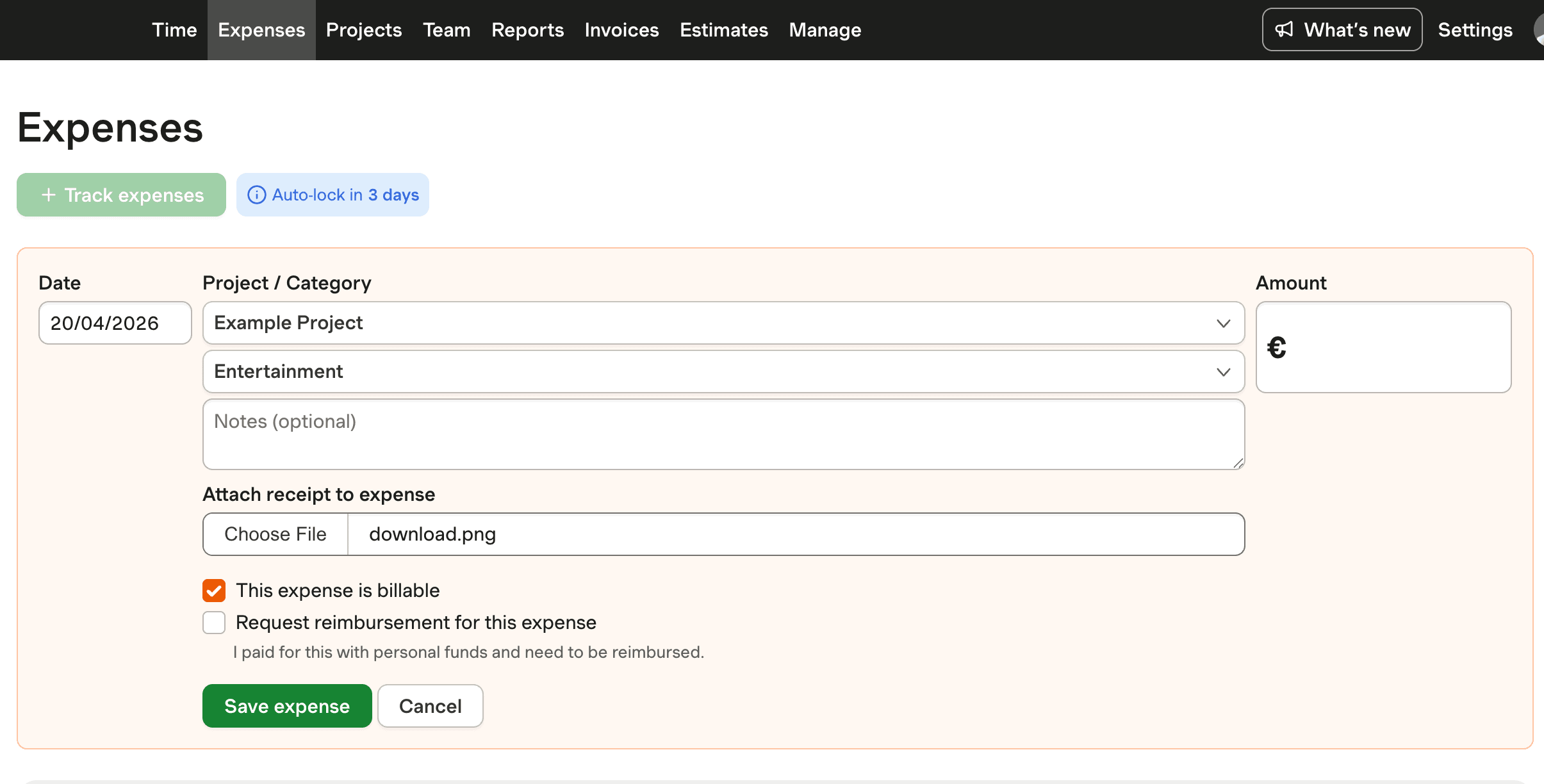
1099 Expense Tracking with Harvest

Harvest offers a clean interface for tracking project-specific expenses, helping freelancers manage 1099 costs efficiently.

Screenshot of Harvest's 1099 expense tracking interface

1099 Expense Tracker FAQs

  • Freelancers can track 1099 expenses by maintaining organized records of all business-related costs. This includes using dedicated tools or spreadsheets to categorize and document expenses regularly, ensuring accurate tax reporting and maximizing deductions.

  • Using an expense tracker helps freelancers accurately categorize expenses, simplify tax preparation, and ensure compliance with IRS regulations. This can lead to significant tax savings, often ranging from $1,250 to $5,250 annually.

  • Yes, Harvest can help by allowing freelancers to categorize expenses by project and category, ensuring accurate client billing and simplifying tax preparation. While it doesn't automate receipt scanning, it supports manual entry for detailed expense tracking.

  • Common mistakes include not tracking every expense, mixing personal and business finances, and failing to meet tax deadlines. To avoid these, freelancers should use dedicated tracking systems, maintain separate accounts, and regularly update records.

  • Yes, separating business and personal finances is essential for accurate tracking and compliance. Using dedicated business accounts simplifies expense categorization and prevents errors during tax filing.

  • Harvest's expense tracking can improve tax filing by providing organized, project-specific expense categorization. This helps ensure accurate reporting and maximizes tax deductions, making the filing process more efficient.

  • Look for features like project-specific expense categorization, receipt storage, and detailed reporting capabilities. These features ensure accurate tracking, compliance, and ease of tax preparation.