Harvest
Invoices
Sign up

Estimate Template for Greece

Harvest provides flexible estimate tools that can be customized to include VAT and currency settings, making it adaptable for businesses operating in Greece.

INVOICE DRAFT

Add your logo here
Item type
Description
Quantity
Unit price
Tax
Amount
Subtotal
$0.00
Discount
$0.00
Amount Due
$0.00
Get paid via:
Credit card / Debit card
ACH
Wire transfer

Customise invoice

Appearance

Add a logo
Show invoice title

Invoice settings

Tax Add up to 2 tax rates
%
Discount Apply a discount percentage
%

Essential Features of an Estimate Template for Greece

A compliant estimate template for Greece must integrate specific legal and financial requirements to ensure accuracy and avoid discrepancies. Firstly, it needs to adhere to Greek tax regulations, particularly concerning Value Added Tax (VAT). Greece operates with a standard VAT rate of 24%, alongside reduced rates of 13% and 6% for certain goods and services, and a 0% rate for specific items like exports. Some Aegean islands (Leros, Lesbos, Kos, Samos, Chios) even benefit from a 30% reduction on these rates. Your template should clearly itemize the VAT rate applied to each product or service and display the total VAT amount in Euros. For currency formatting, while the Euro symbol (€) is common in general use, formal and legal documents often require the ISO code "EUR" followed by the amount, typically formatted with a comma as the decimal separator and a period for thousands (e.g., 1.234,56 EUR in many European contexts, though in English-language documents, 1,234.56 EUR is also common).
Customizing Your Estimate Template for Greek Business Needs

Tailoring your estimate template to Greek business practices enhances its usability and ensures full compliance. Beyond standard fields, consider adding custom fields for local requirements. Essential information includes your company's full name, address, and Greek VAT registration number (AFM). Similarly, the client's full name and address are mandatory. Each estimate needs a unique, sequential number and the date of issue. A detailed description of the goods or services, including quantities and unit prices, is also critical. Incorporating legal disclaimers is a smart move, even if not strictly mandated for estimates. These should clearly state that the document is an estimate, not a final invoice, and is valid for a specific period (e.g., 30 days). Also, include a clause that the final cost may change if project requirements evolve.

Common Pitfalls to Avoid When Creating Estimates in Greece

When preparing estimates for the Greek market, several common errors can lead to complications. A significant pitfall is making mistakes in VAT inclusion. Incorrectly applying the standard 24% rate when a reduced rate (13% or 6%) applies, or vice-versa, can result in incorrect pricing and potential tax issues. Always double-check the applicable VAT rate for each item. Another common error is errors in currency formatting. Inconsistent use of decimal and thousands separators, or incorrect placement of the Euro symbol or ISO code, can cause confusion for clients. Ensure consistent formatting, typically using a comma for decimals and a period for thousands in Greece, or following the EUR 1,234.56 format for English documents. Finally, the omission of legal disclaimers can be problematic. Without clear statements that the estimate is non-binding, has a validity period, and is subject to change, you risk client disputes if costs or timelines shift. Always include clear payment terms and conditions.

See Your Greek Estimate Template in Action

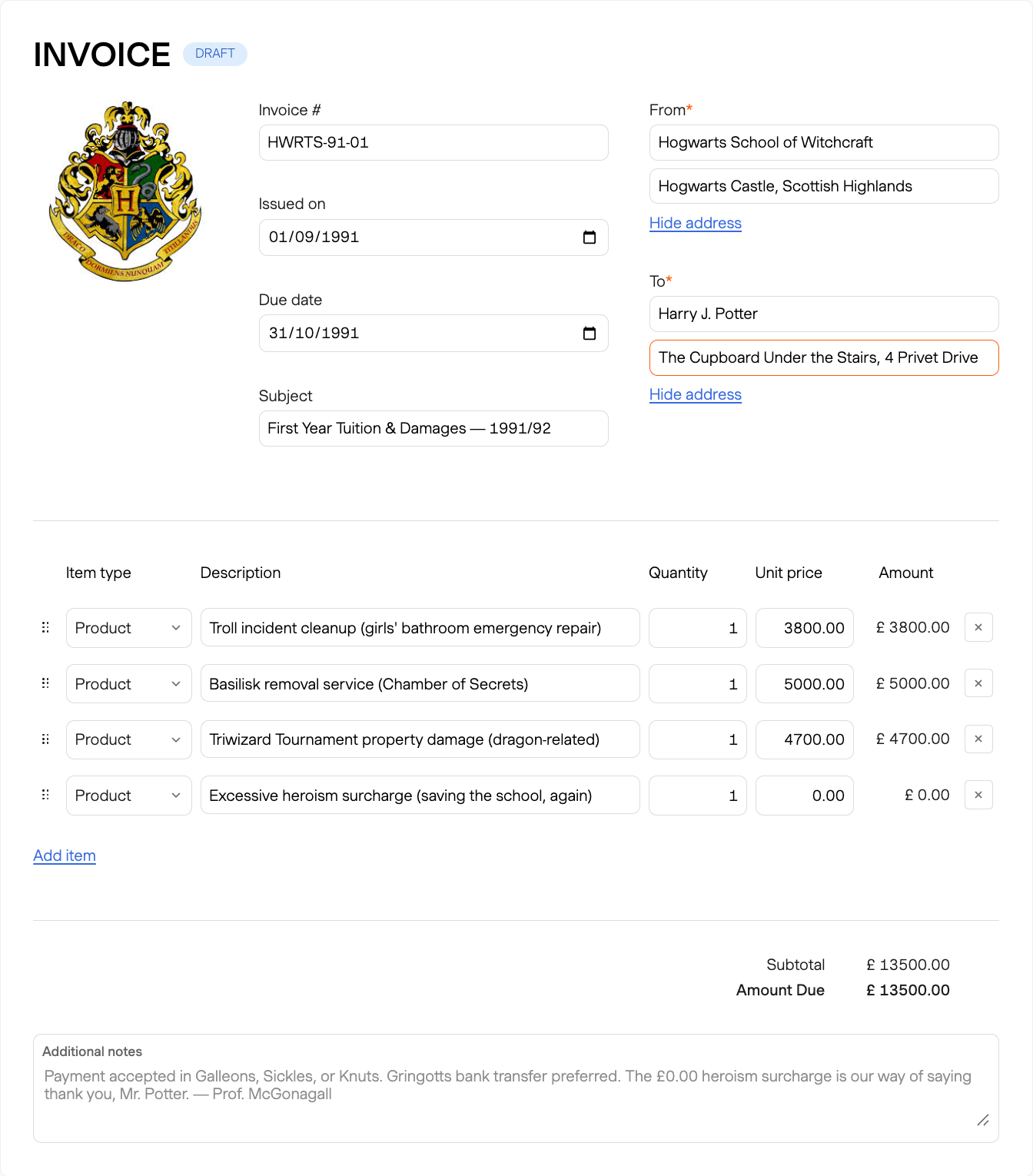
Preview how your estimate will include Greek VAT rates, Euro currency formatting, and local compliance details — all ready for your Greek clients.

Estimate Template for Greece FAQs

  • Harvest allows you to include VAT details, such as a VAT number, in your estimates by configuring your account settings.

  • In Greece, estimates should include the company's name, address, and VAT number, as well as the client's details. A unique estimate number and issue date are required. The estimates should itemize goods or services with descriptions and prices, and include legal disclaimers indicating the non-binding nature and validity period of the estimate.

  • Harvest allows you to import clients and projects using CSV files, making it easier to transfer existing data into the platform. This feature streamlines the onboarding process for new users.
  • Generally, estimate templates do not automatically adjust for currency fluctuations. Manual updates are often necessary to reflect current exchange rates.

  • Harvest supports setting the Euro as the currency for estimates, ensuring accurate currency formatting.