Harvest
Invoices
Sign up

Invoice Software for Oil and Gas

Harvest provides straightforward invoicing solutions with seamless integration to popular accounting software, ideal for the oil and gas industry seeking efficiency and compliance.

INVOICE DRAFT

Add your logo here
Item type
Description
Quantity
Unit price
Tax
Amount
Subtotal
$0.00
Discount
$0.00
Amount Due
$0.00
Get paid via:
Credit card / Debit card
ACH
Wire transfer

Customise invoice

Appearance

Add a logo
Show invoice title

Invoice settings

Tax Add up to 2 tax rates
%
Discount Apply a discount percentage
%

Essential Features for Oil and Gas Invoicing Software

Choosing invoice software for oil and gas operations requires focusing on capabilities that address the industry's unique financial complexities. Essential features include robust Joint Interest Billing (JIB), which is critical for allocating shared operational costs among multiple stakeholders in joint ventures based on ownership percentages. This ensures accurate cost distribution for exploration, drilling, and production expenses, maintaining transparency and accountability. Another vital feature is automated compliance tracking, which helps navigate the vast and evolving regulatory landscape, including federal, state, and local environmental, safety, and financial regulations from agencies like EPA, OSHA, PHMSA, and FERC. Automation reduces manual effort, minimizes errors, and helps avoid costly fines or operational disruptions from non-compliance. Finally, seamless integration with ERP systems is paramount to eliminate data silos, provide real-time visibility across finance, procurement, and field operations, and streamline workflows for greater efficiency.
Selection Criteria for Choosing the Right Software

When evaluating invoicing software, prioritize solutions that enhance operational efficiency and ensure compliance. Look for real-time invoice approval capabilities, which significantly reduce manual data entry and accelerate approval cycles, potentially leading to earlier payment discounts. This allows supervisors to quickly confirm invoices match actual services, improving accuracy and cash flow. Detailed AFE (Authority for Expenditure) reporting is another critical criterion. An AFE outlines estimated costs and the scope of proposed operations, such as drilling a new well or major repairs, and includes project descriptions, itemized estimated costs, working interest shares, and proposed timelines. Software should provide comprehensive AFE tracking to manage risk and capital effectively. Lastly, the software must support the management of complex billing structures, accommodating multiple line items, varying pricing models, tiered pricing, usage-based charges, and the ability to handle provisional and final invoicing common in the industry.

Avoiding Common Pitfalls in Oil and Gas Invoicing

Navigating oil and gas invoicing requires vigilance to avoid common pitfalls that can lead to significant financial and operational setbacks. A major challenge involves compliance issues, where failures to meet regulatory standards can result in substantial fines, legal action, and reputational damage. This includes overlooking specific clauses in contracts, missing local mandates (e.g., environmental, ESG disclosures), or failing to track obligations across various documents. Integration challenges are also prevalent, particularly when dealing with legacy systems that often use proprietary protocols and create fragmented data silos. This can lead to manual reconciliations, data inconsistencies, and a lack of real-time visibility, hindering decision-making. Finally, handling unique tax regulations is complex due to federal, state, local, and international rules, many of which are industry-specific. These include severance taxes, ad valorem taxes, and specific provisions for intangible drilling costs or bonus depreciation. The global minimum tax (e.g., OECD Pillar Two's 15% effective tax rate) also adds layers of complexity for multinational corporations.

See Your Oil and Gas Invoice Template in Action

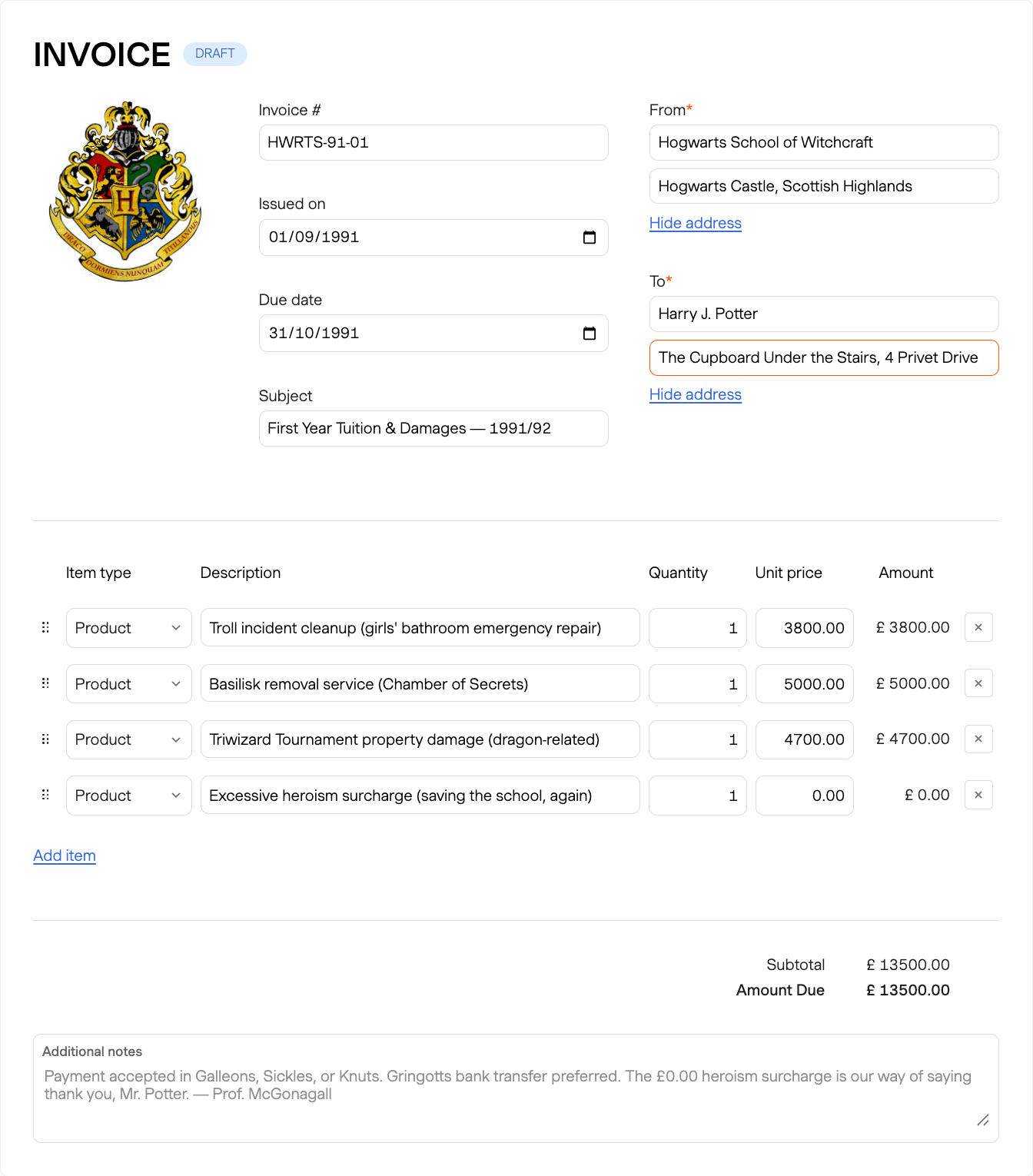
Preview how your invoice will look with joint interest billing, automated compliance tracking, and integration with ERP systems — ready for the oil and gas industry.

Invoice Software for Oil and Gas FAQs

  • Compliance features necessary for oil and gas invoicing software include automated tracking of regulatory requirements, integration with compliance management systems, and real-time updates on changes in laws and regulations. This ensures that the invoicing process adheres to industry standards and legal obligations, reducing the risk of fines and operational disruptions.

  • Yes, invoicing software can handle complex billing structures by supporting multiple line items, tiered pricing models, and usage-based charges. It can manage provisional and final invoicing and accommodate various stakeholders' needs, ensuring accurate billing and cost distribution.

  • You can pull up the invoice history and related time entries to clarify any discrepancies. Harvest keeps a record of all tracked time tied to each invoice.
  • Invoicing software may face limitations with unique tax regulations due to the complexity and variability of tax laws across different jurisdictions. The software might not automatically update with the latest tax rules, requiring manual input or updates to ensure compliance with specific industry-related taxes such as severance or ad valorem taxes.

  • Integration with ERP systems enhances oil and gas invoicing processes by providing real-time data synchronization across financial and operational functions. This eliminates data silos, improves visibility into cash flow, and streamlines workflows, leading to more efficient invoicing and financial management.