Harvest
Invoices
Sign up

Invoice Template for Software Developers

Harvest provides flexible invoicing solutions tailored to the needs of software developers, ensuring comprehensive billing for all project aspects.

INVOICE DRAFT

Add your logo here
Item type
Description
Quantity
Unit price
Tax
Amount
Subtotal
$0.00
Discount
$0.00
Amount Due
$0.00
Get paid via:
Credit card / Debit card
ACH
Wire transfer

Customise invoice

Appearance

Add a logo
Show invoice title

Invoice settings

Tax Add up to 2 tax rates
%
Discount Apply a discount percentage
%

Key Features of an Effective Software Developer Invoice Template

An effective software developer invoice template should comprehensively detail all aspects of your work, ensuring clarity for your clients. Look for templates that allow for granular descriptions of development tasks, moving beyond generic "coding" to specify "backend API development for user authentication" or "frontend UI implementation for dashboard analytics." The template must support billing for different project phases, such as discovery, design, development sprints, and deployment, allowing you to itemize costs associated with each stage. Crucially, it should facilitate including retainer agreements, clearly showing the initial retainer amount, services covered, and the remaining balance after each billing cycle. Finally, ensure the template provides dedicated sections for itemizing software testing and debugging costs, distinguishing these from initial development efforts.
Customization Tips for Your Invoice Template

To tailor your invoice template effectively, focus on reflecting the unique value and structure of your software development services.

  1. Specify hourly rates for different development work: Don't just use one rate. Differentiate between a senior developer's rate for architectural design (e.g., $150/hour) and a junior developer's rate for routine bug fixes (e.g., $75/hour).
  2. Track project milestones and deliverables: Clearly link payments to specific, completed deliverables. For instance, "Milestone 1: Database Schema Finalized and Implemented" with an associated payment amount, rather than just a date.
  3. Incorporate software licensing fees: Create a distinct line item for any third-party software licenses, APIs, or tools purchased on behalf of the client, ensuring transparency and accurate pass-through costs.

Custom fields for project codes or client-specific purchase order numbers can also streamline your accounting processes.

Common Pitfalls in Software Development Invoicing

Avoiding common mistakes in software development invoicing ensures professional interactions and prompt payments. A significant pitfall is avoiding vague task descriptions; instead of "website work," detail "Implemented responsive navigation bar with JavaScript animations." This clarity prevents client queries and disputes. Another common issue is failing to ensure accuracy in retainer and licensing fee billing. Always double-check the drawdown from retainers and verify that all licensing costs are correctly itemized and supported by documentation. Furthermore, maintaining clarity in milestone tracking is essential; ambiguity around what constitutes a completed milestone can delay payments. Define milestones precisely in your contract and reference them directly on the invoice. Inconsistent formatting or missing payment terms can also undermine professionalism and lead to delays.

See Your Software Developer Invoice Template in Action

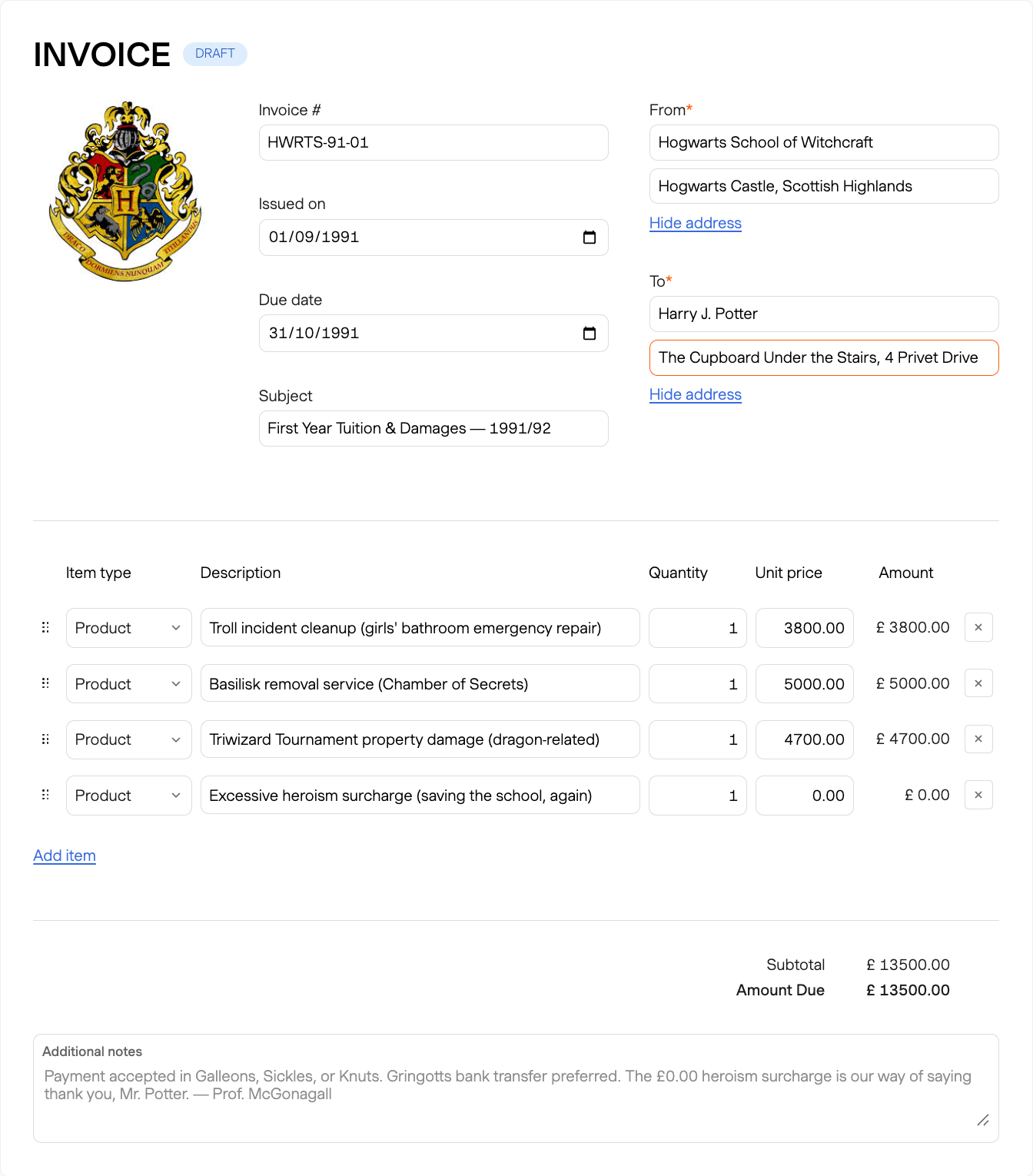
Preview how your template will organize detailed task descriptions, project phases, and software licensing fees for comprehensive billing.

Invoice Template for Software Developers FAQs

  • Harvest allows you to include detailed descriptions of software development tasks by displaying time entry notes on your invoice line items.

  • Best practices for invoicing in software development include providing clear and detailed descriptions of work completed, itemizing all costs, and ensuring transparency with clients about project phases and associated billing. Regularly updating invoices to reflect the current state of the project can also help maintain clarity and client trust.

  • Harvest? Harvest does not impose strict storage limits for invoices and other data, allowing you to keep records as long as your account is active. However, it's good practice to manage and archive older data periodically.
  • Harvest facilitates tracking project milestones and deliverables through invoicing by allowing you to invoice upon completion of project phases.

  • Invoice templates can sometimes lack the flexibility required for highly customized projects, as they may not automatically adapt to complex billing structures. Additionally, they may require manual updates to reflect changes in project scope or client requirements, which can be time-consuming.