Harvest
Invoices
Sign up

Invoice Template for Law Firms

Harvest offers flexible invoicing options tailored to law firms, ensuring accurate billing with detailed invoices that include case numbers, billable hours, and more.

INVOICE DRAFT

Add your logo here
Item type
Description
Quantity
Unit price
Tax
Amount
Subtotal
$0.00
Discount
$0.00
Amount Due
$0.00
Get paid via:
Credit card / Debit card
ACH
Wire transfer

Customise invoice

Appearance

Add a logo
Show invoice title

Invoice settings

Tax Add up to 2 tax rates
%
Discount Apply a discount percentage
%

Key Features of a Law Firm Invoice Template

An effective law firm invoice template must support detailed, compliant billing specific to legal services. Essential features include dedicated fields for case or matter numbers, allowing clients to easily track expenses against specific legal matters. Templates should also provide clear line items for retainer fees, distinguishing initial payments from earned fees and ensuring proper accounting. Robust templates facilitate accurate tracking of billable hours, often integrating fields for attorney rates, time spent, and activity descriptions, which is crucial for transparency. Furthermore, compliance with legal billing standards, such as those governing trust accounts (e.g., IOLTA rules in the US), is paramount, requiring templates to clearly separate client funds from operating funds.
Customizing Your Invoice Template

Tailoring your invoice template is crucial for reflecting your firm's unique identity and operational needs across various practice areas. You should adjust the template to suit different law practices, whether you specialize in litigation, corporate law, or family law, by modifying service descriptions and billing structures. Incorporating firm-specific details like your logo, contact information, and branding elements ensures a professional and consistent client experience. Critically, ensure the template's compatibility with your existing legal practice management software or accounting systems. This integration prevents manual data entry errors and streamlines your billing workflow, often requiring templates that support data export or direct input.

Downloading and Integrating Invoice Templates

Acquiring and implementing a suitable invoice template involves selecting the right format and ensuring seamless integration with your current systems. Templates are commonly available in various formats, including Microsoft Word (.docx), Excel (.xlsx), and PDF, with some cloud-based solutions offering direct online editing. To integrate, first, choose a template format compatible with your legal case management software or accounting platform. The typical steps to download and implement involve: 1) selecting your preferred template, 2) downloading the file, 3) customizing it with your firm's details, and 4) testing it with your existing software by generating a sample invoice to confirm data flow and accuracy.

See Your Law Firm Invoice Template in Action

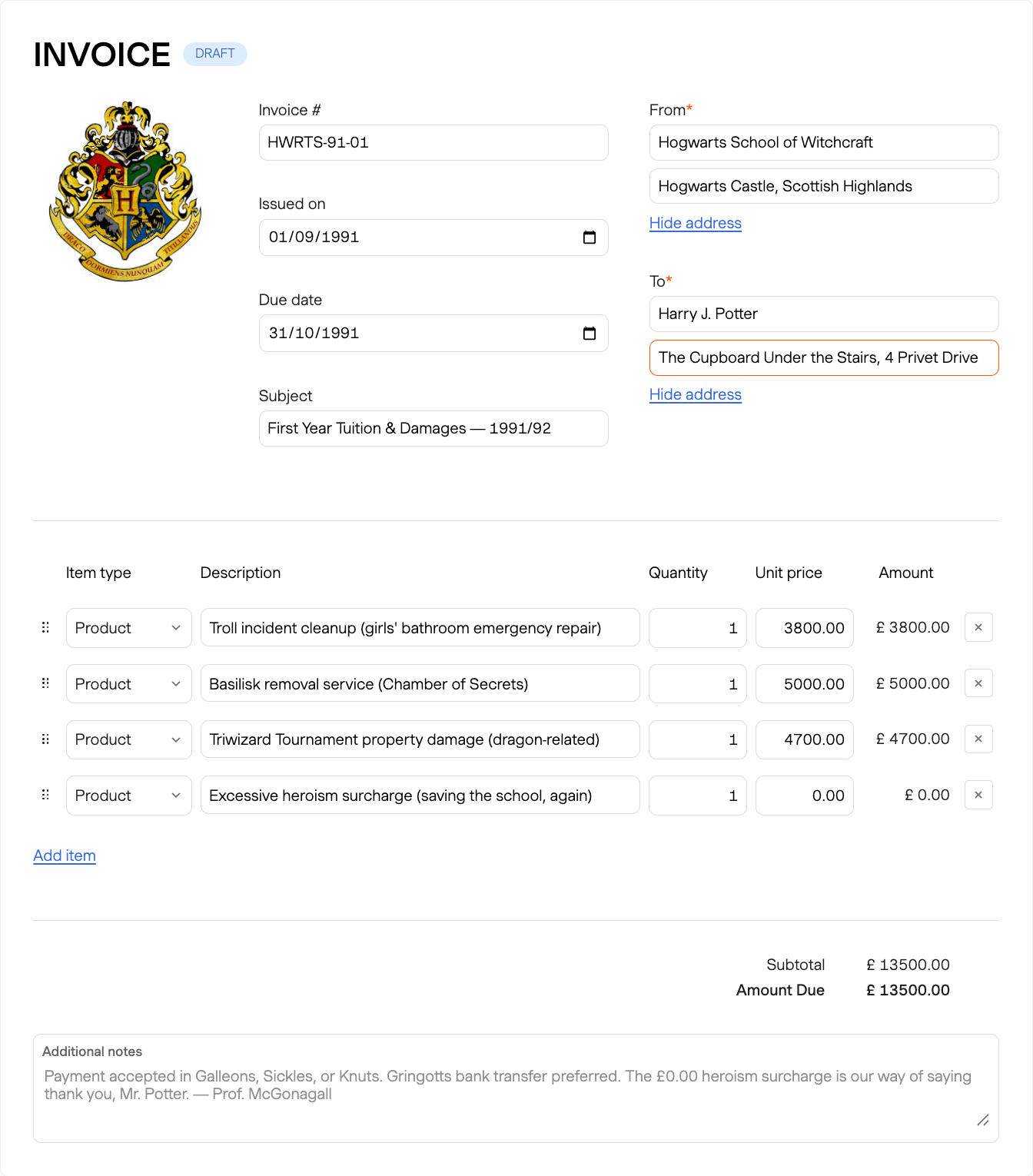
Preview how your invoice will appear with fields for case numbers, retainer fees, and compliance with legal billing standards — ready to use for your law practice.

Invoice Template for Law Firms FAQs

  • Harvest allows you to track billable hours with detailed descriptions of each task, which can be included in invoices, ensuring comprehensive billing for legal services.

  • Legal billing standards often require clear documentation of services rendered, compliance with trust account regulations, and proper separation of client funds from operating funds. Standards like the IOLTA in the US ensure that client funds are managed lawfully and transparently.

  • Yes, you can set different billing rates per client, project, or team member. This lets you bill accurately based on each client's specific agreement.
  • Harvest supports integration with various legal software systems, allowing you to create detailed invoices while ensuring compatibility with your existing platforms.

  • Invoice templates may lack customization for highly specialized legal services or complex billing arrangements. They might also require manual adjustments to integrate with unique software setups or to comply with specific jurisdictional billing standards.