Harvest
Invoices
Sign up

Invoice Template for Small Business Owners

Harvest provides flexible invoicing tools that help small business owners efficiently track time and expenses, ensuring accurate billing.

INVOICE DRAFT

Add your logo here
Item type
Description
Quantity
Unit price
Tax
Amount
Subtotal
$0.00
Discount
$0.00
Amount Due
$0.00
Get paid via:
Credit card / Debit card
ACH
Wire transfer

Customise invoice

Appearance

Add a logo
Show invoice title

Invoice settings

Tax Add up to 2 tax rates
%
Discount Apply a discount percentage
%

Key Features of Effective Invoice Templates

An effective invoice template ensures your business gets paid accurately and on time by providing clear, professional documentation. Key features include robust customizability, allowing you to tailor the template to your specific business needs, branding, and client requirements.

When evaluating templates, prioritize those that offer:

  • Detailed Service Descriptions: Ensure ample space to itemize services or products, including quantities, unit prices, and clear descriptions. This transparency helps clients understand exactly what they're paying for and reduces disputes. For service-based businesses, this might involve breaking down tasks or project phases.
  • Clear Payment Terms: Explicitly state the due date (e.g., "Net 30"), accepted payment methods, and any late payment penalties. This sets expectations and encourages prompt payment. Upfront communication about these terms is crucial.
  • Essential Business and Client Information: The template should prominently display your company's name, logo, address, contact details, and tax identification number, alongside the client's corresponding information. A unique, sequential invoice number and the issue date are also mandatory for tracking and compliance.

Templates should also support the inclusion of applicable taxes (like GST or VAT) and discounts, ensuring the total amount due is clearly calculated and displayed.
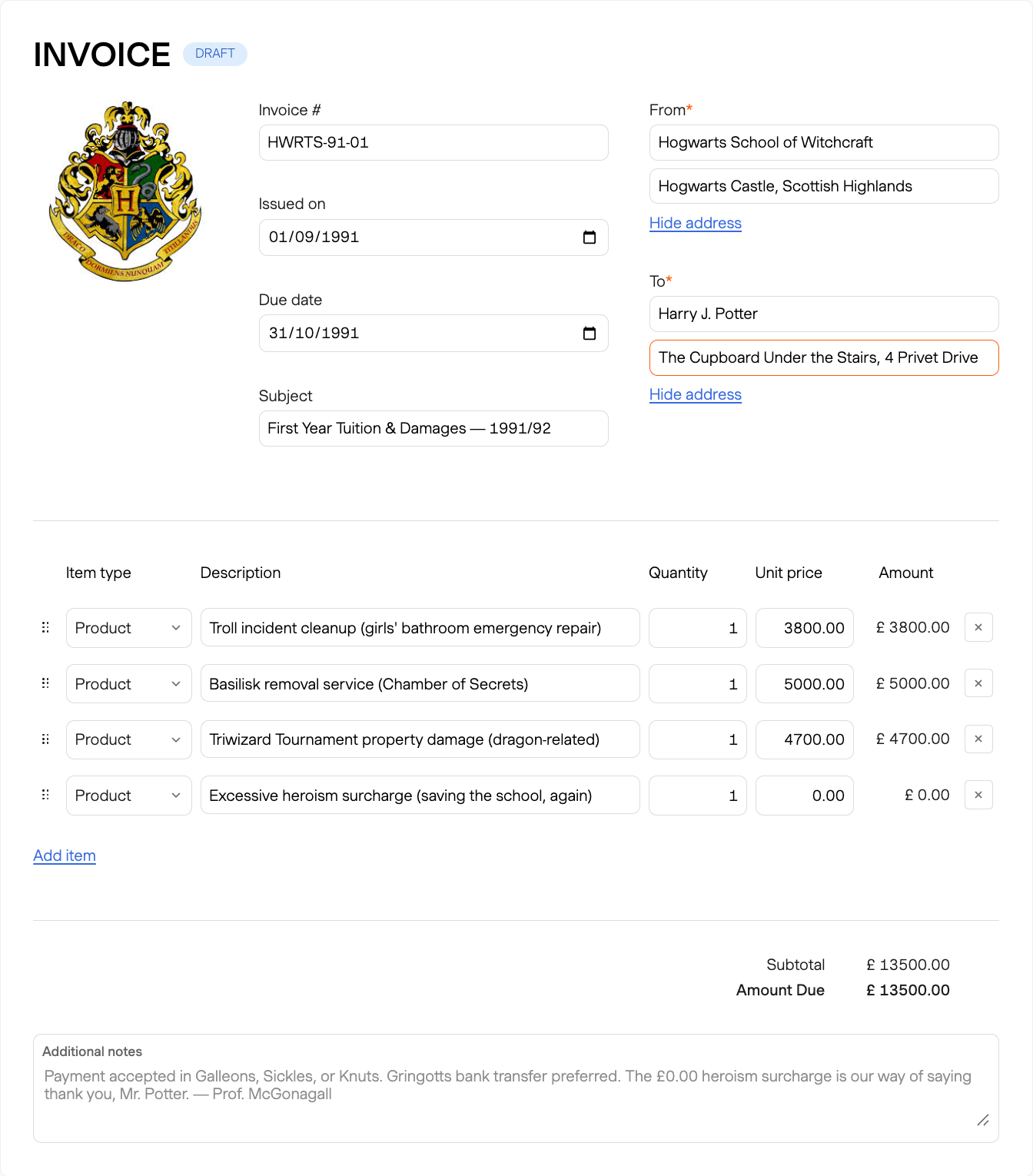
Choosing the Right Invoice Template for Your Industry

Selecting an invoice template tailored to your industry is crucial for compliance and efficiency, as different sectors have unique billing rules and required fields. Generic templates can often fall short, leading to incomplete invoices and payment delays.

Consider these points when making your selection:

  1. Industry-Specific Requirements: Look for templates designed for your sector. For instance, construction companies might need fields for materials, labor hours, and project phases, while consultants often require detailed time tracking. Freelancers benefit from templates that clearly break down hours logged, rates, and project fees.
  2. Common Pitfalls to Avoid:
    • Lack of Customization: Generic templates may not have specific fields your industry requires, causing confusion and delays.
    • Outdated Information: Ensure the template allows easy updating of your business and client details to maintain professionalism.
    • Poor Design: A cluttered or hard-to-read layout can lead to missed details and payment disputes. Prioritize clean layouts with clear visual hierarchy.
  3. Examples for Popular Sectors:
    • Freelancers/Consultants: Templates should emphasize itemized tasks, hours worked, and project fees, with clear sections for service descriptions.
    • Service Businesses (e.g., IT, Cleaning): Focus on templates that allow detailed descriptions of services provided, quantities, and rates.
    • Contractors: Templates with ample room to itemize the scope of work, materials, and labor are beneficial.

Always check for compatibility with your existing accounting software to streamline your billing process.

Streamlining Your Invoicing Process

Optimizing your invoicing process can significantly improve cash flow and reduce administrative burden, often by leveraging automation and best practices. Digital invoicing systems can reduce time spent on invoice generation by up to 30%.

To streamline your invoicing:

  1. Set Up Recurring Invoices: For clients with regular, predictable payments (e.g., monthly retainers, subscriptions, ongoing maintenance contracts), recurring invoices automate the billing schedule. This saves time and ensures consistent billing, with options for weekly, bi-weekly, monthly, quarterly, or annually. Ensure your recurring invoice template includes complete client information, detailed service descriptions, fixed pricing, and payment terms.
  2. Track Billable Hours and Expenses Accurately:
    • Time Tracking: Use dedicated time tracking tools to record billable hours in real-time, preventing forgotten entries and manual errors. Many tools allow you to categorize entries by project and client, and convert them directly into invoices. Law firms, for instance, often track time in six-minute (0.1 hour) increments.
    • Expense Tracking: Integrate expense tracking with your invoicing to ensure all reimbursable expenses are accurately captured and billed to clients. Mark expenses as either billable or non-billable for clear financial insights.
  3. Best Practices for Efficient Invoicing:
    • Invoice Promptly: Send invoices immediately upon completion of work or delivery of goods to avoid cash flow drag.
    • Clear Communication: Establish payment expectations and deadlines upfront with clients.
    • Digital Delivery: Utilize electronic invoicing (e.g., PDF via email) for swift delivery and record-keeping.
    • Automated Reminders: Set up automated payment reminders for clients before and on due dates to reduce late payments.
    • Organized Record-Keeping: Keep copies of all invoices and related payment records for at least 3-10 years, depending on local regulations, for tax compliance and dispute resolution.

Preview Your Small Business Invoice Template

See how your invoice can be customized with your business logo, detailed service descriptions, and payment terms tailored for small businesses.

Invoice Template for Small Business Owners FAQs

  • Harvest enables small businesses to track billable hours and expenses, making it easy to include them in invoices.
  • Industry-specific invoice templates ensure compliance with sector-specific billing rules and include all necessary fields, reducing the chance of errors and payment delays. They also reflect the professional standards and expectations of your industry, which can enhance client trust and satisfaction.
  • Harvest regularly updates its software to improve existing features and introduce new ones. While there’s no fixed schedule, users can expect updates that enhance usability and incorporate user feedback.
  • While invoice templates can streamline many aspects of billing, they cannot automate everything. Customization, client-specific details, and manual checks are often required to ensure accuracy and compliance. Automated systems can handle recurring invoices and reminders, but human oversight is essential for complex billing scenarios.
  • Harvest allows you to include detailed service descriptions and set payment terms directly on your invoices.