Harvest
Invoices
Sign up

Secure Invoice App

Harvest integrates with secure payment gateways like Stripe and PayPal, ensuring that user privacy is prioritized during transactions.

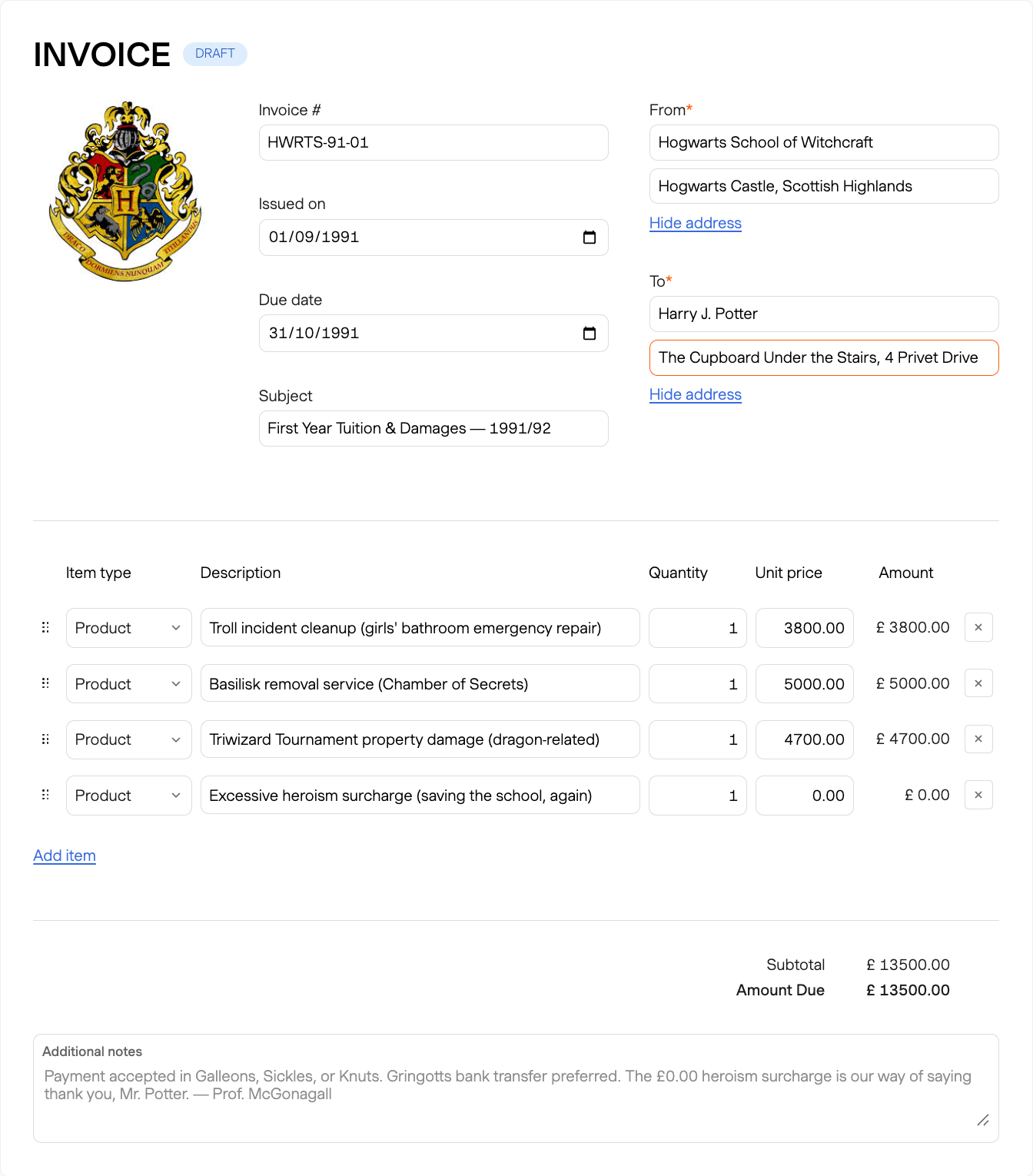
INVOICE DRAFT

Add your logo here
Item type
Description
Quantity
Unit price
Tax
Amount
Subtotal
$0.00
Discount
$0.00
Amount Due
$0.00
Get paid via:
Credit card / Debit card
ACH
Wire transfer

Customise invoice

Appearance

Add a logo
Show invoice title

Invoice settings

Tax Add up to 2 tax rates
%
Discount Apply a discount percentage
%

Key Security Features to Look for in a Secure Invoicing App

To ensure an invoicing app truly protects your financial data and client information, prioritize these essential security features. Look for robust two-factor authentication (2FA), which adds an extra layer of security beyond just a password, often requiring a code from your phone. Data encryption is non-negotiable; ensure the app encrypts data both in transit (when moving between your device and their servers) and at rest (when stored on their servers) using strong, industry-standard protocols like AES-256. Compliance with regulations such as GDPR (General Data Protection Regulation) is crucial, especially if you handle client data from the EU, indicating a commitment to user privacy. Finally, verify strong policies around user data confidentiality, ensuring your information isn't shared or accessed without explicit consent.
Common Pitfalls When Choosing a Secure Invoicing App

When selecting a secure invoicing app, users frequently make mistakes that can compromise data integrity and privacy. A significant pitfall is overlooking comprehensive data encryption; some apps might encrypt data in transit but neglect encryption at rest, leaving your sensitive information vulnerable on their servers. Another common error is ignoring compliance with relevant data protection regulations like GDPR, CCPA, or HIPAA, which can lead to hefty fines and reputational damage if your business operates in regulated sectors or regions. Lastly, many users neglect to thoroughly review user feedback and independent security audits related to the app's security posture. While marketing claims are important, real-world user experiences and expert assessments often reveal critical security gaps or a history of breaches.

How to Evaluate an Invoicing App's Privacy Measures

Evaluating an invoicing app's privacy measures requires a critical eye beyond marketing claims. Start by assessing their privacy policy thoroughly; it should clearly detail what data is collected, how it's used, who it's shared with, and for how long it's retained. Look for explicit commitments to not sell your data.

  1. Check for self-hosting options: For maximum control over your data, investigate if the app offers a self-hosting solution, allowing you to store all data on your own servers rather than a third-party cloud.
  2. Verify secure payment integrations: Ensure any integrated payment gateways are reputable and PCI DSS compliant, meaning they adhere to strict security standards for handling credit card information.
  3. Inquire about data residency: Understand where your data will be physically stored and processed, as this can have implications for legal jurisdiction and data protection laws.

These steps help verify an app's true commitment to privacy.

Explore a Secure Invoice App in Action

See how secure invoicing apps protect your data with features like encryption, 2FA, and GDPR compliance, offering peace of mind for your business.

Secure Invoice App FAQs

  • Harvest integrates with secure payment gateways like Stripe and PayPal, ensuring that user privacy is prioritized during transactions.
  • GDPR compliance is crucial for invoicing apps that handle data from EU citizens. It ensures that user data is processed legally, transparently, and securely, minimizing the risk of data breaches and legal repercussions.
  • Yes, Harvest syncs invoices with QuickBooks Online and Xero, so you don't need to re-enter invoice data in your accounting system.
  • While invoicing apps can implement robust security measures, no system can be entirely immune to data breaches. Risks can be mitigated but not eliminated, so continuous updates and security audits are essential.
  • Two-factor authentication enhances security by requiring two forms of verification before access is granted. This means even if a password is compromised, unauthorized access is prevented without a second authentication factor, such as a code sent to a mobile device.