
Independent Contractor Agreement Template in Korean

Navigating the complexities of independent contractor agreements in South Korea is crucial for compliance. Harvest helps contractors manage workflows, ensuring efficient time and expense tracking.

テンプレートから始める

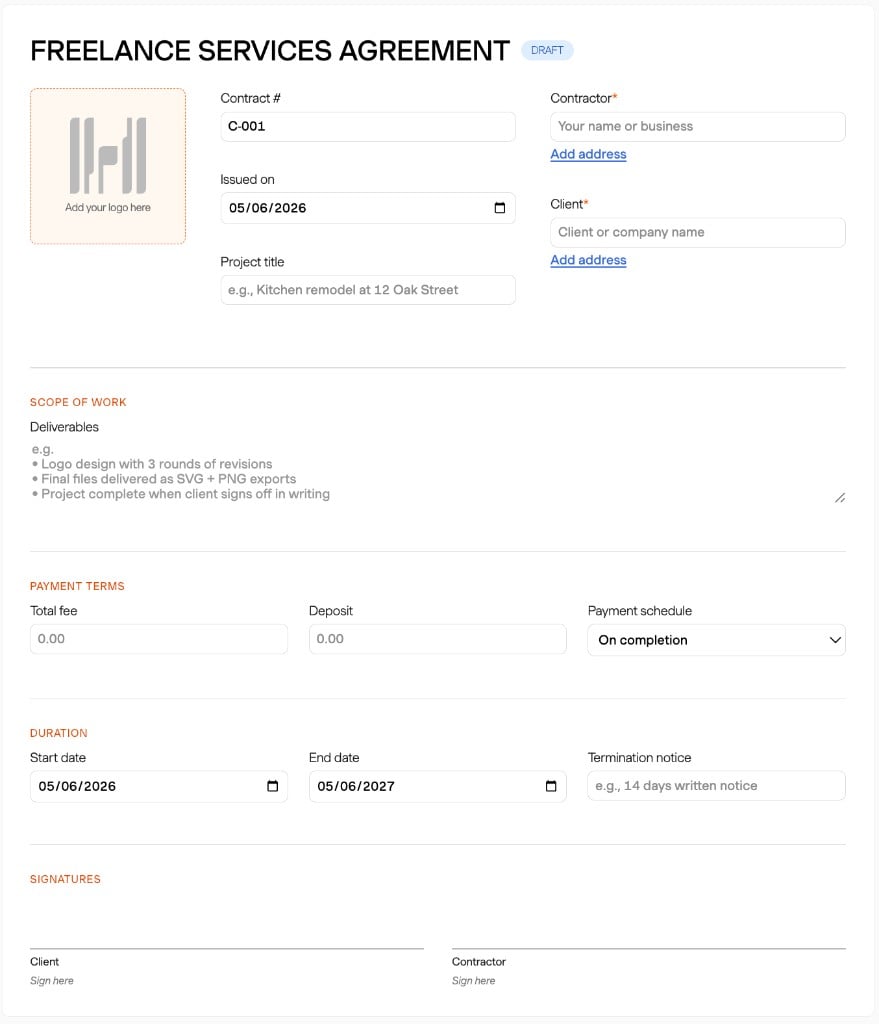
契約書 ドラフト

ここにロゴを追加

業務範囲

支払い条件

期間

署名

クライアント

ここに署名

契約者

ここに署名

支払い方法:
クレジットカード / デビットカード
ACH
電信送金

契約をカスタマイズ

外観

ロゴを追加
契約タイトルを表示

契約設定

支払い条件を含める 総料金、前金、スケジュール
契約解除条項を含める 契約を終了するために必要な通知
署名欄を含める 両当事者が下部に署名

Understanding Independent Contractor Agreements in South Korea

Independent contractor agreements in South Korea are essential for ensuring compliance with the country's legal framework. As the gig economy expands, with a 38.6% increase in gig workers over five years, having a well-drafted agreement is crucial. These agreements must clearly outline the contractor's status, scope of work, payment terms, and other key conditions. Compliance with the Korean Civil Code is necessary, as misclassifying workers can lead to significant legal and financial penalties. For instance, misclassification can result in fines, back payments, and tax audits.

When drafting an agreement, include clauses that specify the contractor's independent status, deliverables, payment schedules, and intellectual property rights. Additionally, confidentiality and non-compete clauses protect both parties' interests. It's important to review these agreements periodically to ensure they align with current legal requirements and accurately reflect the working relationship. Businesses are advised to maintain comprehensive documentation to support the classification of workers as independent contractors.

Legal Considerations for Independent Contractors in South Korea

In South Korea, distinguishing between an independent contractor and an employee is critical, as it impacts legal rights and obligations. Courts assess factors like control over work, integration into the business, and economic dependency to classify workers. Recent legal changes, effective May 1, 2026, presume anyone providing labor to a business is an employee unless proven otherwise, shifting the burden of proof to employers. This highlights the importance of accurately classifying workers to avoid penalties.

Contractors must understand their tax responsibilities, which include managing income tax and social security contributions. For example, the National Pension Service contributions will increase from 9% to 13% by 2033. Clients typically withhold 3.3% of payments as an advance on taxes. Legal experts recommend seeking professional guidance to navigate these complexities and mitigate misclassification risks, especially given the evolving labor frameworks.

Common Mistakes in Drafting Korean Contractor Agreements

Avoiding common pitfalls in drafting contractor agreements is crucial for compliance and maintaining a business's legal standing. A significant mistake is not clearly defining the contractor's independent status, which can lead to misclassification as an employee. Misclassification can result in administrative fines and back payments for unpaid wages and benefits. Additionally, providing company equipment or dictating work hours can blur the line between contractor and employee.

To avoid these issues, agreements should explicitly state that the contractor is not an employee and outline their autonomy in service delivery. Businesses should also avoid "command-and-control" structures, ensuring contractors have the freedom to manage their work and accept other clients. Regular audits of employment arrangements can help ensure compliance with current regulations. Maintaining thorough records and evidence of independent contractor status is vital in case of legal scrutiny.

The Role of Harvest in Managing Contractor Workflows

While Harvest does not provide legal templates for South Korean contractor agreements, it supports contractors in managing essential workflows. Harvest offers tools for tracking time, managing expenses, and invoicing, which are critical for independent contractors handling multiple projects. This can be particularly valuable as the number of gig workers in South Korea continues to rise, reaching 8.3 million in 2022.

Harvest helps contractors maintain accurate records of billable hours and expenses, which is vital for invoicing clients and managing personal income taxes. By providing visibility into project budgets and expenses, Harvest allows contractors to focus on their core work without worrying about administrative tasks. This makes it easier for contractors to comply with financial obligations, even if Harvest does not directly address legal requirements for contractor agreements.

Harvest for Contractor Agreements

See how Harvest supports contractors with time tracking, expense management, and invoicing, even if it doesn't provide legal templates.

Screenshot of Harvest interface for contractor agreement management.

Independent Contractor Agreement Template in Korean FAQs

  • 韓国の独立契約者契約には、契約者の地位、作業範囲、支払い条件、知的財産、機密保持、契約解除条件に関する条項が含まれるべきです。遵守を確保するために、韓国法を準拠法として明記することが重要です。

  • 分類は、作業の管理、経済的依存、ビジネスへの統合などの要因によって決まります。最近の法改正により、労働を提供する者は、証明されない限り従業員と見なされることが前提となり、明確な契約と遵守の必要性が強調されています。

  • 契約者は、自分の税金、つまり所得税や社会保険料を管理する必要があります。クライアントは通常、税金の前払いとして支払いの3.3%を差し引きます。国民年金の拠出金は2033年までに13%に増加する予定です。

  • 誤分類を避けるために、企業は契約者の独立した地位を契約書に明確に記載し、「コマンド・アンド・コントロール」構造を避けるべきです。法的基準に準拠するために、雇用契約の定期的な監査が推奨されます。

  • Harvestは、タイムトラッキング、経費管理、請求書作成のためのツールを提供することで独立契約者を支援します。このサポートにより、契約者は複数のプロジェクトを効率的に管理し、税務目的のために正確な記録を維持できます。

  • 韓国のギグワーカーの数は、5年間で38.6%増加しました。若い世代や60歳以上の人々がますます非正規雇用に従事しており、労働市場の広範な変化を反映しています。

  • 誤分類に対する罰則には、罰金、未払い賃金や福利厚生の遡及的支払い、税務監査の可能性が含まれます。企業は、明確な契約と分類基準の遵守を確保することで、これらの重大な法的および財政的影響を避ける必要があります。