
Harvest
Time Tracking
Sign up free

Billable Hours Tracker for Developers

Harvest is the billable hours tracker for developers, integrating seamlessly with tools like Jira and GitHub to enhance accuracy and boost revenue by up to 10%.

Try Harvest Free

How much revenue is your team leaving on the table?

Most agencies run at 55-60% utilization. Even a small improvement means significant revenue. See what closing the gap looks like for your team.

Number of people who track billable time
$
Blended rate across roles (junior, senior, lead)
55%
Percentage of total hours that are billable. Industry average is 55-60%.
75%
A realistic target for service businesses is 70-80%.
Monthly revenue gap $0
Revenue at current utilization $0/mo
Revenue at target utilization $0/mo
Extra billable hours needed per person/day 0h
Annual revenue opportunity $0

Start tracking team utilization

Walk through the entire flow below. Start a timer, check your reports, and create a real invoice — all in three clicks.

Go ahead — start tracking!

One click and you're timing. Try it right here: start a timer, add an entry, edit the details. This is exactly how it feels in Harvest.

  • One-click timer from browser, desktop & mobile
  • Works inside Jira, Asana, Trello, GitHub & 50+ tools
  • Duration or start/end — your call
  • Day, week & calendar views to stay on top of it all
  • Friendly reminders so no hour gets left behind
Acme Corp
Website Redesign
Homepage layout revisions
1:24:09
Content Strategy
Blog calendar planning
1:30:00
SEO Audit
Technical audit report
0:45:00
Brand Guidelines
Color system documentation
2:15:00
Logo Concepts
Initial sketches round 1
1:00:00

The Imperative of Billable Hour Tracking for Developers

Accurate billable hour tracking is vital for developers to ensure project profitability and enhance revenue generation. Inaccurate time tracking is a common issue, with 69% of employees not tracking time effectively due to inefficient systems. This can lead to a significant 10% increase in revenue when improved. For developers, precise time data not only enhances client transparency and trust but also improves project estimation and bidding accuracy. By distinguishing between billable and non-billable hours, developers can maintain financial health and optimize their workload.

Effective time tracking allows developers to categorize hours between coding, debugging, and meetings, ensuring a clear understanding of productivity and resource allocation. This categorization is crucial for maximizing billable hours and improving utilization rates, directly impacting a company's financial performance. With Harvest, developers can achieve these objectives through customizable billing rates and detailed reporting features.
Essential Features of a Developer-Friendly Time Tracker

For developers, a time tracker must offer features that align with their workflow and project needs. Automated time capture and flexible manual entry options are essential to accommodate the diverse tasks in software development. Developers require seamless integration with tools like Jira, GitHub, and Trello, ensuring a streamlined workflow without switching applications. Harvest meets these needs by integrating with popular project management tools to capture time entries efficiently.

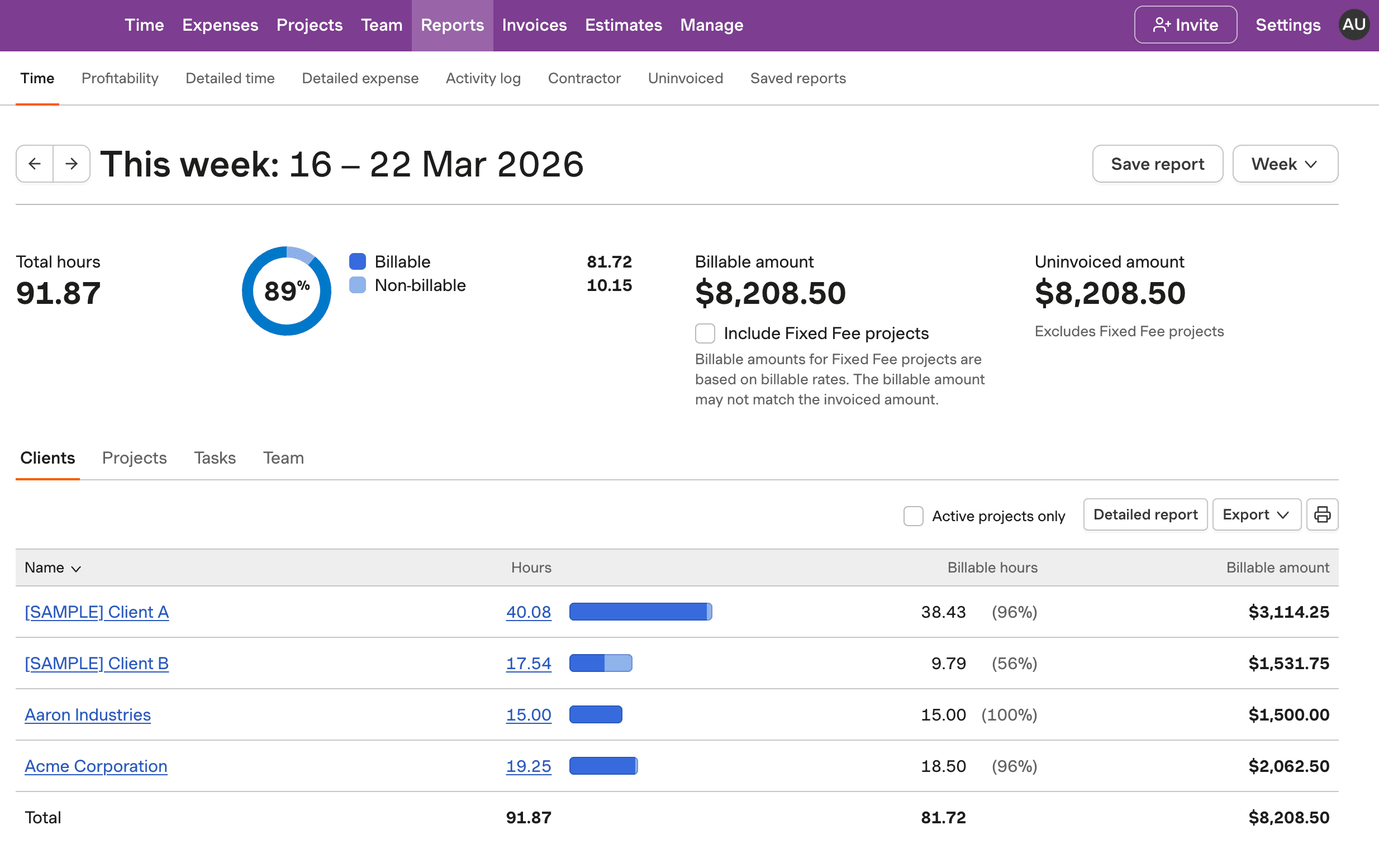
Robust reporting and analytics are crucial for insights into time allocation and productivity. Harvest provides customizable dashboards and reports that allow developers to analyze time spent versus project budgets, helping maintain profitability. Additionally, support for task categorization by project, client, and development phase is essential for accurate billing and invoicing. Cross-platform accessibility ensures developers can track time on any device, whether desktop, web, or mobile.

Integrating Time Tracking into the Development Workflow

Integrating time tracking into a development workflow can be seamless with the right strategies and tools. It's important to choose a solution like Harvest that minimizes disruption to developer routines. By leveraging integrations with existing tools like GitHub and Jira, Harvest synchronizes time entries with tasks automatically, reducing manual input. This automation fosters consistent time logging without burdening developers.

Best practices for categorizing tasks include breaking down activities into specific tasks, such as coding, debugging, and meetings. This granular approach helps identify inefficiencies and allocate time effectively. By encouraging daily logging and establishing consistent habits, teams can improve accuracy and accountability. Harvest supports these practices with features that allow for the differentiation of billable and non-billable tasks, enhancing productivity and project management.

Overcoming Challenges and Fostering a Culture of Trust

Time tracking can sometimes be perceived as micromanagement, but with tools like Harvest, it becomes a tool for empowerment and improvement. Communicating the benefits of time tracking, such as individual productivity and enhanced team planning, helps overcome resistance. Harvest's features, including detailed reporting and flexible billing rates, emphasize the positive impact on developer workflows.

Addressing concerns about tracking harder-to-categorize activities, such as learning or refactoring, is essential. Harvest allows for tracking these activities without penalizing developers, fostering a culture of trust. By using time data for improvement and resource allocation rather than punitive measures, teams can leverage time tracking as a strategic asset rather than a burden.

Track Billable Hours with Harvest

Explore Harvest's features for tracking billable hours, integrating with developer tools like Jira and GitHub for seamless project management.

Harvest dashboard showing billable hours tracking for developers

Billable Hours Tracker for Developers FAQs

  • Harvest is an excellent tool for tracking billable hours for developers, offering seamless integration with tools like Jira and GitHub. It provides detailed reporting and customizable billing rates to enhance productivity and revenue.

  • Harvest integrates with popular project management software such as Jira, GitHub, Asana, and Trello. This integration allows developers to track time directly within their existing workflows, streamlining the process.

  • Developers should look for features like automated time capture, integration with development tools, detailed reporting, and customizable billing rates. Harvest offers these features, ensuring a comprehensive tracking solution.

  • While free options are available, they often lack advanced features. Harvest offers a free 30-day trial with no credit card required, allowing developers to experience its full capabilities risk-free.

  • Using a tool like Harvest, developers can categorize billable hours by project, task, or client, ensuring accurate reporting and invoicing. This categorization helps in understanding time allocation and project profitability.

  • Time tracking provides historical data that helps in refining project estimates and sprint planning. With Harvest, developers can analyze past projects to create more accurate future estimates, leading to competitive bids.

  • Developers may face challenges like resistance to adoption and tracking complex tasks. Harvest addresses these issues with user-friendly features and integrations that minimize disruption and enhance accuracy.

  • Yes, Harvest can track non-billable hours, allowing developers to log time spent on internal tasks like meetings and research. This tracking helps optimize efficiency and prevent burnout.

  • Harvest helps avoid micromanagement by providing developers with autonomy through automated tracking features and detailed reporting. It emphasizes insights and empowerment over surveillance.