
Harvest
Time Tracking
Sign up free

Time Tracking Software for Software Companies

Harvest is the perfect time tracking solution for software companies, addressing inefficiencies that can lead to a 32% loss in work-time efficiency. With seamless integrations and detailed reporting, Harvest boosts productivity and profitability.

Try Harvest Free

How much revenue is your team leaving on the table?

Most agencies run at 55-60% utilization. Even a small improvement means significant revenue. See what closing the gap looks like for your team.

Number of people who track billable time
$
Blended rate across roles (junior, senior, lead)
55%
Percentage of total hours that are billable. Industry average is 55-60%.
75%
A realistic target for service businesses is 70-80%.
Monthly revenue gap $0
Revenue at current utilization $0/mo
Revenue at target utilization $0/mo
Extra billable hours needed per person/day 0h
Annual revenue opportunity $0

Start tracking team utilization

Walk through the entire flow below. Start a timer, check your reports, and create a real invoice — all in three clicks.

Go ahead — start tracking!

One click and you're timing. Try it right here: start a timer, add an entry, edit the details. This is exactly how it feels in Harvest.

  • One-click timer from browser, desktop & mobile
  • Works inside Jira, Asana, Trello, GitHub & 50+ tools
  • Duration or start/end — your call
  • Day, week & calendar views to stay on top of it all
  • Friendly reminders so no hour gets left behind
Acme Corp
Website Redesign
Homepage layout revisions
1:24:09
Content Strategy
Blog calendar planning
1:30:00
SEO Audit
Technical audit report
0:45:00
Brand Guidelines
Color system documentation
2:15:00
Logo Concepts
Initial sketches round 1
1:00:00

The Strategic Advantage of Time Tracking for Software Companies

For software companies, effective time tracking is more than just logging hours; it's a strategic imperative. With the global time tracking software market poised to grow from $6.1 billion in 2025 to $11.43 billion by 2030, driven by remote work and compliance needs, the stakes have never been higher. Yet, over 38% of U.S. employees still rely on outdated methods like paper timesheets, leading to inefficiencies and lost revenue opportunities. In contrast, companies using AI-enhanced time tracking tools report a 32% boost in work-time efficiency and a 50% reduction in administrative overhead.

Harvest addresses these challenges by offering software companies a comprehensive solution that goes beyond basic hour logging. Its one-click timers and manual entries allow for precise tracking of both billable and non-billable hours, crucial for maintaining project budgets. Harvest's detailed reporting capabilities provide insights into team productivity and project profitability, helping software companies identify cost overruns and scope creep before they impact margins. By implementing Harvest, businesses can potentially see a 61% increase in revenue through improved time management and accountability.
Essential Features of Time Tracking Software for Software Development

Software development teams require time tracking software that integrates smoothly with their existing workflows. Essential features include automated timers, manual time logs, task/project categorization, and the ability to track billable versus non-billable hours. These functionalities are crucial in managing project budgets and ensuring productivity. Harvest stands out by integrating with popular project management tools like Jira, Trello, and Slack, which are essential for teams using agile methodologies.

Harvest's support for tracking time against specific software development tasks or user stories further aligns with agile frameworks like Scrum and Kanban. This capability ensures that time tracking does not hinder flexibility or become a burden on developers. Additionally, Harvest's cross-platform accessibility ensures that teams can track time seamlessly across web, mobile, and desktop platforms, facilitating remote work and enhancing accountability.

Optimizing Project Management and Budgeting with Time Data

Accurate time tracking is crucial for effective project management and budgeting in software companies. By analyzing historical time data, companies can improve estimation accuracy and forecast project timelines. Harvest aids in this by providing real-time insights into project burn rates and budget consumption, allowing teams to proactively address potential overages. This proactive approach is essential, as companies often see a positive ROI from time tracking within just six months of implementation.

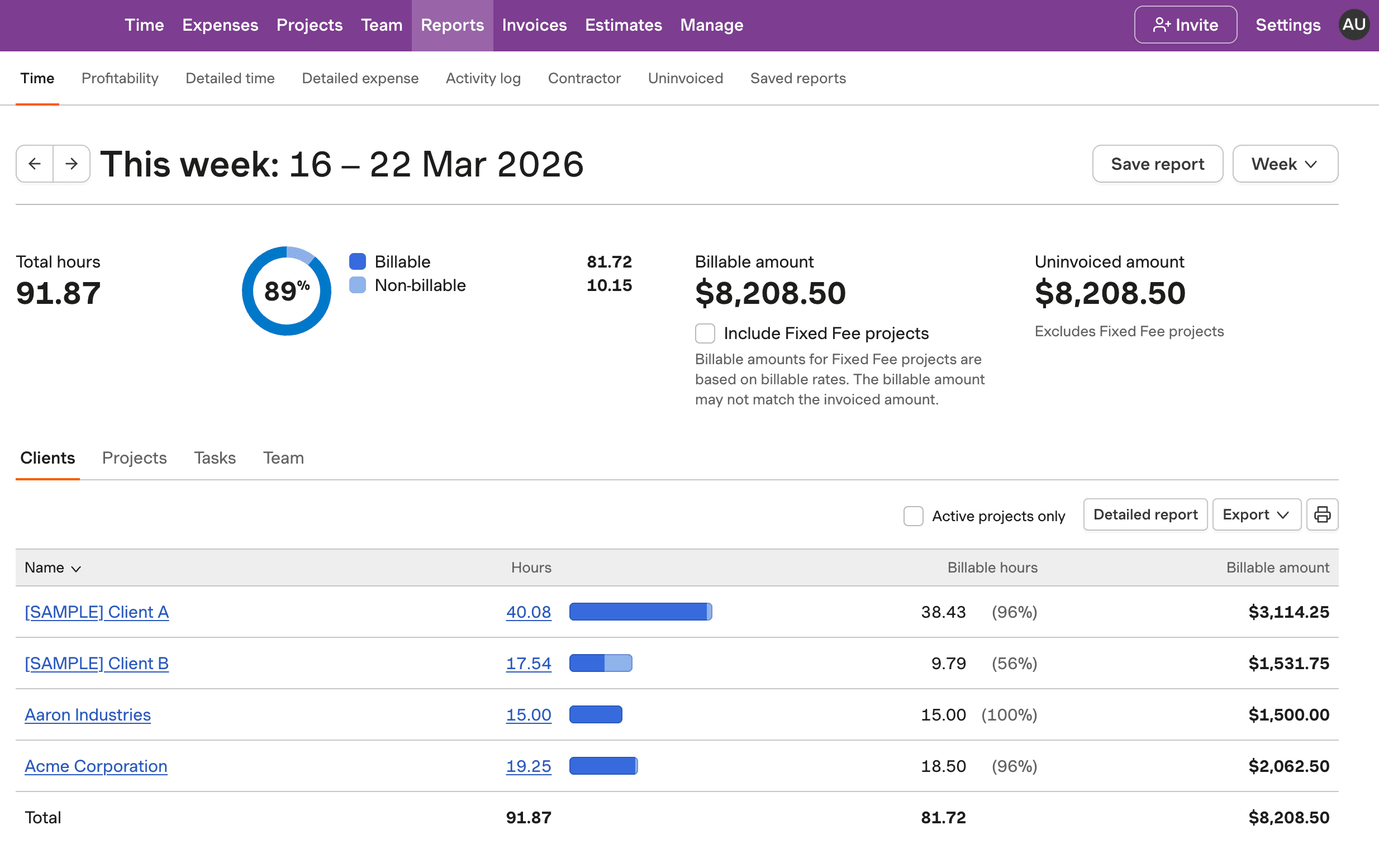
Harvest's reporting tools enable teams to identify scope creep, analyze resource allocation, and prevent team overcommitment. These detailed reports can justify client invoices and highlight project profitability, making them invaluable for maintaining healthy client relationships. By leveraging Harvest's capabilities, software companies can enhance their resource management strategies, ensuring projects remain profitable and on track.

Best Practices for Implementing Time Tracking in Software Teams

Successful time tracking implementation in software teams begins with setting clear and measurable goals. Whether it's measuring productivity or improving estimation accuracy, defining objectives is key. Harvest's user-friendly interface and comprehensive integration capabilities make it an ideal choice for teams looking to minimize friction in adoption. Automated features like start/stop timers and cross-platform synchronization reduce manual efforts, fostering a culture of accountability without micromanagement.

Encouraging regular time logging and reviewing data with the team can help identify patterns and bottlenecks. Harvest supports this with its detailed reporting and analytics, which are crucial for continuous improvement. Moreover, ensuring compliance with labor laws and maintaining data privacy are essential, especially when using automatic activity recording. By following these best practices, software companies can maximize the benefits of time tracking and enhance overall team performance.

Discover Harvest for Software Companies

See how Harvest's time tracking enhances project management for software companies with integrations and detailed reports.

Screenshot of Harvest's time tracking interface for software companies

Time Tracking Software for Software Companies FAQs

  • Time tracking enhances project management by providing real-time insights into project progress and resource allocation. This helps teams identify scope creep and budget overruns early, enabling proactive adjustments. Harvest, with its detailed reporting and integration with project management tools, streamlines these processes for software companies.

  • Harvest integrates with popular project management tools like Jira, Trello, and Slack, making it ideal for software development teams. These integrations ensure seamless time tracking across platforms, supporting agile methodologies and enhancing team collaboration.

  • Yes, Harvest provides comprehensive reporting tools that aid in budget tracking and profitability analysis. By tracking both billable and non-billable hours, Harvest helps software companies maintain project budgets and identify profitability gaps before they impact margins.

  • Harvest's ability to track time against specific tasks and user stories aligns with agile frameworks like Scrum and Kanban. Its integrations with tools like Jira further support agile methodologies, ensuring time tracking enhances rather than disrupts workflow flexibility.

  • Harvest supports remote work through its mobile time tracking capabilities available on iOS and Android devices. This ensures teams can log time from anywhere, fostering accountability and maintaining productivity across distributed teams.

  • Automated timers in Harvest simplify time tracking by reducing manual entry and enhancing accuracy. This feature helps in capturing precise work hours, which is critical for project budgeting and billing accuracy.

  • Tracking both billable and non-billable hours provides a comprehensive view of project workloads and true profitability. By logging all hours, software companies can better understand the real costs of projects and make informed decisions about resource allocation and pricing strategies.