
Harvest
Time Tracking
Sign up free

Utilization Rate Tracking

Harvest streamlines utilization rate tracking, helping teams and freelancers optimize efficiency by accurately logging and analyzing billable and non-billable hours.

Try Harvest Free

How much revenue is your team leaving on the table?

Most agencies run at 55-60% utilization. Even a small improvement means significant revenue. See what closing the gap looks like for your team.

Number of people who track billable time
$
Blended rate across roles (junior, senior, lead)
55%
Percentage of total hours that are billable. Industry average is 55-60%.
75%
A realistic target for service businesses is 70-80%.
Monthly revenue gap $0
Revenue at current utilization $0/mo
Revenue at target utilization $0/mo
Extra billable hours needed per person/day 0h
Annual revenue opportunity $0

Start tracking team utilization

Walk through the entire flow below. Start a timer, check your reports, and create a real invoice — all in three clicks.

Go ahead — start tracking!

One click and you're timing. Try it right here: start a timer, add an entry, edit the details. This is exactly how it feels in Harvest.

  • One-click timer from browser, desktop & mobile
  • Works inside Jira, Asana, Trello, GitHub & 50+ tools
  • Duration or start/end — your call
  • Day, week & calendar views to stay on top of it all
  • Friendly reminders so no hour gets left behind
Acme Corp
Website Redesign
Homepage layout revisions
1:24:09
Content Strategy
Blog calendar planning
1:30:00
SEO Audit
Technical audit report
0:45:00
Brand Guidelines
Color system documentation
2:15:00
Logo Concepts
Initial sketches round 1
1:00:00

Understanding Utilization Rate Tracking

Utilization rate tracking is crucial for optimizing workforce efficiency and resource allocation. The utilization rate formula—(Total Billable Hours / Total Available Hours) × 100—expresses how effectively resources are being used as a percentage. For production-level staff, ideal utilization rates typically range from 70% to 90%. Aiming for a rate above 75% is often considered optimal, balancing productivity with sustainability. However, a 100% utilization rate is neither realistic nor healthy, as it neglects necessary non-billable tasks such as meetings and professional development.

Understanding the variations of utilization is essential. While billable utilization focuses on revenue-generating work, resource utilization includes all productive activities, both billable and non-billable. Capacity utilization takes a broader view, measuring utilization across teams or departments. Regularly tracking these metrics can significantly impact profitability and capacity planning, with a 10% increase in utilization potentially adding $150,000 in annual revenue per consultant at a $150/hour rate.
The Role of Time Tracking in Utilization Rates

Accurate time tracking is the backbone of effective utilization rate management. With Harvest, businesses can log time with ease, using one-click start/stop timers or manual entries for retroactive logging. This ensures that all hours, both billable and non-billable, are recorded accurately. By distinguishing between these categories, organizations can better understand how resources are allocated and identify areas for improvement.

Harvest’s robust reporting capabilities provide detailed insights into time usage, allowing managers to monitor utilization rates consistently. By applying the utilization rate formula regularly, companies can identify trends and potential issues before they impact the bottom line. This proactive approach helps maintain an optimal utilization rate, ensuring that teams are neither underutilized nor overworked.

Improving Utilization Rates with Harvest

Improving utilization rates requires strategic changes in how time and resources are managed. Harvest offers comprehensive tools that facilitate this process, including integrations with popular platforms like Asana and Slack, enhancing workflow efficiency. By setting role-specific targets and utilizing Harvest’s project management features, teams can align their efforts with organizational goals, leading to more efficient use of resources.

Harvest also alerts teams when they are approaching project budgets, ensuring that resources are allocated appropriately. This feature is particularly beneficial for legal firms and other professional services aiming to balance billable and non-billable work. By leveraging these capabilities, businesses can not only improve their utilization rates but also increase overall productivity and profitability.

Why Utilization Rate Tracking Matters

Tracking utilization rates is not just about measuring productivity; it’s about strategic planning for growth and sustainability. High utilization rates indicate efficient resource use, which can lead to significant financial gains. For instance, improving utilization by just 10% can result in substantial additional revenue. However, maintaining a balance is key, as excessively high utilization can lead to burnout.

Harvest’s utilization rate tracking provides the data and insights necessary to make informed decisions about resource allocation. By understanding utilization rates, businesses can better plan their capacity, adjust pricing strategies, and ensure that they are meeting client demands without overextending their workforce. This strategic approach to time management is crucial for long-term success and growth.

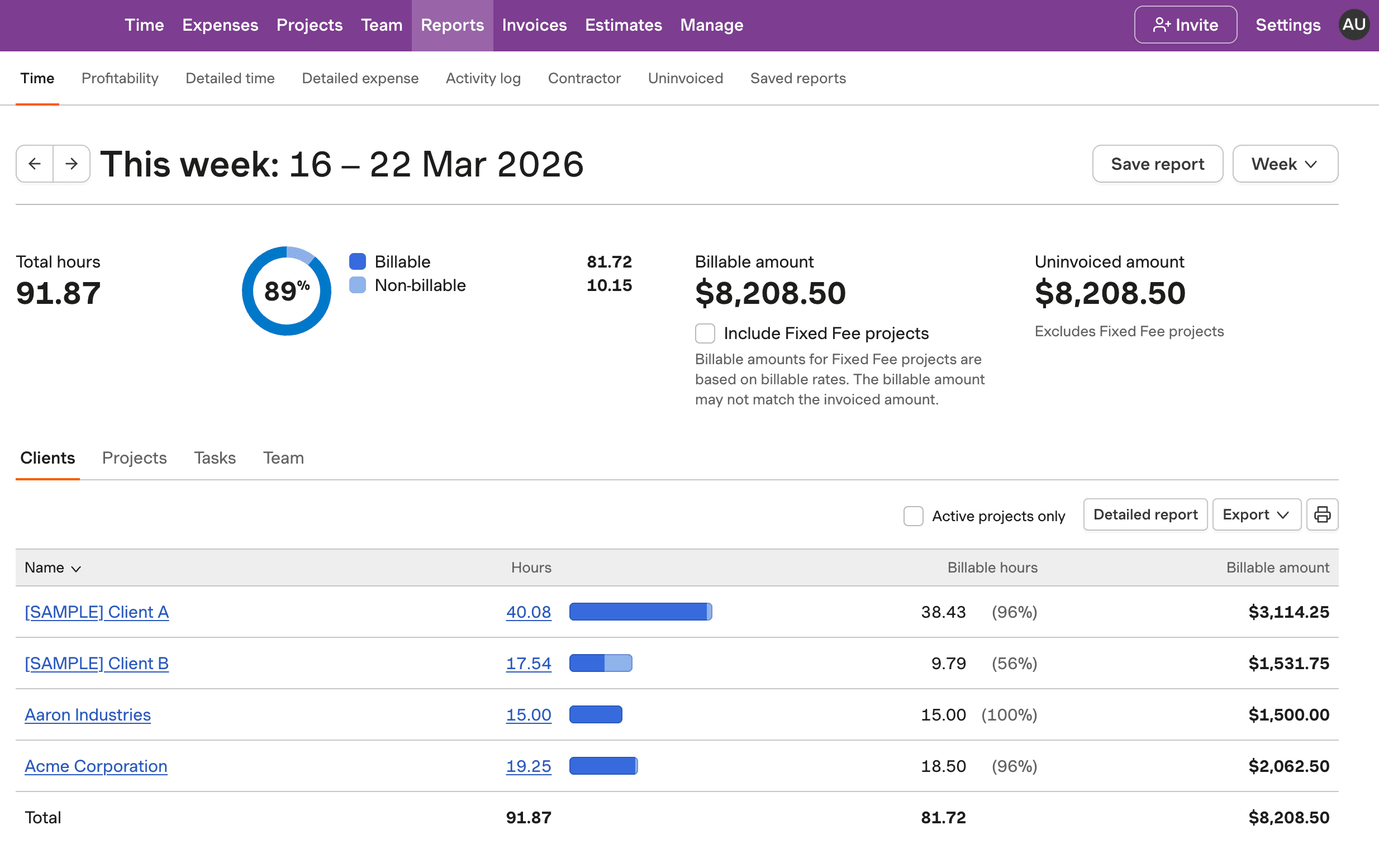
Utilization Rate Tracking with Harvest

See how Harvest tracks utilization rates, providing insights into billable and non-billable hours for optimized resource management.

Utilization rate tracking dashboard by Harvest

Utilization Rate Tracking FAQs

  • The utilization rate is calculated using the formula: (Total Billable Hours / Total Available Hours) × 100. This percentage indicates how efficiently resources are being used.

  • Tracking utilization rates is essential for optimizing resource allocation and improving profitability. A 10% increase in utilization can add significant revenue, making accurate tracking vital for strategic planning.

  • Improving utilization rates involves setting clear targets, accurately tracking time, and using tools like Harvest to analyze and optimize resource allocation. Regular monitoring and adjustments are key to maintaining efficiency.

  • Utilization rates vary by industry, but a general benchmark falls between 70% and 90% for production-level staff. Professional services often target 70-85% to balance efficiency and sustainability.

  • Harvest offers precise time tracking and detailed reporting, allowing users to monitor utilization rates effectively. It integrates with popular platforms, enhancing workflow and resource management.

  • Billable utilization focuses on revenue-generating hours, while resource utilization includes all productive activities, both billable and necessary non-billable tasks.

  • Utilization rates should be tracked regularly, often on a weekly or monthly basis. Consistent monitoring helps identify trends and adjust resource allocation strategies promptly.