
Harvest
Time Tracking
Sign up free

Calculate Break Even Point

Know your break-even point with real project data. Harvest tracks time and costs so you can see exactly when a project becomes profitable.

Try Harvest Free

Will this project be profitable?

Estimate your project cost, set the right price, and know exactly how many hours your team can spend before margin disappears.

Total hours across all team members
$
Average rate across all roles on the project
15%
Scope creep is real. Most projects need 10-25% buffer to stay profitable.
Recommended project price $0
Base cost (before buffer) $0
Hours per person per week 0h
Weekly burn rate $0
Max hours before loss 0h

Track project hours with Harvest

Walk through the entire flow below. Start a timer, check your reports, and create a real invoice — all in three clicks.

Go ahead — start tracking!

One click and you're timing. Try it right here: start a timer, add an entry, edit the details. This is exactly how it feels in Harvest.

  • One-click timer from browser, desktop & mobile
  • Works inside Jira, Asana, Trello, GitHub & 50+ tools
  • Duration or start/end — your call
  • Day, week & calendar views to stay on top of it all
  • Friendly reminders so no hour gets left behind
Acme Corp
Website Redesign
Homepage layout revisions
1:24:09
Content Strategy
Blog calendar planning
1:30:00
SEO Audit
Technical audit report
0:45:00
Brand Guidelines
Color system documentation
2:15:00
Logo Concepts
Initial sketches round 1
1:00:00

Understanding the Break-Even Point: Your Business's Financial Zero

The break-even point (BEP) is a pivotal financial metric for any business, representing the juncture where total revenue precisely matches total costs, thereby resulting in neither profit nor loss. Knowing your BEP is crucial for assessing business health and planning for growth. It answers the critical question: how much must you sell to cover all your expenses?

Key components in calculating the break-even point include fixed costs, variable costs per unit, and the selling price per unit. Fixed costs, such as rent and salaries, do not fluctuate with sales volume. In contrast, variable costs, like raw materials and direct labor, vary with production levels. The selling price is what you charge for each unit sold. Understanding these components is essential for accurate break-even calculations.

The Core Mechanics: Calculating Your Break-Even Point

To calculate the break-even point in units, use the formula: Fixed Costs ÷ (Sales Price per Unit – Variable Cost per Unit). For example, if your fixed costs are $6,000, your selling price per unit is $50, and your variable cost per unit is $25, the break-even point is 240 units. This formula helps determine the number of units you need to sell to cover your costs.

For the break-even point in sales dollars, apply: Fixed Costs ÷ Contribution Margin Ratio. The contribution margin ratio, expressed as a percentage, is derived from dividing the contribution margin by the selling price per unit. If your contribution margin ratio is 50%, with fixed costs of $6,000, you achieve break-even at $12,000 in sales. These calculations provide clear targets for sales strategies and financial planning.

Strategic Applications of Break-Even Analysis

Break-even analysis is more than just a number; it's a strategic tool that informs critical business decisions. It aids in setting pricing strategies by revealing the sales volume needed at different price points to cover costs. Businesses can also use it to manage costs effectively by understanding how changes in fixed and variable costs impact profitability.

Furthermore, break-even analysis is essential for evaluating new projects or investments. By calculating the break-even point, businesses can assess the viability of expanding product lines or entering new markets. It also helps in multi-product scenarios by determining a weighted average contribution margin to understand overall profitability. Despite its assumptions, break-even analysis remains a cornerstone of strategic business planning.

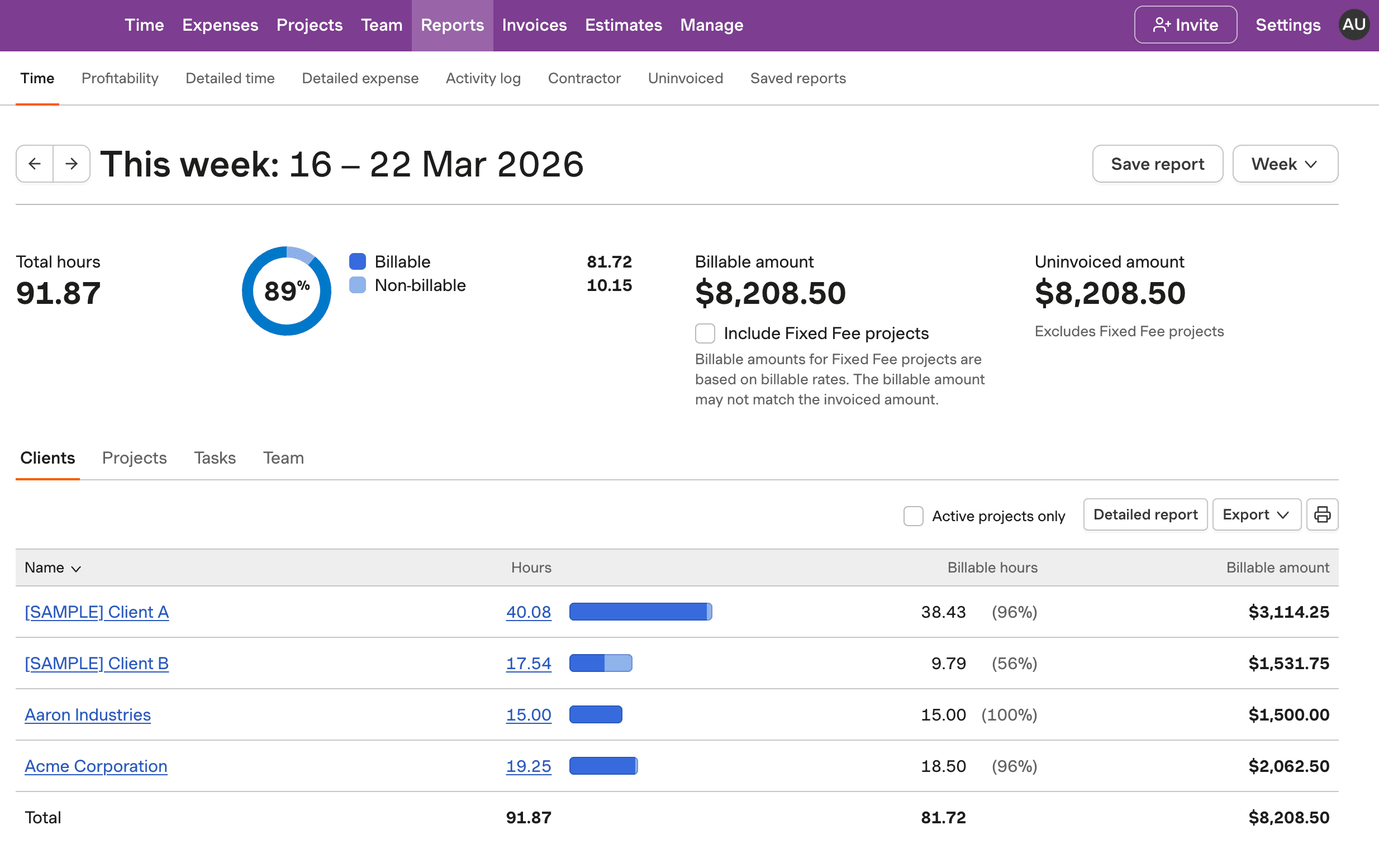
Calculate Break Even Point with Harvest

See how Harvest can help you calculate your break-even point, providing detailed insights and strategic planning tools.

Break-even point calculation in Harvest screenshot

Calculate Break Even Point FAQs

  • The break-even point is when a business's total revenue equals its total costs, resulting in no profit or loss. It's essential for understanding when a business will start to be profitable.

  • To calculate the break-even point in units, divide the total fixed costs by the difference between the sales price per unit and the variable cost per unit. This tells you how many units need to be sold to cover costs.

  • The break-even point is crucial for financial planning and decision-making. It helps businesses set sales targets, manage costs, and evaluate the profitability of new ventures or pricing strategies.
  • The break-even point informs pricing strategy by showing the sales volume needed at different price points to cover costs. This helps businesses set competitive and profitable prices.

  • Changes in fixed costs, variable costs per unit, or the selling price can alter the break-even point. For example, reducing variable costs or increasing prices can lower the number of units needed to break even.

  • Break-even analysis helps identify cost structures and manage them effectively. By understanding fixed and variable costs, businesses can implement strategies to reduce expenses and improve profitability.

  • While Harvest excels in tracking time and expenses, it does not perform financial calculations like break-even analysis. However, it provides the data necessary for informed financial decision-making.