
Harvest
Time Tracking
Sign up free

Utilization Rate Calculator for Nonprofits

Harvest empowers nonprofits with precise time tracking and reporting to enhance resource utilization, supporting efficient mission fulfillment.

Try Harvest Free

How much revenue is your team leaving on the table?

Most agencies run at 55-60% utilization. Even a small improvement means significant revenue. See what closing the gap looks like for your team.

Number of people who track billable time
$
Blended rate across roles (junior, senior, lead)
55%
Percentage of total hours that are billable. Industry average is 55-60%.
75%
A realistic target for service businesses is 70-80%.
Monthly revenue gap $0
Revenue at current utilization $0/mo
Revenue at target utilization $0/mo
Extra billable hours needed per person/day 0h
Annual revenue opportunity $0

Start tracking team utilization

Walk through the entire flow below. Start a timer, check your reports, and create a real invoice — all in three clicks.

Go ahead — start tracking!

One click and you're timing. Try it right here: start a timer, add an entry, edit the details. This is exactly how it feels in Harvest.

  • One-click timer from browser, desktop & mobile
  • Works inside Jira, Asana, Trello, GitHub & 50+ tools
  • Duration or start/end — your call
  • Day, week & calendar views to stay on top of it all
  • Friendly reminders so no hour gets left behind
Acme Corp
Website Redesign
Homepage layout revisions
1:24:09
Content Strategy
Blog calendar planning
1:30:00
SEO Audit
Technical audit report
0:45:00
Brand Guidelines
Color system documentation
2:15:00
Logo Concepts
Initial sketches round 1
1:00:00

Understanding Utilization in Nonprofits

Utilization rate in the nonprofit sector is a critical measure of how resources are allocated towards achieving the organization's mission. Unlike for-profit businesses, where utilization often focuses on billable hours, nonprofits must consider a broader scope, including staff, program funds, and overall organizational capacity. Understanding these elements is crucial for nonprofits to ensure their resources are being used efficiently and effectively.

Tracking utilization helps nonprofits demonstrate accountability to stakeholders and ensures they are meeting mission goals. For instance, the Program Efficiency Ratio measures the percentage of total expenses directly related to program activities. Industry standards suggest that well-managed nonprofits direct 65% to 75% of their spending towards programs. To build trust and transparency, nonprofits must report this ratio in their IRS Form 990 filings.

Another key metric is the Grant Utilization Rate, which assesses how effectively awarded funds are used. A rate above 85% is considered healthy, indicating efficient resource management. Understanding these metrics helps nonprofits maintain financial health and operational effectiveness, ultimately supporting their mission-driven work.
Calculating Utilization Rates for Nonprofits

Nonprofits can effectively calculate their utilization rates by employing specific formulas tailored to their operational needs. To measure Program Efficiency, divide program expenses by total expenses. For nonprofits aiming for efficiency, benchmarks suggest directing 65% to 75% of expenses towards program activities. Similarly, the Staff Utilization Rate can be calculated by dividing total productive hours by total available hours, with ideal rates falling between 75% and 85% for billable staff.

Grant Utilization is another critical metric, though it lacks a singular formula. It involves the effective use of awarded funds, with a benchmark of over 85% indicating good management. For overhead, the formula is total overhead divided by total income, where less than 35% is considered efficient. As of 2024, the U.S. Office of Management and Budget allows a 15% de minimis rate for indirect costs on federal grants, aiding nonprofits in maintaining compliance.

By understanding and applying these formulas, nonprofits can benchmark their performance against industry standards, ensuring they are making the most of their resources to support their missions.

Strategies for Enhancing Nonprofit Resource Utilization

Improving resource utilization within a nonprofit requires a strategic approach. One effective strategy is making data-driven decisions. Analytics tools can track donor behaviors, campaign performance, and community needs, enabling informed decisions about resource allocation. Regular program evaluations can help identify successful initiatives and areas for improvement.

Collaborative efforts can also enhance resource utilization. By forming strategic partnerships with other organizations, nonprofits can share resources, facilities, and expertise. This not only reduces individual costs but also amplifies collective impact. Additionally, leveraging technology such as data management systems and collaborative platforms can streamline operations and improve tracking, optimizing overall efficiency.

Capacity building is vital for sustainable utilization. Investing in leadership development, staff training, and robust internal systems helps manage programs and funding effectively. By implementing these strategies, nonprofits can maximize their impact while maintaining operational efficiency.

Overcoming Nonprofit Utilization Challenges

Nonprofits face unique challenges in managing resource utilization effectively. Common issues include inaccurate time tracking and the "overhead myth," where there's undue pressure to minimize administrative costs at the expense of operational effectiveness. To address these, nonprofits can utilize tools like Harvest for accurate time tracking, distinguishing between volunteer and paid staff hours.

Understanding that ideal utilization rates vary by role and organizational size is essential. For example, program staff may have higher utilization expectations compared to managers, who perform more strategic, non-billable tasks. Nonprofits must balance efficiency with employee well-being and mission effectiveness, avoiding burnout from near-100% utilization rates.

Adopting flexible project budgeting and alert systems, as available in Harvest, ensures resources are allocated effectively, maximizing mission impact while maintaining a healthy organizational environment. By addressing these challenges, nonprofits can improve their operational efficiency and mission fulfillment.

Utilization Rate Calculator for Nonprofits with Harvest

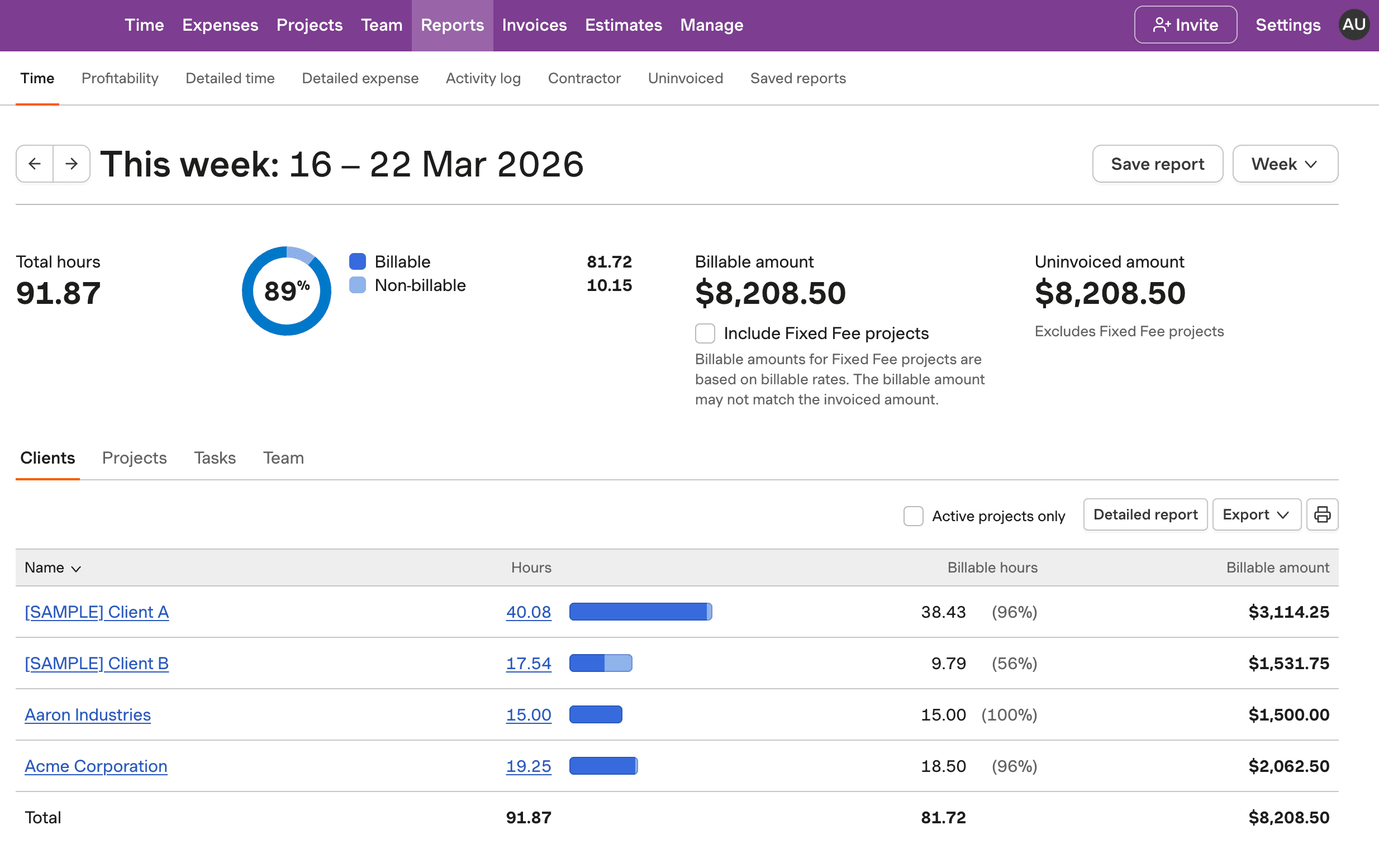
The preview shows how Harvest's platform helps nonprofits track and optimize utilization rates, enhancing mission impact.

Harvest's utilization rate calculator for nonprofits interface.

Utilization Rate Calculator for Nonprofits FAQs

  • The utilization rate in a nonprofit context measures how effectively resources like staff and funds are used to achieve the organization's mission. It extends beyond billable hours to include program efficiency and grant utilization.

  • To calculate staff utilization rate, divide the total productive hours by the total available hours, and multiply by 100. Ideal rates for billable staff are between 75% and 85%, balancing productivity with well-being.

  • Good benchmarks include directing 65% to 75% of expenses to programs, over 85% for grant utilization, and keeping overhead below 35%. These standards ensure resources support mission-driven activities efficiently.

  • Harvest allows you to track both billable and non-billable hours, making it easy to differentiate volunteer hours from paid staff hours. This ensures accurate utilization metrics for better resource management.

  • Improving resource utilization involves data-driven decisions, strategic partnerships, technology adoption, and capacity building. These strategies help allocate resources effectively, maximizing impact and efficiency.

  • Harvest's project budgeting and alert features help nonprofits allocate resources effectively. This ensures projects stay within budget and resources are used efficiently, maximizing mission impact.

  • Nonprofits must report program efficiency ratios on IRS Form 990. As of 2024, the OMB allows a 15% de minimis rate for indirect costs on federal grants, helping maintain compliance with funding requirements.