
Harvest
Time Tracking
Sign up free

Utilization Rate Calculator in Greece

Track team utilization for Greek operations. Harvest monitors billable vs. non-billable hours, helping you optimize team productivity and capacity.

Try Harvest Free

How much revenue is your team leaving on the table?

Most agencies run at 55-60% utilization. Even a small improvement means significant revenue. See what closing the gap looks like for your team.

Number of people who track billable time
$
Blended rate across roles (junior, senior, lead)
55%
Percentage of total hours that are billable. Industry average is 55-60%.
75%
A realistic target for service businesses is 70-80%.
Monthly revenue gap $0
Revenue at current utilization $0/mo
Revenue at target utilization $0/mo
Extra billable hours needed per person/day 0h
Annual revenue opportunity $0

Start tracking team utilization

Walk through the entire flow below. Start a timer, check your reports, and create a real invoice — all in three clicks.

Go ahead — start tracking!

One click and you're timing. Try it right here: start a timer, add an entry, edit the details. This is exactly how it feels in Harvest.

  • One-click timer from browser, desktop & mobile
  • Works inside Jira, Asana, Trello, GitHub & 50+ tools
  • Duration or start/end — your call
  • Day, week & calendar views to stay on top of it all
  • Friendly reminders so no hour gets left behind
Acme Corp
Website Redesign
Homepage layout revisions
1:24:09
Content Strategy
Blog calendar planning
1:30:00
SEO Audit
Technical audit report
0:45:00
Brand Guidelines
Color system documentation
2:15:00
Logo Concepts
Initial sketches round 1
1:00:00

Understanding Utilization Rates in Greece

Utilization rates are a key performance metric in Greece, reflecting how effectively resources such as labor, equipment, or facilities are used. These rates are calculated using the formula: Utilization Rate = (Actual Time Worked / Total Available Time) x 100%. This metric is crucial for businesses, as it directly impacts profitability and resource management. In Greece, the manufacturing sector reported a capacity utilization rate of 77.20% in March 2026, a slight decrease from the previous quarter. Understanding these rates helps businesses optimize operations and identify areas for improvement.

For Greek businesses, balancing a high utilization rate with employee well-being is essential. While an ideal rate maximizes productivity, it should also allow time for necessary non-billable activities. Organizations must consider economic conditions and sector-specific factors, such as seasonality in tourism or mechanization in agriculture, when evaluating utilization rates.
Key Utilization Trends in the Greek Economy

Recent data highlights significant trends in Greece's economic utilization rates. In the manufacturing sector, capacity utilization averaged 73.93% from 1982 to 2026, with a peak of 80.70% in Q2 2024. This reflects Greece's industrial activity and economic sentiment. The labor force participation rate, crucial for understanding workforce dynamics, was 61.2% in January 2026, indicating a slight increase from the previous month.

Healthcare service utilization in Greece is heavily influenced by socioeconomic factors. Between 2009 and 2014, the economic crisis led to a shift in healthcare service usage, with increased demand for public services despite budget cuts. The circular material use rate, another critical metric, rose from 4.2% in 2020 to 5.2% in 2023, yet remains below the EU average. These statistics underscore the diverse factors affecting utilization across sectors.

Factors Influencing Utilization Rates in Greece

Several factors impact utilization rates across Greece, influenced by economic conditions and sector-specific dynamics. Economic crises, such as the recession period from 2009 to 2014, have historically increased demand for public services, impacting healthcare utilization patterns. In the manufacturing industry, capacity utilization rates are a significant economic indicator monitored by both national and European organizations.

Sector-specific considerations also play a role. For instance, the tourism industry is affected by seasonality, while agriculture has seen changes due to mechanization efforts. Understanding these varied influences helps businesses strategize effectively, optimizing utilization while ensuring sustainable growth.

Calculating and Optimizing Utilization for Greek Businesses

Calculating utilization rates involves a clear understanding of both productive and total available time. For Greek businesses, it's important to distinguish between billable hours and necessary non-billable activities, such as training and administrative tasks. The formula Utilization Rate = (Total Billable Hours / Total Available Hours) x 100% is widely used across industries to gauge efficiency.

Improving utilization rates involves strategic planning and resource management. Businesses should aim for an ideal utilization rate that balances workload with employee well-being and asset maintenance. This requires considering overhead costs, profit margins, and optimal billing rates. By focusing on these areas, Greek businesses can enhance operational efficiency and competitive advantage.

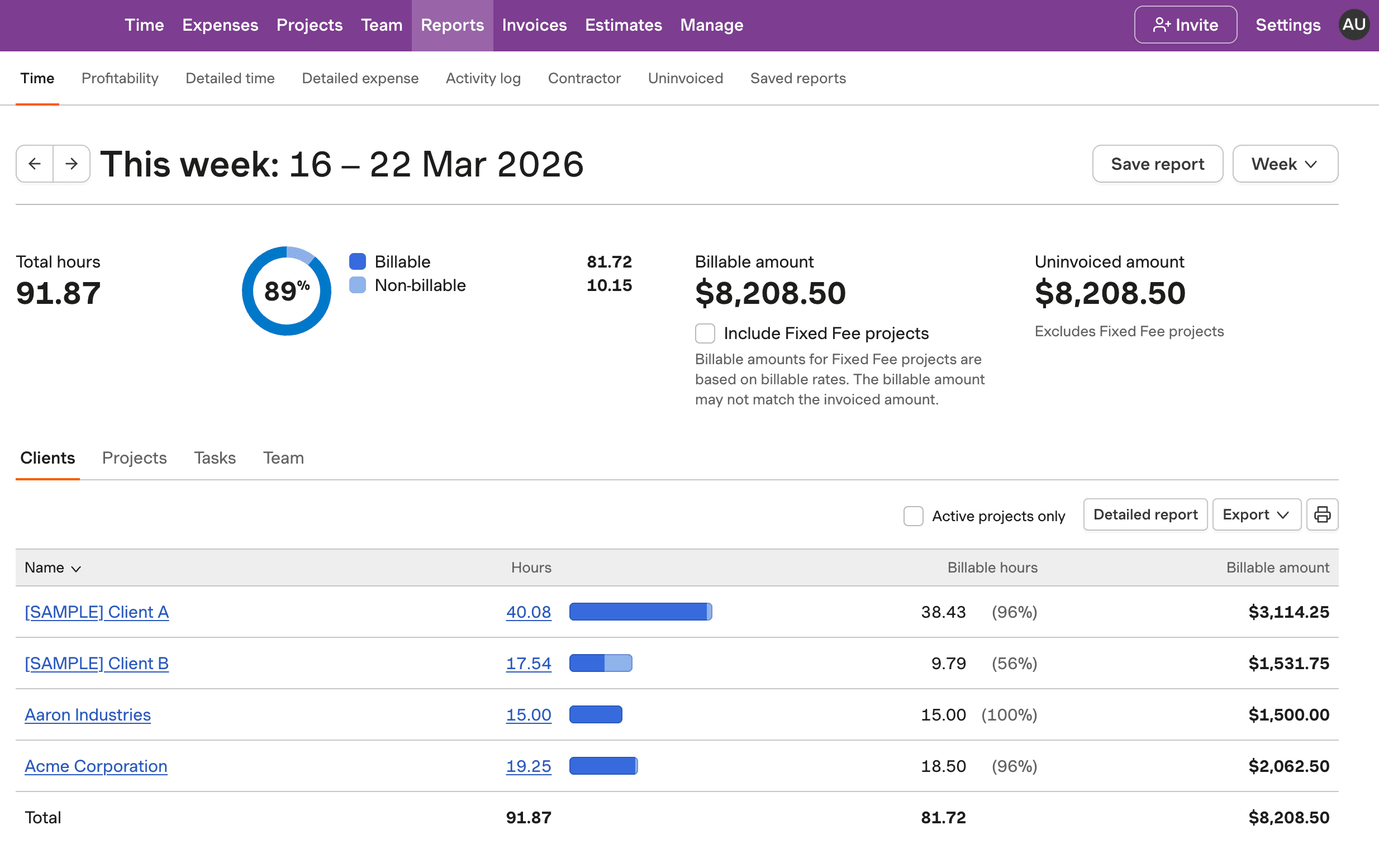
Utilization Rate Calculator with Harvest

Explore Harvest's global project management capabilities, ideal for businesses aiming to optimize utilization rates. Manage time effectively with Harvest.

Harvest utilization rate calculator interface

Utilization Rate Calculator in Greece FAQs

  • Utilization rate is calculated by dividing actual time worked by total available time, then multiplying by 100%. This formula helps gauge resource efficiency in businesses.

  • Factors such as economic conditions, sector-specific dynamics, and government policies impact utilization rates in Greece. Understanding these helps businesses optimize operations.

  • The average capacity utilization rate in Greek manufacturing was 77.20% in March 2026, reflecting industrial activity and economic sentiment.

  • Businesses can enhance utilization rates by optimizing resource allocation, balancing workload, and focusing on strategic planning to avoid burnout and asset overuse.

  • Harvest helps businesses globally manage time and resources efficiently, though it doesn't provide specific analytics for Greece. It supports optimal utilization through effective time tracking.

  • While specific regulations for company utilization rate reporting aren't detailed, general economic statistics are reported by bodies like EUROSTAT and the European Commission.

  • During economic crises, demand for public healthcare services increases, despite budget cuts, as seen in Greece between 2009 and 2014.