
Harvest
Quotes
Sign up

Mobile Construction Estimating Software

Harvest helps contractors manage their time and expenses efficiently, supporting project management even without specialized estimating features.

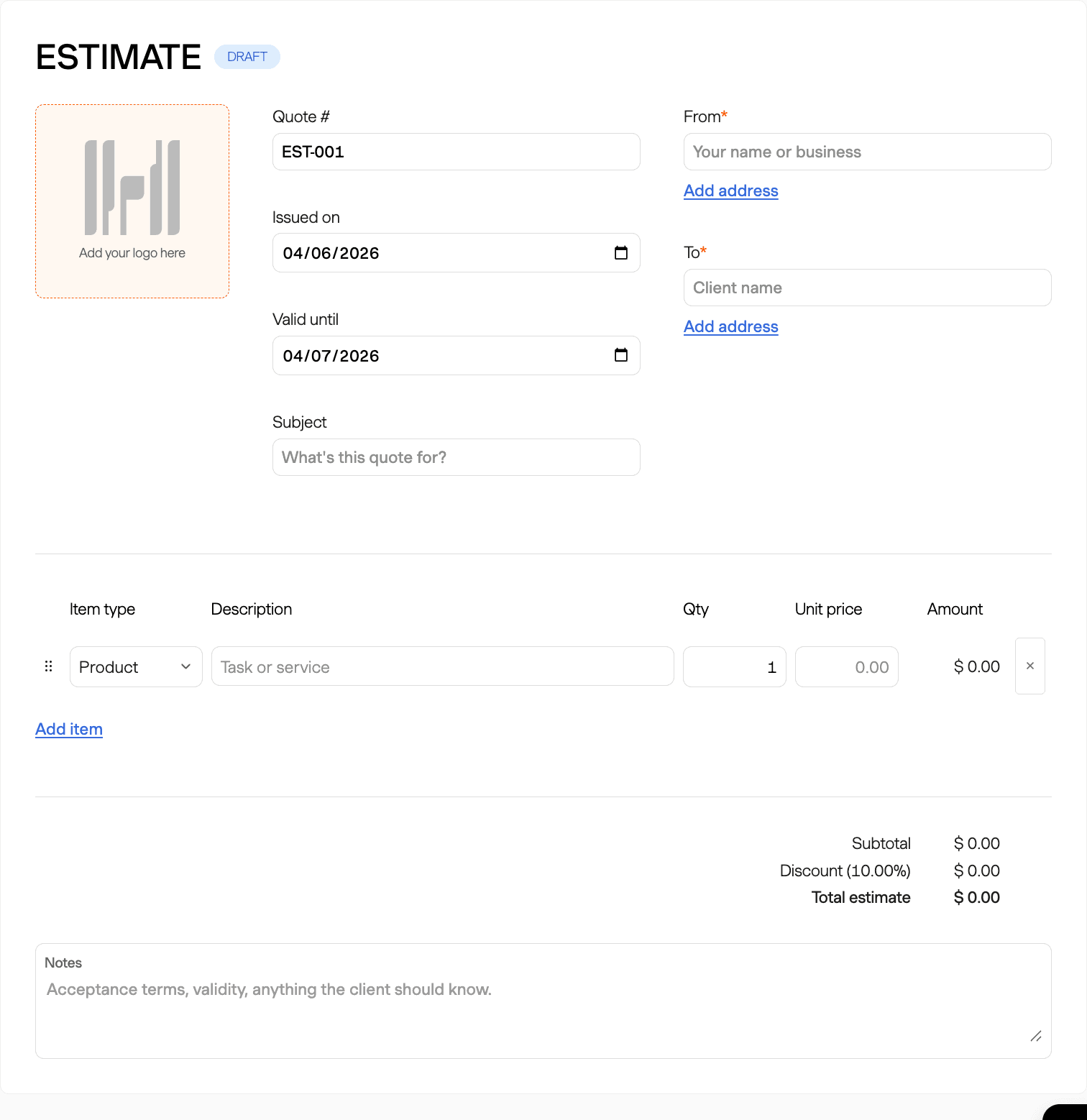
ESTIMATE DRAFT

Add your logo here
Item type
Description
Qty
Unit price
Tax
Amount
Subtotal
$0.00
Discount
$0.00
Total estimate
$0.00
Get paid via:
Credit card / Debit card
ACH
Wire transfer

Customize estimate

Appearance

Add a logo
Show estimate title

Quote settings

Tax Add up to 2 tax rates
%
Discount Apply a discount percentage
%

The Rise of Mobile Construction Estimating Software

The global construction estimating software market is undergoing significant growth, projected to expand from USD 1.5 billion in 2024 to USD 2.62 billion by 2030. This growth is largely fueled by the increasing adoption of mobile estimating applications, particularly in North America, which accounted for nearly 38% of the market share in 2024. These mobile solutions are transforming how construction professionals manage bids and projects by offering real-time access to estimates and facilitating rapid data collection and processing.

Mobile estimating software dramatically enhances efficiency and accuracy on job sites. Users report saving over 8 hours per week on estimating tasks, contributing to annual revenue increases of over $95,000 due to faster bidding processes. These applications help reduce estimating errors, which currently cost the U.S. construction industry an estimated $273 billion annually. Moreover, the integration of advanced technologies like 3D modeling and BIM into these tools enables seamless collaboration among architects, engineers, and contractors, further improving project outcomes.

Integrating Mobile Estimating Apps with Existing Workflows

Seamless integration of mobile estimating apps with existing project management systems is crucial for maximizing their utility. This integration ensures that estimates, schedules, and updates align perfectly, eliminating the need for double data entry and reducing the risk of errors. Many modern estimating tools support import/export functions and offer real-time updates, which create a "single source of truth" for all project-related data.

Mobile apps allow contractors to modify estimates on-site, respond to client requests immediately, and adjust for changes in materials or labor requirements. This flexibility is particularly beneficial for real-time decision-making and can significantly improve project timelines. However, it's essential to note that while Harvest doesn't offer AI-powered estimating or 3D room scanning, it does support time tracking and expense management, which are crucial for maintaining project profitability.

The Impact of AI and Automation in Estimating

AI is playing an increasingly pivotal role in construction estimating, enhancing the speed and precision of bid preparation. While there's a common misconception that AI is challenging to implement, many construction estimating tools now incorporate AI features seamlessly, allowing even non-technical teams to benefit from automation. AI can automate takeoffs and increase bidding speed, which is especially valuable given the volatile material costs and tight project deadlines.

It's important to emphasize that while AI enhances estimating capabilities, human oversight is still required for complex tasks such as project scoping and decision-making. For Harvest users, while AI-driven estimation features aren't available, the software excels in tracking time and expenses, which can inform cost estimates and help maintain project budgets.

Best Practices for Implementing Estimating Software

Implementing mobile estimating software successfully requires strategic planning and training. Begin by training a few team members to build momentum before scaling up the process. Using templates and creating a library of symbols for common job types can facilitate smoother transitions and reduce the learning curve.

To avoid common estimating mistakes, leverage digital takeoff software for accurate measurements and integrate supplier pricing to ensure current market rates are applied. Additionally, integrating estimating tools with other business processes such as project management platforms ensures that all team members have access to up-to-date information, improving overall project coordination and efficiency. While Harvest may not offer direct estimating features, its capabilities in tracking project time and expenses can significantly support project management.

Explore Harvest's Tools for Contractors

Discover how Harvest helps contractors manage project time and expenses efficiently, complementing mobile estimating tools.

Screenshot of Harvest's mobile construction estimating interface.

Mobile Construction Estimating Software FAQs

  • Look for features like intuitive user interfaces, real-time updates, integration with project management tools, and support for 3D modeling and BIM. These features can significantly enhance accuracy and collaboration.

  • Mobile estimating software allows for real-time data access and collaboration, reducing estimating errors and increasing bidding speed. Users typically save over 8 hours per week, allowing for more projects and revenue.

  • Integration ensures all data aligns with schedules and updates, eliminating double data entry and reducing errors. It creates a single source of truth for all project data, enhancing coordination and efficiency.

  • Yes, AI can automate tedious tasks like takeoffs, improve precision, and speed up bidding processes. However, human oversight is essential for complex decision-making and project scoping.

  • These apps enable contractors to update estimates on-site, respond to changes instantly, and adjust for new material or labor requirements, ensuring more accurate and timely project execution.

  • Harvest offers tools for tracking time, managing expenses, and invoicing clients, providing a streamlined approach to project management. It excels in supporting contractors with budget and expense tracking.

  • The market is expected to grow from USD 1.5 billion in 2024 to USD 2.62 billion by 2030, driven by digital transformation and the adoption of advanced mobile tools in the construction industry.