
Harvest
Expenses
Sign up

60 Dias Expense Management

Harvest offers project-based expense tracking, helping businesses manage expenses efficiently within a 60-day window, ensuring regulatory compliance and financial accuracy.

EXPENSE REPORT DRAFT

Drop your receipts here or click to upload

Images and PDFs (max 10 MB each)

Date
Category
Merchant
Description
Amount
Total
$0.00

Customise report

Appearance

Show report title

Report settings

Understanding the 60-Day Expense Management Rule

Managing business expenses within a 60-day window is crucial for compliance and financial efficiency. The U.S. Internal Revenue Service (IRS) considers 60 days as a "reasonable period of time" for employees to substantiate expenses under an accountable plan. This ensures reimbursements are treated as non-taxable, aligning with regulations and avoiding additional tax liabilities. Businesses adhering to this guideline can prevent reimbursements from being classified as taxable income, which is essential for maintaining financial accuracy.

Delayed expense reporting can distort financial data and complicate budget tracking, leading to unexpected shortfalls. For instance, businesses can lose track of 20% of their spending due to errors, with manual tracking increasing the risk of fraud by up to 75%. By optimizing expense management within this timeframe, companies can enhance operational efficiency and financial health.
Challenges and Solutions in Expense Management

Expense management is fraught with challenges, from delayed reporting to manual processing errors. For example, companies can lose up to 5% of revenue due to expense fraud and policy violations. Manual systems, often reliant on spreadsheets, are prone to data entry mistakes and lost receipts, leading to inaccurate financial reporting. The average cost of processing an invoice manually is $7.75, compared to $2.00 with automation.

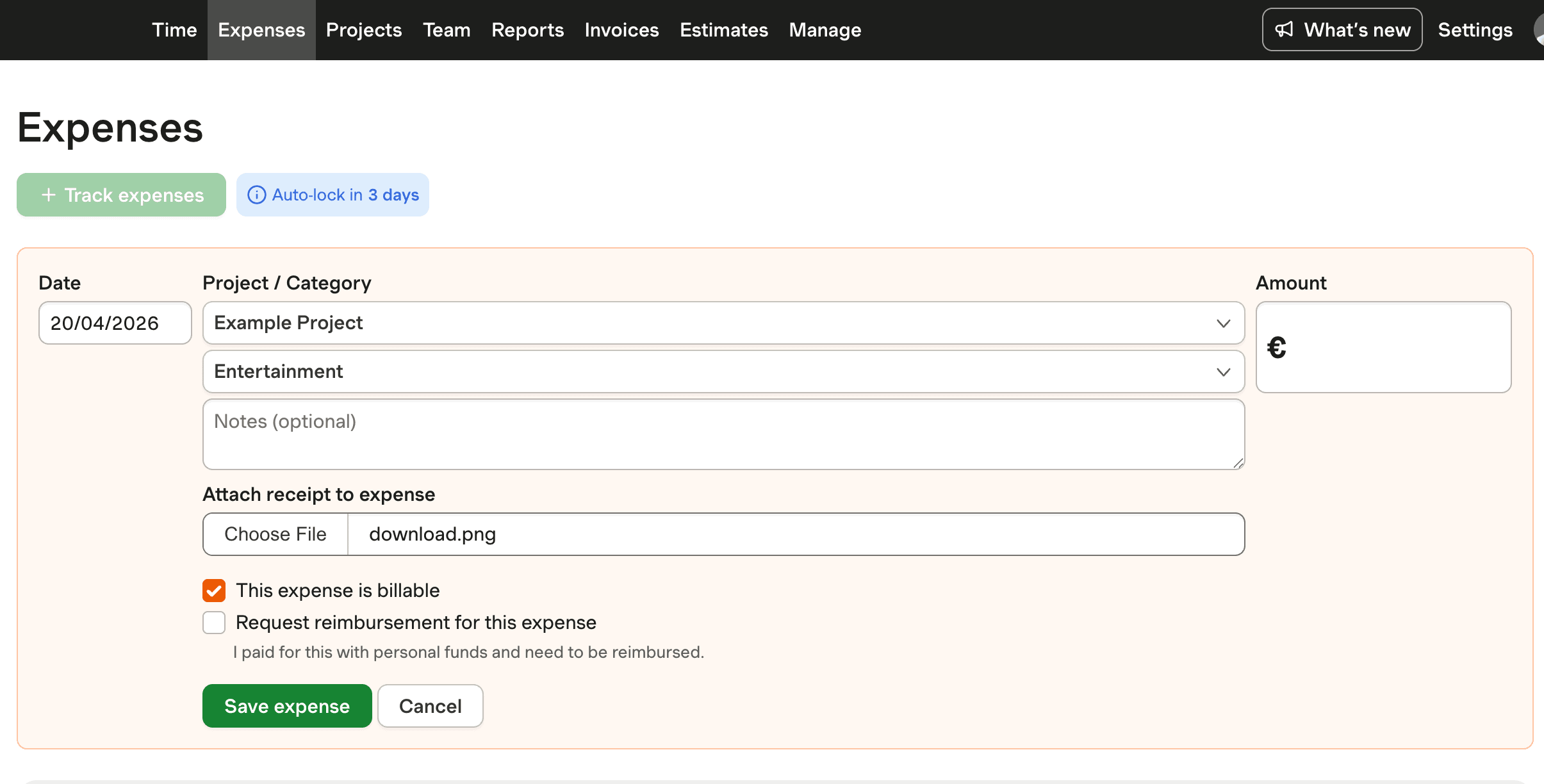
Harvest offers a solution with project-based expense tracking that simplifies submission and categorization processes. By automating these tasks, Harvest reduces errors and improves efficiency. Its integration capabilities ensure seamless data transfer to accounting systems, providing real-time financial insights and streamlined workflows.

The Shift Towards Automated Expense Management

Automation is transforming expense management by reducing labor costs and enhancing accuracy. Businesses that automate their expense processes see a significant drop in costs—from $7.75 to $2.00 per invoice processed. Automation also enables real-time tracking, giving companies immediate visibility into spending and allowing finance teams to control budgets proactively.

Harvest facilitates this shift by offering tools for real-time expense tracking and invoicing. While it does not support VAT recovery on expense receipts, Harvest allows users to add VAT numbers to invoices, ensuring compliance and financial clarity. This capability is particularly beneficial for small-to-medium businesses that need straightforward project-based expense management.

Implementing Best Practices for Effective Expense Management

To effectively manage expenses, businesses should implement clear and enforceable policies. These should define permissible expenses, submission timelines, and documentation requirements, reducing confusion and enhancing compliance. Regular auditing of expense reports can help identify discrepancies and prevent fraud, aligning expenditures with budgetary goals.

Adopting an automated expense management system like Harvest can streamline operations and improve data accuracy. Encouraging timely submission through automated reminders and fostering a culture of accountability are crucial steps. Leveraging real-time analytics from Harvest can further optimize the process, highlighting cost-saving opportunities and bottlenecks for improvement.

Expense Management with Harvest

Harvest provides tools for efficient expense tracking within a 60-day window, ensuring financial accuracy and compliance.

Harvest expense management dashboard showcasing 60-day tracking.

60 Dias Expense Management FAQs

  • The 60-day rule refers to the IRS guideline that requires employees to submit expense reports within 60 days for reimbursements to be treated as non-taxable income. This helps businesses maintain compliance and financial accuracy.

  • Timely expense reporting is crucial for maintaining accurate financial records and optimizing cash flow. Delayed reporting can lead to financial distortions and missed cost-saving opportunities.

  • Automation reduces the cost of processing invoices from $7.75 to $2.00 and minimizes errors. It enables real-time tracking and enhances visibility, allowing businesses to manage budgets proactively.

  • Yes, Harvest provides tools for real-time expense tracking and invoicing, allowing businesses to maintain financial accuracy and streamline operations.

  • Best practices include implementing clear expense policies, conducting regular audits, and using automated systems like Harvest to reduce errors and improve efficiency.

  • While Harvest allows users to add VAT numbers to invoices, it does not support VAT recovery through expense receipts. It is ideal for project-based expense tracking without complex VAT features.

  • Harvest integrates seamlessly with accounting systems to automate data transfer, eliminating manual data entry and providing real-time financial insights.