
Harvest
Expenses
Sign up

Best Project Expense Tracker

Harvest is the best project expense tracker for managing expenses within project budgets, helping businesses avoid up to 19% error rates seen in manual tracking.

EXPENSE REPORT DRAFT

Drop your receipts here or click to upload

Images and PDFs (max 10 MB each)

Date
Category
Merchant
Description
Amount
Total
$0.00

Customise report

Appearance

Show report title

Report settings

Challenges of Manual Expense Tracking

Manual expense tracking processes are fraught with inefficiencies and errors. Research indicates that 19% of manual expense reports contain errors, and correcting each report can take up to 18 minutes, costing an additional $52. Without an automated system, businesses also face the risk of losing visibility over project budgets, potentially leading to budget overruns—a common problem cited by 55% of project managers as a reason for project failure. These inefficiencies not only waste time but can also lead to significant financial losses.

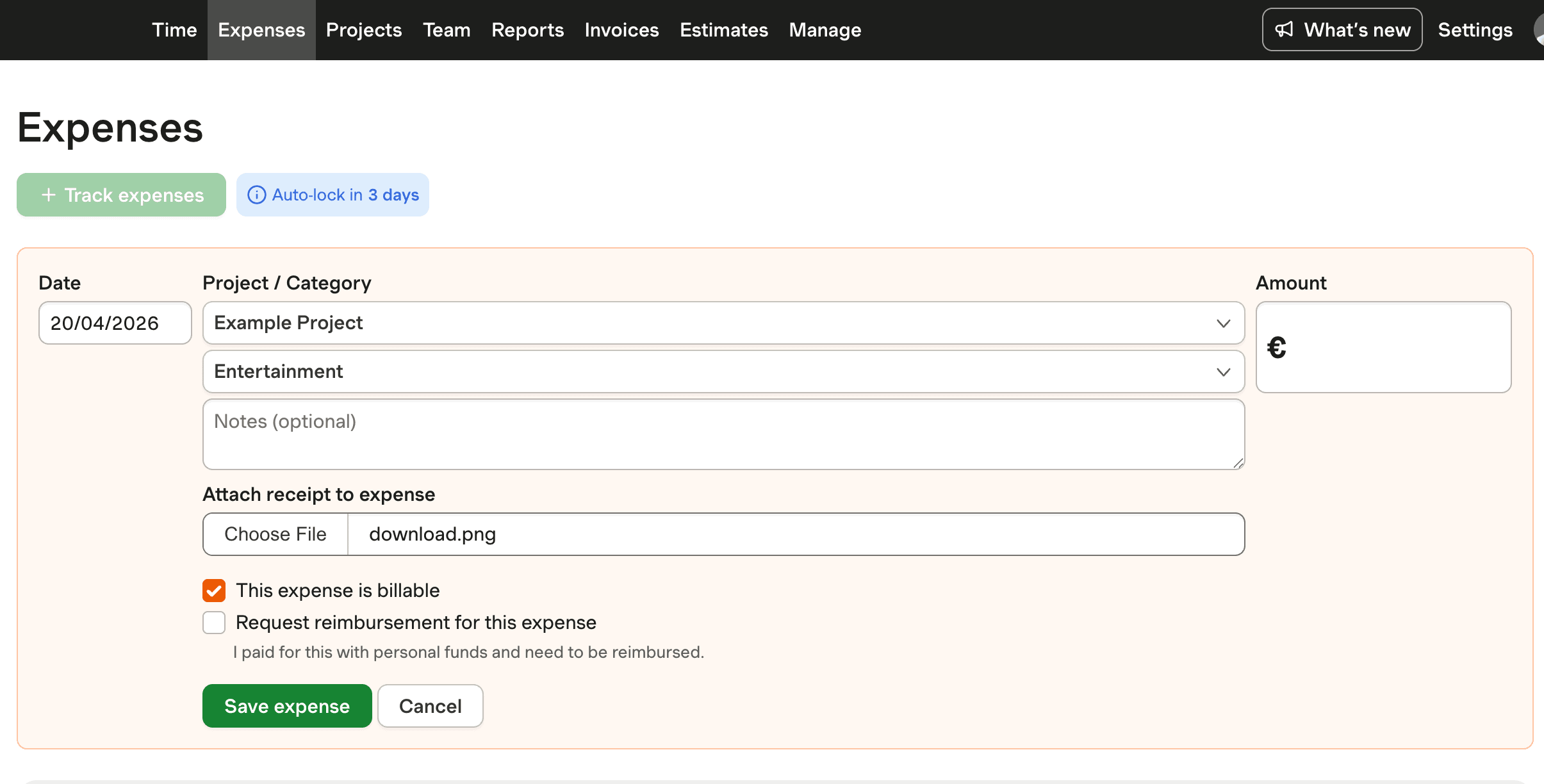
Harvest addresses these challenges by offering a streamlined solution for tracking project expenses. By allowing users to track expenses within project budgets and customize expense categories, Harvest helps businesses maintain control over their finances. This approach reduces the likelihood of errors and saves valuable time, enabling teams to focus on core project activities without worrying about the complexities of manual tracking.
Harnessing the Power of Customizable Expense Categories

One of the critical features of an effective project expense tracker is the ability to customize expense categories. This capability allows businesses to tailor their tracking to the specific needs of each project, ensuring that all relevant costs are accounted for. In industries like construction and technology, where expenses can vary widely, this customization is crucial for accurate budgeting and reporting.

Harvest empowers administrators to create customizable expense categories specific to project types. By organizing expenses into detailed categories, businesses gain clearer insights into where funds are allocated, making it easier to identify cost-saving opportunities and improve financial planning. This level of customization not only enhances tracking accuracy but also supports strategic decision-making by providing detailed financial data tailored to each project's unique requirements.

Integrating Expense Tracking Within Project Budgets

Efficient project management demands the integration of expense tracking within the overall project budget. This integration ensures that project costs are monitored continuously against the allocated funds, helping prevent budget overruns and ensuring financial accountability. While some tools offer direct integration with project management software, Harvest provides a comprehensive system for tracking expenses within project budgets itself.

With Harvest, businesses can set project budgets by total project fees, including both billable and non-billable expenses, to gain a comprehensive view of project costs. This approach allows teams to track multiple projects simultaneously, ensuring that every expense is accounted for within the project's financial framework. By centralizing expense tracking within the project budget, Harvest helps businesses maintain financial oversight and minimize the risk of unexpected costs.

The Future of Expense Management: Automation and AI

As businesses look toward the future of expense management, automation and AI are becoming increasingly vital. Automated expense reporting can reduce processing costs by up to 78% per transaction, illustrating the significant efficiency gains available through technology. Furthermore, companies that adopt AI in expense management could see a profitability increase of up to 38% by 2035, underscoring the financial benefits of embracing modern solutions.

While Harvest does not currently offer AI-driven capabilities, its robust system for tracking expenses within project budgets ensures businesses can automate many manual tasks. By focusing on automation where possible, Harvest helps organizations streamline their processes, reduce errors, and increase efficiency, setting the stage for future technological advancements that could further enhance expense management capabilities.

Explore Harvest for Project Expense Tracking

See how Harvest's project expense tracking features help manage budgets with customizable categories and detailed reporting.

Screenshot of Harvest project expense tracking interface.

Best Project Expense Tracker FAQs

  • Harvest helps track project expenses by allowing you to set budgets within project parameters and create customizable expense categories. This provides a structured way to monitor costs and ensure financial control throughout the project lifecycle.

  • Customizing expense categories allows businesses to align their expense tracking with specific project needs. This ensures comprehensive budgeting, accurate reporting, and easier identification of cost-saving opportunities.

  • Yes, Harvest allows you to track multiple project budgets simultaneously. This feature ensures that every project has clear financial oversight, helping prevent budget overruns and maintaining accountability.

  • Automation in expense management reduces the cost of processing expense claims by up to 78% and minimizes errors. It streamlines workflows, saves time, and allows teams to focus on more strategic tasks.

  • By integrating expense tracking with project budgets, businesses can continuously monitor spending against allocated funds. This real-time oversight helps identify potential overruns early, allowing for proactive adjustments.

  • Manual expense tracking is prone to errors, with 19% of reports typically containing inaccuracies. Correcting these errors is time-consuming and costly, making automation a valuable solution for efficiency.

  • Harvest allows you to generate detailed expense reports but does not offer real-time reporting. However, it provides robust tools for tracking expenses within project budgets, ensuring comprehensive financial oversight.