
Harvest
Expenses
Sign up

Billable Expense Tracker in Gujarati

Harvest provides an efficient solution for tracking billable expenses, allowing users to attach receipt photos, ensuring thorough documentation even when inputting notes in Gujarati.

  • Attach receipts to projects & tasks
  • Turn tracked expenses into client invoices
  • Free 30-day trial, no credit card needed

or drag & drop • Images and PDFs, max 10 MB

The Need for Effective Billable Expense Tracking

Billable expense tracking is crucial for businesses that aim to maintain a clear and accurate account of expenses that can be charged to clients. In industries like legal, accounting, and construction, tracking client-billable expenses ensures accurate billing and minimizes revenue loss. For instance, professional service firms meticulously document expenses such as court fees and travel costs to avoid client disputes and ensure profitability. Automating this process can lead to a productivity boost of up to 30%, as teams spend less time on manual entry and more on core activities.

In regions like Gujarat, businesses often face challenges such as managing a mix of cash and digital payments. Effective expense tracking systems must accommodate various payment methods, including UPI and bank transactions, to provide comprehensive financial visibility. Businesses adopting automated systems report a reduction in reimbursement processing time from 14-21 days to just 2-3 days, highlighting the efficiency benefits of digital expense management.
How Harvest Simplifies Expense Management

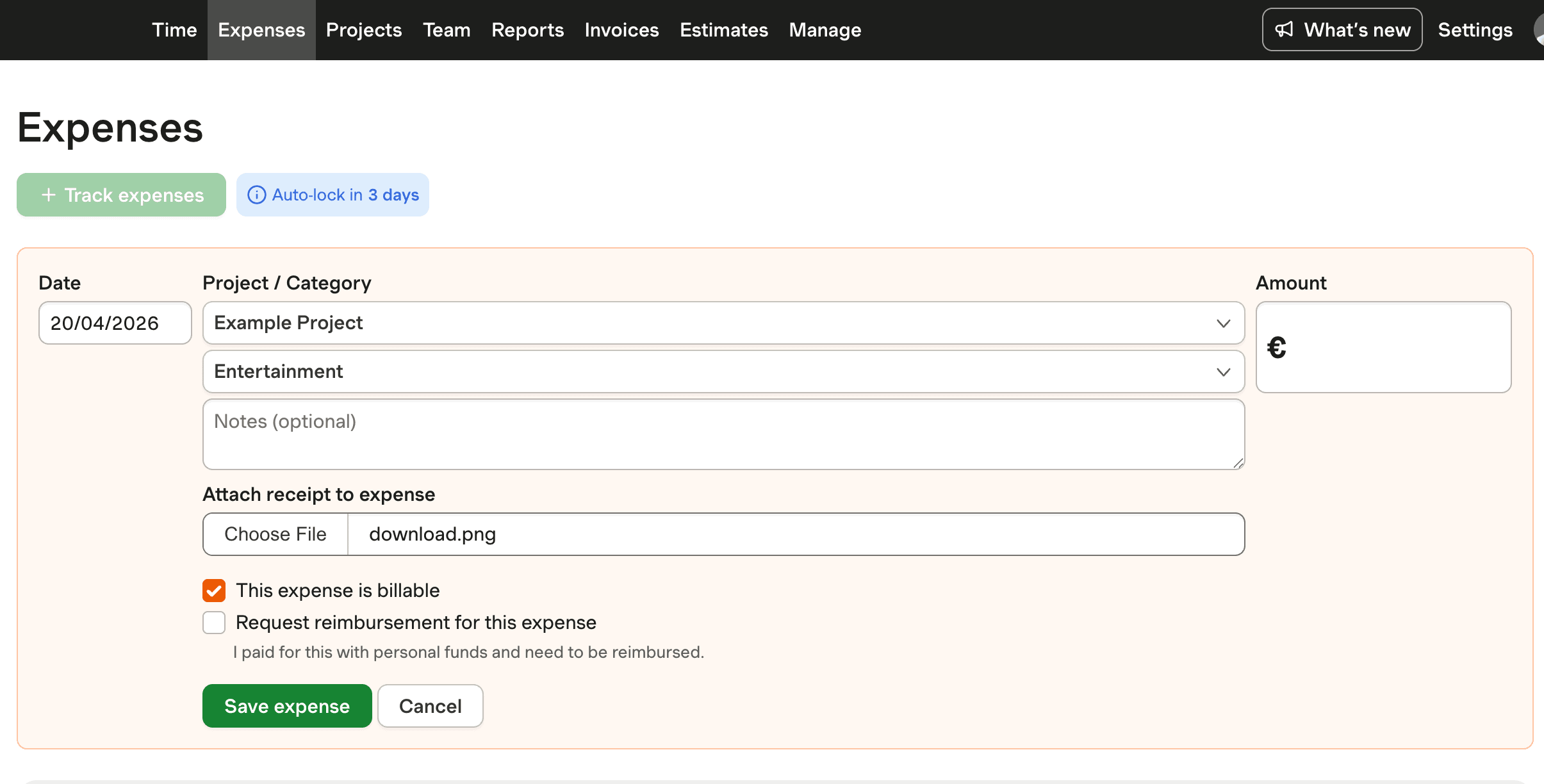
Harvest offers a streamlined solution for businesses seeking to manage their expenses efficiently. Although Harvest's interface is primarily in English, users can input category names and notes in any language, including Gujarati, making it adaptable for local use. Harvest excels in project-based expense tracking by allowing users to attach photos of receipts to expense entries, ensuring thorough documentation and ease of reference.

Despite the absence of specific features tailored for Indian financial practices, Harvest's ability to upload receipt images directly through mobile devices or desktop platforms enhances accuracy and reduces the administrative burden on employees. This feature is particularly beneficial for maintaining detailed records required for GST compliance in India, ensuring that businesses can claim Input Tax Credit (ITC) accurately.

The Role of Automation in Expense Tracking

Automation plays a pivotal role in modernizing expense tracking, offering significant time and cost savings. Automated systems can reduce errors and accelerate the reimbursement process, with some businesses saving approximately ₹6,200 (around $75) per expense report. This is achieved through features like immediate receipt digitization and automatic expense categorization, which streamline the entire expense capture process.

Furthermore, the strategic importance of such automation is underscored by the fact that 87% of CFOs are prioritizing expense automation to enhance accuracy and compliance by 2025. This shift towards automated solutions is not just about reducing administrative overhead but also about gaining real-time visibility into spending patterns, allowing businesses to make informed decisions about budget allocation and cash flow management.

Best Practices for Billable Expense Management

Implementing best practices in billable expense management is essential for businesses to maintain financial accuracy and compliance. A step-by-step approach includes defining billable expenses clearly in contracts, using dedicated systems like Harvest for capturing expenses, and maintaining detailed documentation such as receipts and invoices. Categorizing expenses properly helps optimize tax liability and provides insights into project profitability.

Regular review and reconciliation of expense reports against financial statements are crucial for accuracy. Establishing approval workflows ensures that all expenses are validated for necessity and compliance. To avoid common mistakes like late submissions and manual errors, businesses should adopt automated solutions that integrate seamlessly with accounting software, enhancing data flow and reporting accuracy.

Manage Billable Expenses with Harvest

Explore Harvest's capabilities for efficient billable expense tracking, featuring receipt uploads and language flexibility for Gujarati users.

Harvest interface showing billable expense tracking features

Billable Expense Tracker in Gujarati FAQs

  • Harvest simplifies billable expense tracking by allowing users to attach receipt photos to expenses, ensuring accurate documentation. This feature is accessible via mobile and desktop, making it easy to manage expenses on the go.

  • While Harvest's user interface is in English, you can enter category names and notes in Gujarati, making it adaptable for local use. This flexibility helps users manage their expenses effectively without language barriers.

  • Automated expense tracking significantly reduces reimbursement processing time and administrative errors. It can save businesses around ₹6,200 per expense report and enhance productivity by up to 30% by streamlining expense management tasks.

  • Real-time visibility into expenses allows businesses to make informed decisions about budgeting and cash flow. It helps identify spending patterns, prevent overspending, and ensures compliance with financial regulations.

  • Indian businesses often manage a mix of cash and digital payments, requiring systems that can handle diverse payment methods. Challenges include ambiguous policies and lost receipts, which automated systems like Harvest help mitigate by offering real-time tracking and digital receipt capture.

  • Harvest aids in GST compliance by allowing detailed documentation of expenses, including receipt uploads, necessary for claiming Input Tax Credit. This ensures expenses are properly tracked and classified, reducing the risk of compliance issues.

  • Automation is a key focus for CFOs, with 87% prioritizing it by 2025 to improve accuracy and compliance in expense management. This strategic shift enhances financial operations and supports informed decision-making.