
Harvest
Expenses
Sign up

Company Monthly Expenses Template Excel

Businesses overspend by 30% due to inefficient expense tracking. Harvest's customizable categories offer a streamlined solution for project-based expense management.

  • Attach receipts to projects & tasks
  • Turn tracked expenses into client invoices
  • Free 30-day trial, no credit card needed

or drag & drop • Images and PDFs, max 10 MB

The Importance of a Company Monthly Expenses Template

Managing company expenses efficiently is crucial for maintaining financial health and avoiding overspending. Businesses that utilize structured expense tracking systems can reduce their operational costs by up to 20% and increase profit margins by up to 10%. Inefficient expense management, often resulting from manual processes like paper receipts and spreadsheets, can lead to overspending by as much as 30%. Moreover, manual data entry is time-consuming and prone to errors, costing businesses over $2,000 per year in lost receipts alone.

For businesses seeking a more structured approach, a company monthly expenses template in Excel can provide a straightforward yet effective solution. By systematically categorizing expenses, companies can gain better insights into their spending patterns. However, traditional templates often lack real-time tracking, which is considered a "game-changer" by 87% of small businesses for financial visibility and decision-making. While Excel templates offer a starting point, integrating them with real-time data entry systems, like those provided by Harvest, can dramatically enhance their effectiveness.
How to Customize an Excel Template for Company Expenses

Customizing an Excel template to fit your company's specific needs is essential for effective expense tracking. Start by opening a new Excel workbook and setting up essential columns such as "Date," "Vendor," "Expense Type," "Amount," and "Notes." This setup helps maintain detailed records and provides a clear overview of spending. Consistent categorization of expenses—like travel, office supplies, and marketing—ensures that funds are allocated accurately.

Utilize Excel's `=SUM()` formula to aggregate amounts under each category. This allows for quick assessments of spending levels and helps identify trends. Creating summary tables can also provide a comprehensive overview of your business finances, including monthly totals and an annual breakdown by categories. Consistent updates to your spreadsheet, paired with diligent receipt management, are crucial for maintaining accuracy and ensuring readiness for tax purposes.

Enhancing Expense Management with Harvest

While Excel templates serve as a foundational tool for expense management, Harvest offers enhanced capabilities that can streamline your processes. Harvest allows administrators to create customizable expense categories, making it adaptable for different business types. This flexibility is ideal for small to medium businesses looking to manage project-based expenses efficiently.

Harvest's focus on project-based expense tracking means that while it doesn't automate expense tracking with built-in formulas, it does allow for precise manual entry and detailed reporting. This approach not only supports accurate financial record-keeping but also aids in identifying spending trends across various projects. For businesses seeking to transition from Excel templates to a more dynamic expense management system, integrating Harvest can significantly improve efficiency and accuracy.

Overcoming Common Excel Template Limitations

Excel templates, though useful, have limitations that can impede effective expense management. Manual data entry is often time-consuming and error-prone, leading to inaccurate reports and potential overspending. Without real-time tracking, expenses may accumulate unnoticed, providing limited visibility into overall spending patterns.

To overcome these challenges, businesses should consider digital solutions like Harvest. While Excel requires manual updates, Harvest allows for real-time data entry and tracking, improving financial visibility and decision-making. By adopting Harvest, businesses can reduce processing time by up to 70% and increase accuracy by up to 90%, ensuring more reliable and efficient expense management.

Manage Expenses with Harvest

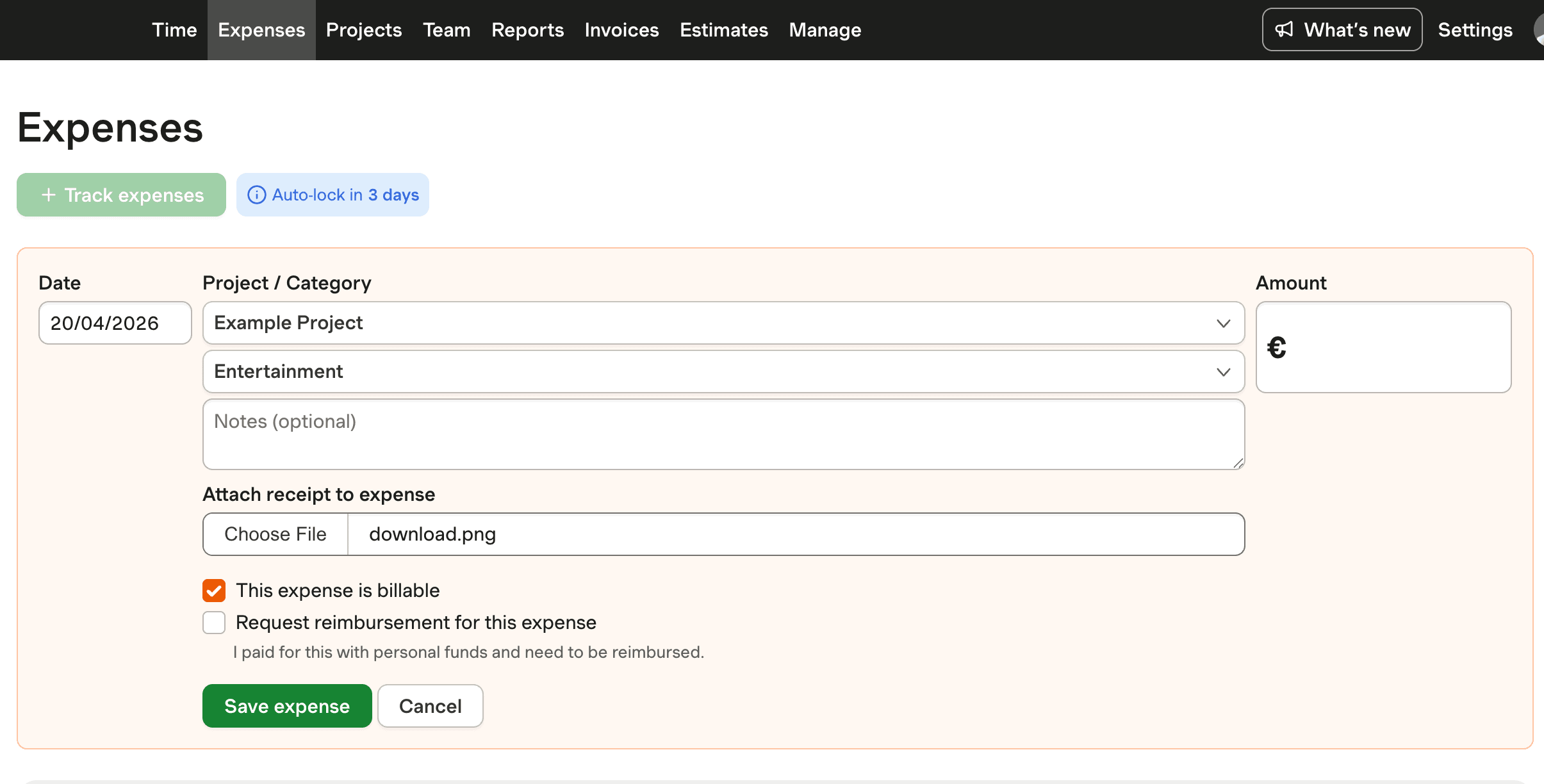
See how Harvest simplifies tracking company monthly expenses with customizable categories, enhancing financial management.

Harvest interface for managing company monthly expenses with Excel templates.

Company Monthly Expenses Template Excel FAQs

  • A good monthly expenses template should include columns for date, vendor, expense type, amount, and notes. It should also allow for categorization of expenses to help track spending patterns. Utilizing formulas like `=SUM()` can aid in calculating totals, providing a comprehensive view of expenses.

  • To customize an Excel template, start by setting up relevant columns such as "Date," "Vendor," and "Expense Type." Consistently categorize each expense and use formulas to calculate totals. Regular updates and diligent receipt management are essential for accuracy.

  • Effective tracking involves setting up clear categories, using formulas to sum totals, and regularly updating records. Avoid relying solely on memory for recurring expenses and ensure receipts are organized and digitalized to prevent loss.

  • Harvest enhances expense tracking by offering customizable categories and project-based tracking, reducing errors associated with manual data entry. Unlike Excel, Harvest allows for real-time updates, improving financial visibility and decision-making.

  • Manual expense tracking often leads to human error, delayed reporting, and limited financial visibility. The time-consuming nature of manual processes can detract from core business activities, and the reliance on physical receipts poses risks of loss and damage.

  • Switching to digital expense management can reduce operational costs by up to 20% and save employees up to 80% of the time spent on expense management. It also improves accuracy and compliance, leading to better financial decision-making.

  • Real-time expense tracking provides immediate insights into financial status, helping businesses make informed decisions. It is considered a "game-changer" by 87% of small businesses for enhancing financial visibility and reducing the risk of overspending.