
Harvest
Expenses
Sign up

Expense Tracker for Landscapers

Landscaping businesses face unique financial challenges, with labor costs often consuming 35% of revenue. Harvest helps landscapers track expenses and improve project profitability, providing insights into job costing and financial health.

EXPENSE REPORT DRAFT

Drop your receipts here or click to upload

Images and PDFs (max 10 MB each)

Date
Category
Merchant
Description
Amount
Total
$0.00

Customise report

Appearance

Show report title

Report settings

Why Expense Tracking Matters for Landscapers

Effective expense tracking is crucial for landscapers aiming to maintain healthy profit margins and streamline financial operations. In the U.S., the landscaping industry is projected to reach $184.1 billion by 2025, growing at a 6.0% CAGR. With labor costs making up 35% of revenue, managing these expenses is critical to achieving a net profit margin of 10-14%, which is considered healthy for the industry. Companies that manage their expenses well can see over 20% margins, allowing for debt-free scaling.

Despite the industry's size, many landscaping businesses still rely on outdated methods like paper receipts and manual data entry, which are prone to errors and inefficiencies. Automating expense management can reduce processing costs by 30% and decrease errors by 65%. By transitioning from manual to digital processes, landscapers can not only save time but also gain real-time insights into their financial health, helping them make proactive decisions about their business operations.
How Harvest Supports Landscapers with Expense Tracking

Harvest offers landscapers a comprehensive solution for tracking expenses, labor costs, and project profitability, ensuring they keep financial operations under control. By using Harvest, landscapers can monitor labor costs as a percentage of revenue, a critical metric since labor typically constitutes the largest expense. This insight helps businesses maintain profitability and optimize cost allocation across different projects.

While Harvest does not differentiate expenses by service type, it excels in organizing expenses and invoicing, providing a clear picture of financial health. The platform's tools for job costing and project profitability enable landscapers to analyze financial performance and make informed decisions. This capability is essential for landscapers who need to track costs accurately and ensure their projects are profitable.

Key Features to Look for in an Expense Tracker

An effective expense tracker for landscapers should include several key features to ensure comprehensive financial management. First, it must allow for the categorization of expenses into logical groups like labor, materials, and overhead, to provide clarity and control over spending. Digital tools that offer receipt scanning and optical character recognition (OCR) can automate data entry, reducing manual errors and improving accuracy.

Additionally, real-time tracking capabilities are essential. By logging expenses as they occur, landscapers can prevent lost receipts and forgotten details, ensuring precise and up-to-date records. This real-time data empowers businesses to monitor spending patterns and adjust budgets accordingly. Moreover, integrating expense tracking with other business systems, such as invoicing and project management tools, provides a holistic view of financial operations, aiding in strategic decision-making.

Best Practices for Managing Landscaping Expenses

To effectively manage expenses, landscapers should adopt a structured approach to financial tracking. Establishing a consistent system, whether through spreadsheets or specialized software like Harvest, ensures that all expenditures are recorded and categorized accurately. Categorizing expenses into operating costs, COGS, and employee costs allows for a clear understanding of where money is being spent.

Regular reviews and audits of expenses are vital to identify errors and monitor spending against budgets. By doing so, landscapers can pinpoint opportunities for cost savings and enhance their profit margins. Avoid common pitfalls such as relying solely on manual processes or mixing personal and business finances, which can lead to inaccuracies and inefficiencies. Instead, adopt digital solutions that streamline workflows and provide accurate, real-time financial data.

Track Landscaping Expenses with Harvest

Harvest provides landscapers with tools to track expenses and project profitability, offering insights into labor costs and financial health.

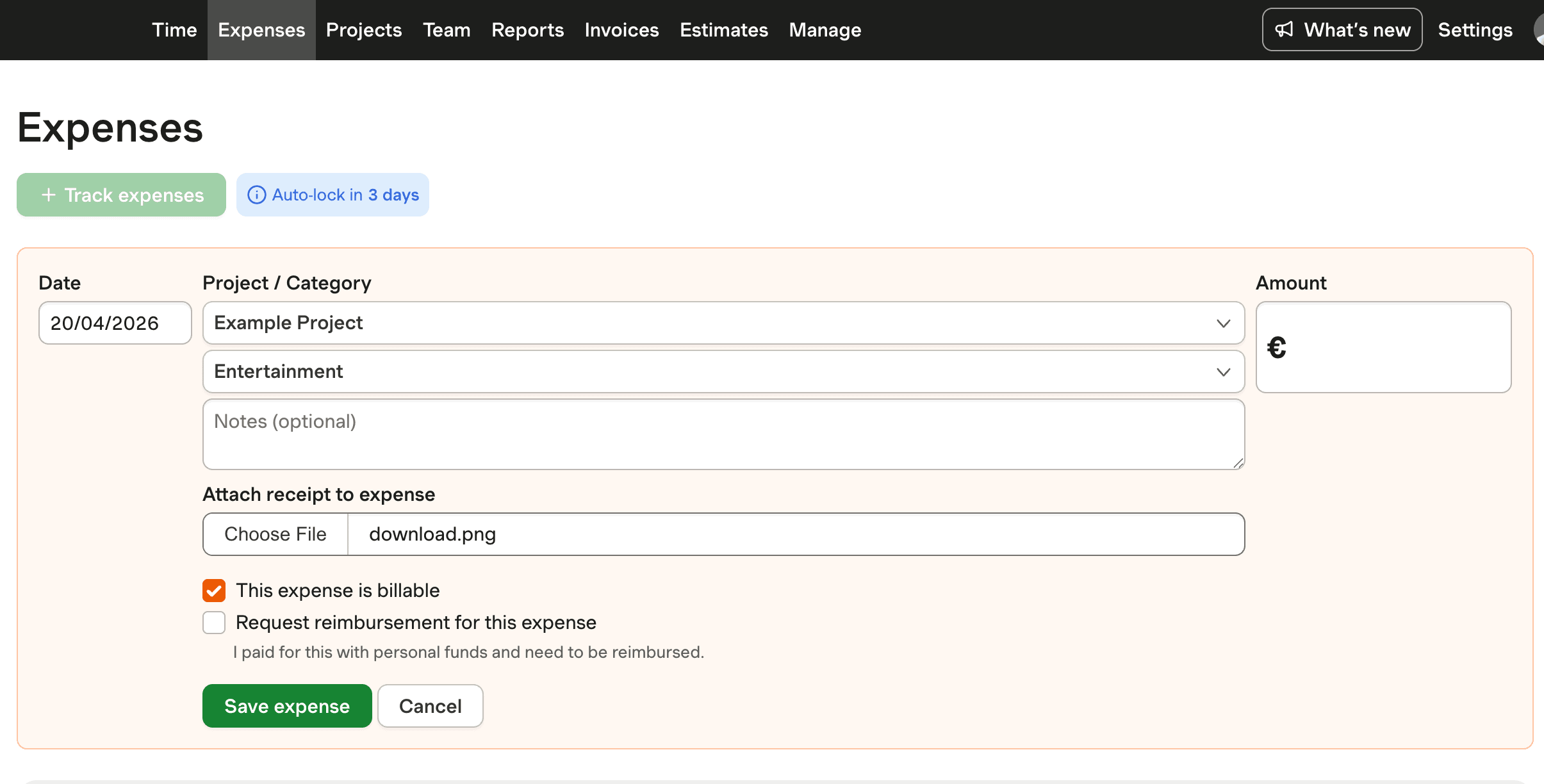
Screenshot of Harvest expense tracker for landscapers.

Expense Tracker for Landscapers FAQs

  • Landscapers can track expenses effectively by using digital tools like Harvest, which offer features such as receipt scanning, expense categorization, and real-time tracking. These tools help automate data entry, reduce errors, and provide a comprehensive view of spending patterns.

  • Landscapers should track a variety of expenses, including labor costs, materials, equipment, travel, and overhead. Categorizing these expenses helps in analyzing financial health and maintaining profitability.

  • Real-time expense tracking is crucial as it ensures that all spending is recorded promptly, preventing lost receipts and forgotten expenses. This accuracy helps landscapers manage their budgets effectively and make informed financial decisions.

  • Yes, Harvest provides tools that help landscapers with job costing by tracking labor costs and project profitability. This functionality aids in understanding the financial performance of landscaping projects and making data-driven decisions.

  • Digital expense tracking offers several benefits, including reduced processing costs, fewer errors, and faster approval times. Automating these processes frees up time for landscapers, allowing them to focus on revenue-generating activities.

  • Harvest integrates with other business operations by linking expense tracking with invoicing and project management tools. This integration provides a unified view of financial activities, aiding in comprehensive financial management.

  • A healthy profit margin for a landscaping business typically ranges between 10% and 14%. Achieving higher margins can support debt-free scaling and better financial stability.