
Harvest
Expenses
Sign up

Expense Tracking for Contractors With Wave Integration

Harvest empowers contractors to track expenses efficiently, even without direct Wave integration, by offering comprehensive tools for time tracking, job costing, and invoicing.

EXPENSE REPORT DRAFT

Drop your receipts here or click to upload

Images and PDFs (max 10 MB each)

Date
Category
Merchant
Description
Amount
Total
$0.00

Customise report

Appearance

Show report title

Report settings

Efficient Expense Tracking for Contractors

Expense tracking is crucial for contractors who need to maintain financial health and ensure operational efficiency. The transition from manual processes like spreadsheets to digital solutions has become a necessity, offering significant time savings and cost reductions. Automated expense management can reduce the cost of processing expense claims by up to 78% per transaction. Additionally, freelancers can save between $3,000 and $8,000 annually in taxes by maximizing deductions through accurate expense tracking. These savings are essential for contractors who often deal with complex job costing and frequent on-the-go purchases.

However, manual processes continue to plague many contractors, leading to high error rates. On average, 19% of manual reports contain errors, each taking 18 minutes to correct and costing an additional $52. This inefficiency can be mitigated by adopting integrated solutions like Harvest, which streamlines expense reporting, time tracking, and invoicing into a cohesive workflow. By automating these processes, contractors can focus more on their projects and less on administrative tasks.
Benefits of Digital Expense Management

Digital expense management offers numerous advantages, particularly for contractors who need precise job costing and financial visibility. The use of integrated systems enhances real-time job costing by syncing project costs with accounting software, providing immediate insights. This is crucial for contractors to avoid financial blind spots and ensure accurate pricing and profitability.

With tools like Harvest, contractors can easily track labor and material costs as billable expenses or invoice line items, facilitating detailed reporting. This not only aids in better financial management but also in strategic decision-making. For instance, a contractor can identify which services are most profitable and adjust their focus accordingly. Additionally, Harvest allows for the seamless integration of time tracking with expense reporting, ensuring that no billable hour goes unaccounted.

Best Practices for Contractor Expense Tracking

To optimize expense tracking, contractors should follow several best practices. First, opening a separate business bank account is essential to distinguish personal and business expenses, simplifying bookkeeping and tax preparation. Next, choosing an integrated accounting software that automates expense tracking is crucial for maintaining accurate records and simplifying tax reporting.

Contractors should also link their financial institutions to the software for automatic transaction downloads and categorization, reducing manual data entry. Using mobile apps to capture receipts instantly ensures no details are lost or damaged. Regular reconciliations of receipts against bank statements help maintain accuracy and flag missing items. While Harvest does not specifically categorize expenses by project phase, it allows for tracking expenses by project and client, which can still provide significant insights into financial performance.

Wave Integration and Harvest's Role

While Wave offers features for expense tracking, contractors seeking additional capabilities can benefit from integrating with complementary tools like Harvest. Harvest provides detailed reports on labor versus material costs and integrates time tracking with expense reporting, offering a comprehensive view of project profitability and expenses.

Although Harvest does not integrate directly with Wave, it enhances the contractor's workflow by allowing for detailed job costing and invoicing. By using both systems, contractors can leverage Wave for its accounting capabilities while using Harvest to manage project budgets, time, and expenses effectively. This dual approach ensures that contractors maintain accurate financial records and make informed decisions based on real-time data.

Explore Harvest's Expense Tracking

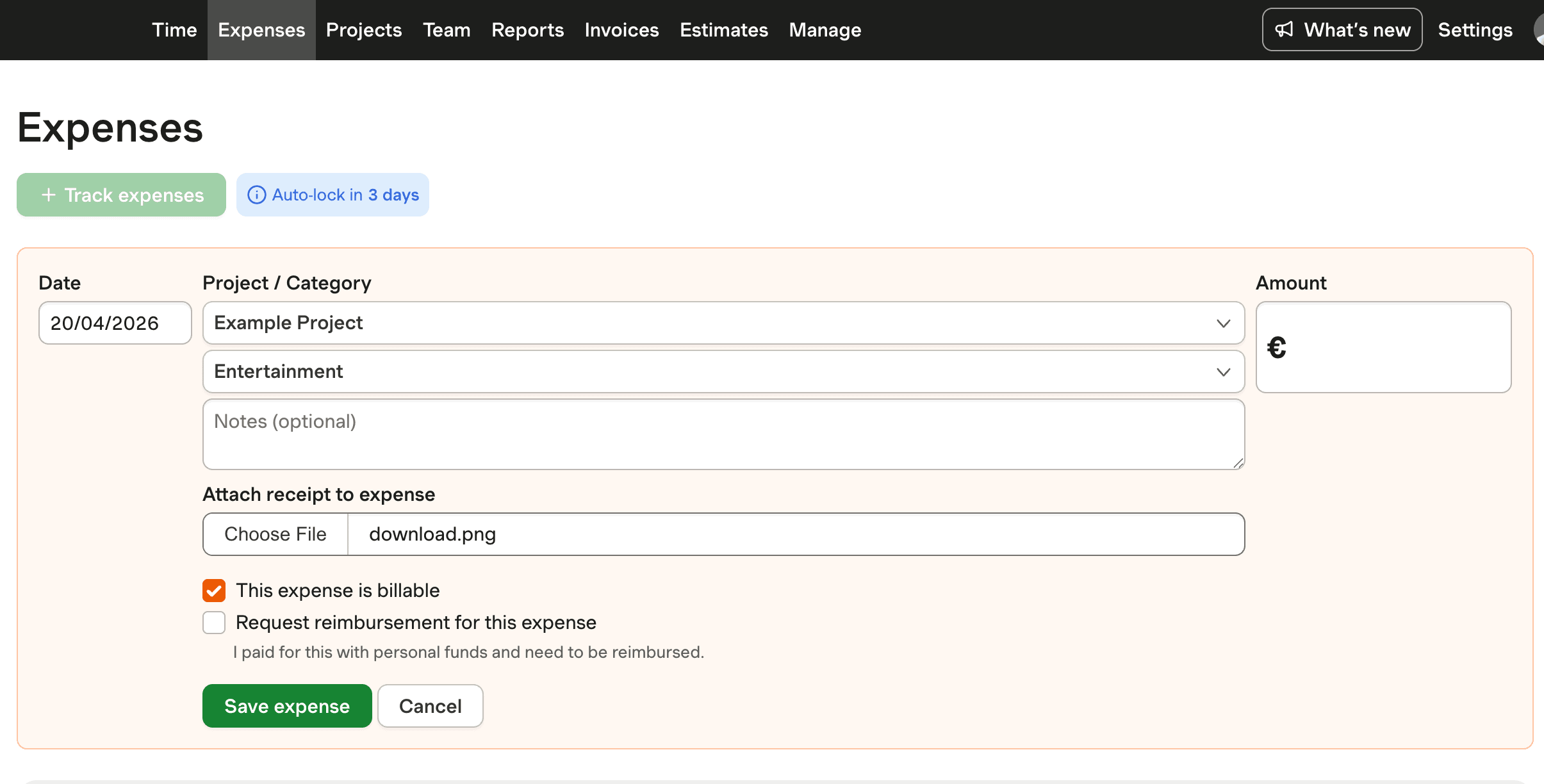
See how Harvest enhances contractor expense tracking with detailed job costing and time tracking integration.

Harvest expense tracking dashboard for contractors.

Expense Tracking for Contractors With Wave Integration FAQs

  • Contractors can efficiently track expenses by using integrated accounting software that automates transaction downloads and categorization. This reduces manual data entry errors and provides real-time financial insights.

  • Digital expense management reduces processing costs by up to 78% and saves freelancers between $3,000 and $8,000 annually in taxes. It offers real-time insights and reduces manual errors.

  • Harvest supports job costing by allowing contractors to organize labor and materials as billable expenses or invoice line items. This helps in maintaining accurate financial records and project profitability.

  • While Harvest does not directly integrate with Wave, it complements it by offering detailed job costing and time tracking, enhancing overall financial management for contractors.

  • Best practices include opening a separate business bank account, using integrated software for automated tracking, categorizing expenses by project, and performing regular reconciliations.

  • Real-time expense tracking provides immediate financial insights, helps avoid cost overruns, and ensures profitability by allowing for accurate job costing and decision-making.

  • Contractors can manage expenses on-the-go by using mobile apps to capture receipts instantly and by linking their financial accounts to their accounting software for automatic updates.

  • Contractors should avoid relying on manual methods, mixing personal and business finances, and failing to back up digital records. It's crucial to track expenses in real time to prevent backlogs.