
Harvest
Expenses
Sign up

Filling Out Expense Report

Harvest simplifies the process of filling out expense reports by providing tools for receipt uploads and project-based categorization, reducing errors and ensuring compliance.

EXPENSE REPORT DRAFT

Drop your receipts here or click to upload

Images and PDFs (max 10 MB each)

Date
Category
Merchant
Description
Amount
Total
$0.00

Customise report

Appearance

Show report title

Report settings

Understanding the Essentials of Filling Out an Expense Report

Filling out an expense report involves more than just listing expenses; it requires a detailed record that ensures compliance and accuracy. At the core, an expense report should include the date, category, and amount of each expense, along with receipts or proof of payment. According to the IRS, these elements are crucial for substantiating business expenses, and businesses must retain these records for at least three years. However, many companies struggle with these requirements due to manual processes, which cost organizations up to $35.02 per report and can lead to financial inefficiencies.

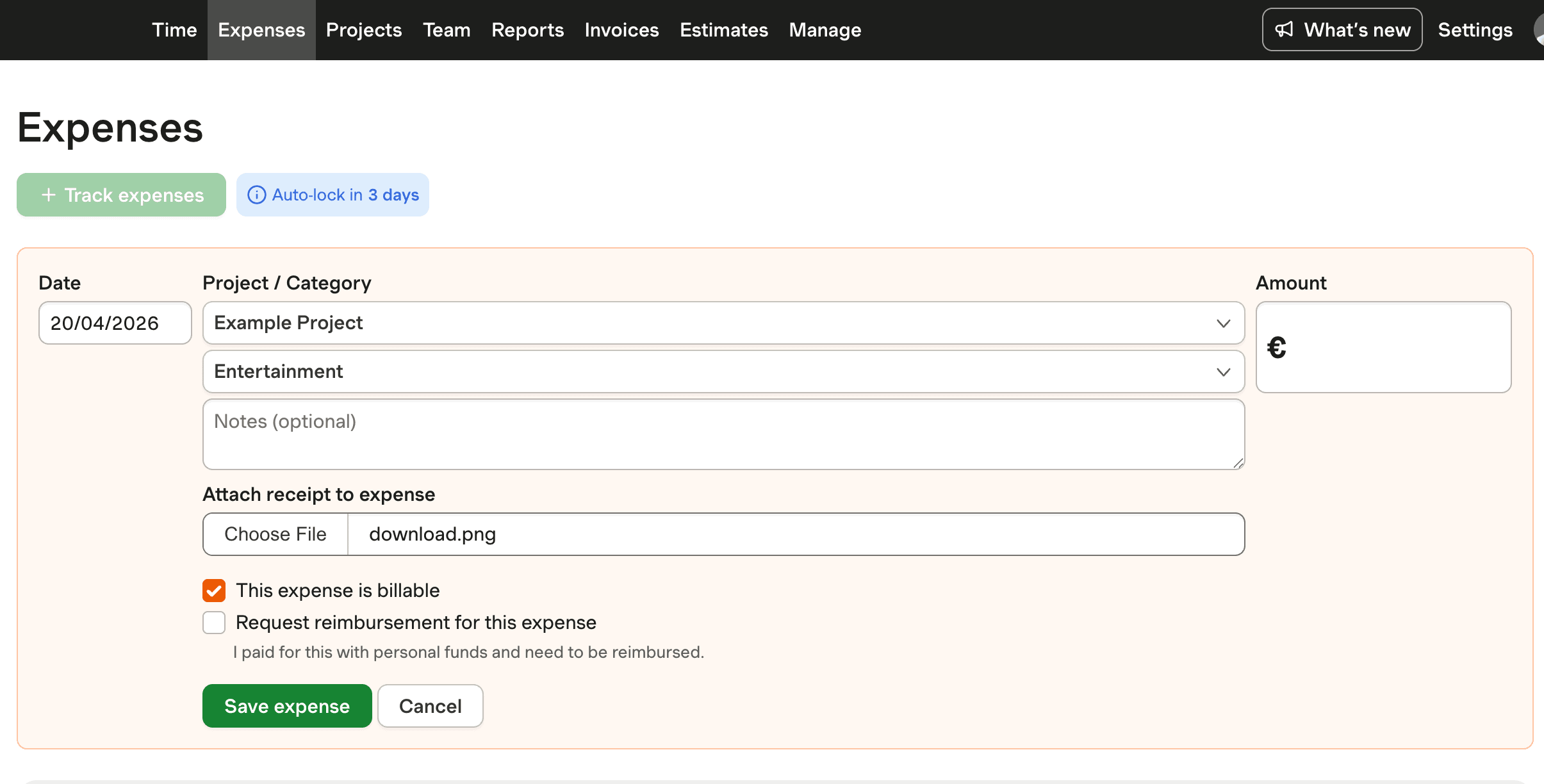
To streamline this process, adopting digital tools like Harvest can significantly enhance accuracy and efficiency. Harvest allows users to attach receipt images directly to each expense, ensuring that all information is readily available and organized. This capability not only helps in maintaining compliance but also reduces the risk of errors, which can cost an additional $52 each to rectify. By digitizing and organizing expenses, businesses can focus on core activities without being bogged down by administrative burdens.
How to Categorize and Itemize Expenses Effectively

Proper categorization and itemization of expenses are essential for clarity and effective tracking. Missteps in these areas are common, with 19% of expense reports typically containing errors, leading to additional costs and delayed reimbursements. Categorizing expenses by type—such as travel, meals, and office supplies—and itemizing them line by line can help prevent such issues.

With Harvest, users can easily track expenses by date, project, and category, providing a clear and detailed view of spending patterns. This functionality not only aids in accurate reporting but also supports project-based budgeting. By maintaining detailed records, businesses can gain insights into spending trends and identify areas for cost-saving. Such clarity is critical in industries with high travel or project-based work, where precise tracking is necessary to manage budgets effectively.

Leveraging Technology for Expense Report Compliance

Compliance with expense reporting regulations is crucial to avoid legal and financial repercussions. The average loss from expense reimbursement schemes is $251,000, highlighting the importance of maintaining rigorous documentation and adherence to policies. Despite this, about one-third of businesses still rely on manual processes, increasing the risk of non-compliance.

By integrating technology into expense management, companies can enhance compliance and reduce the risk of errors. Harvest aids in this by allowing users to attach necessary documentation, such as receipt images, directly to each expense report. This capability ensures that all required information is captured and easily accessible for audits. Furthermore, the ability to itemize expenses line by line within Harvest provides additional clarity, supporting compliance with IRS guidelines and reducing the likelihood of disallowed deductions.

Avoiding Common Mistakes in Expense Reporting

Common mistakes in expense reporting, such as lost receipts and incorrect categorization, can cost businesses significantly. In 2023, 17% of expense claims had missing receipts, which could lead to compliance issues and financial loss. Implementing best practices can help mitigate these risks.

Using tools like Harvest can greatly reduce the occurrence of these errors. By allowing for digital receipt capture and providing a structured format for categorizing and itemizing expenses, Harvest minimizes the chance of mistakes. Additionally, Harvest supports adding notes to expenses, which can assist in clarifying the business purpose of each transaction, further enhancing the accuracy of reports. Encouraging employees to submit reports promptly and use mobile apps for immediate receipt capture can also improve the overall efficiency of the expense reporting process.

Filling Out Expense Reports with Harvest

Harvest streamlines expense report completion with features for receipt uploads and project-based categorization. Ensure compliance easily.

Screenshot of Harvest's expense report filling interface.

Filling Out Expense Report FAQs

  • An expense report should include the date, category, and amount of each expense, along with receipts or proof of payment. These details ensure compliance and accuracy in reporting.

  • Expenses can be categorized by type, such as travel, meals, or office supplies. Using a tool like Harvest, you can further organize expenses by project or date, enhancing clarity and tracking.

  • Receipts for all claimed expenses should be attached to the report. This includes receipts for travel, meals, and any other reimbursable costs. Harvest allows easy attachment of digital receipts for each expense.

  • While specific templates can vary, using a structured format like the one provided by Harvest can help ensure all necessary information is captured and organized correctly.

  • Common mistakes include lost receipts, incorrect categorization, and delayed submissions. Using a digital tool like Harvest can help avoid these by capturing receipts immediately and organizing expenses efficiently.

  • Harvest helps by allowing users to attach receipt images and itemize expenses by project and category. This ensures accuracy and compliance, reducing the risk of errors in reporting.

  • Yes, Harvest supports tracking expenses by project, which is ideal for businesses needing detailed insights into project-specific spending. This feature aids in effective budget management and reporting.