
Harvest
Expenses
Sign up

Keep Track of Miles Driven

Harvest offers customizable manual mileage tracking, ideal for small businesses needing to track project-related travel with precision. This ensures detailed record-keeping without the complexities of automated systems.

  • Attach receipts to projects & tasks
  • Turn tracked expenses into client invoices
  • Free 30-day trial, no credit card needed

or drag & drop • Images and PDFs, max 10 MB

Understanding the Importance of Accurate Mileage Tracking

Keeping track of miles driven is essential for individuals and businesses aiming for accurate tax deductions, expense reimbursements, and operational efficiency. The market for mileage tracking software is expanding rapidly, with a projected growth from USD 250 million in 2023 to USD 620 million by 2032, reflecting an 11% CAGR. This growth underscores the increasing reliance on digital solutions over traditional paper logs, which are prone to errors and inefficiencies. Automated mileage tracking, although not offered by Harvest, can save drivers an average of 42 hours annually, highlighting the shift towards automated processes to eliminate human error.

For many businesses, the evolution from manual to digital tracking represents a critical shift. Notably, companies using automated systems report saving over 4,000 hours annually across 100 employees. While Harvest provides a manual entry system, it empowers businesses to categorize trips by purpose, such as client meetings or errands, ensuring that each mileage entry is recorded with relevant custom notes, enhancing record-keeping accuracy.
Leveraging Harvest for Manual Mileage Tracking

While automated tracking solutions offer convenience, Harvest caters to small businesses preferring a manual approach to track project-related travel. Harvest's strength lies in its ability to allow users to add custom labels and notes to each mileage entry. This feature is particularly useful for categorizing trips by purpose, which can streamline expense management and improve the accuracy of financial records.

Moreover, Harvest integrates with accounting software like QuickBooks Online and Xero, although it does not sync expense entries directly. This integration supports businesses by allowing for seamless invoice copying, aiding in the consolidation of financial data. By focusing on manual entry, Harvest ensures that users retain control over their mileage tracking process, fostering greater customization and alignment with individual business needs.

The Role of Mileage Tracking in Tax Compliance and Business Efficiency

Accurate mileage tracking is crucial for complying with tax regulations, such as those set by the IRS in the United States. The IRS requires detailed records including the date, purpose, starting and ending locations, and odometer readings for each trip. Despite Harvest not offering IRS-compliant logs, it allows for manual entry of mileage, which can be customized with notes to fit various business purposes. This flexibility can aid businesses in maintaining compliance by ensuring that all necessary details are documented accurately.

For companies looking to optimize their reimbursement processes, transitioning from traditional fleet vehicles to systems like the Fixed and Variable Rate (FAVR) can reduce transportation costs by up to 30% annually. Although Harvest does not automate these processes, its manual tracking system can support businesses in capturing and categorizing travel data effectively, contributing to informed decision-making and efficient cost management.

Maximizing Productivity with Manual Mileage Tracking

Manual mileage tracking, as facilitated by Harvest, can be a powerful tool for businesses seeking to enhance productivity and operational efficiency. By allowing users to annotate each entry with custom notes, Harvest enables businesses to differentiate between various trip purposes, such as client visits or supply runs. This feature not only aids in accurate record-keeping but also supports strategic planning by providing insights into travel patterns and associated costs.

While automated solutions offer convenience, the manual approach provided by Harvest can empower businesses to maintain a high level of detail and control over their mileage logs. This can be particularly beneficial for small businesses and freelancers who require a tailored approach to manage their travel expenses. In doing so, Harvest helps businesses align their tracking practices with operational goals and enhance overall financial management.

Track Miles Driven with Harvest

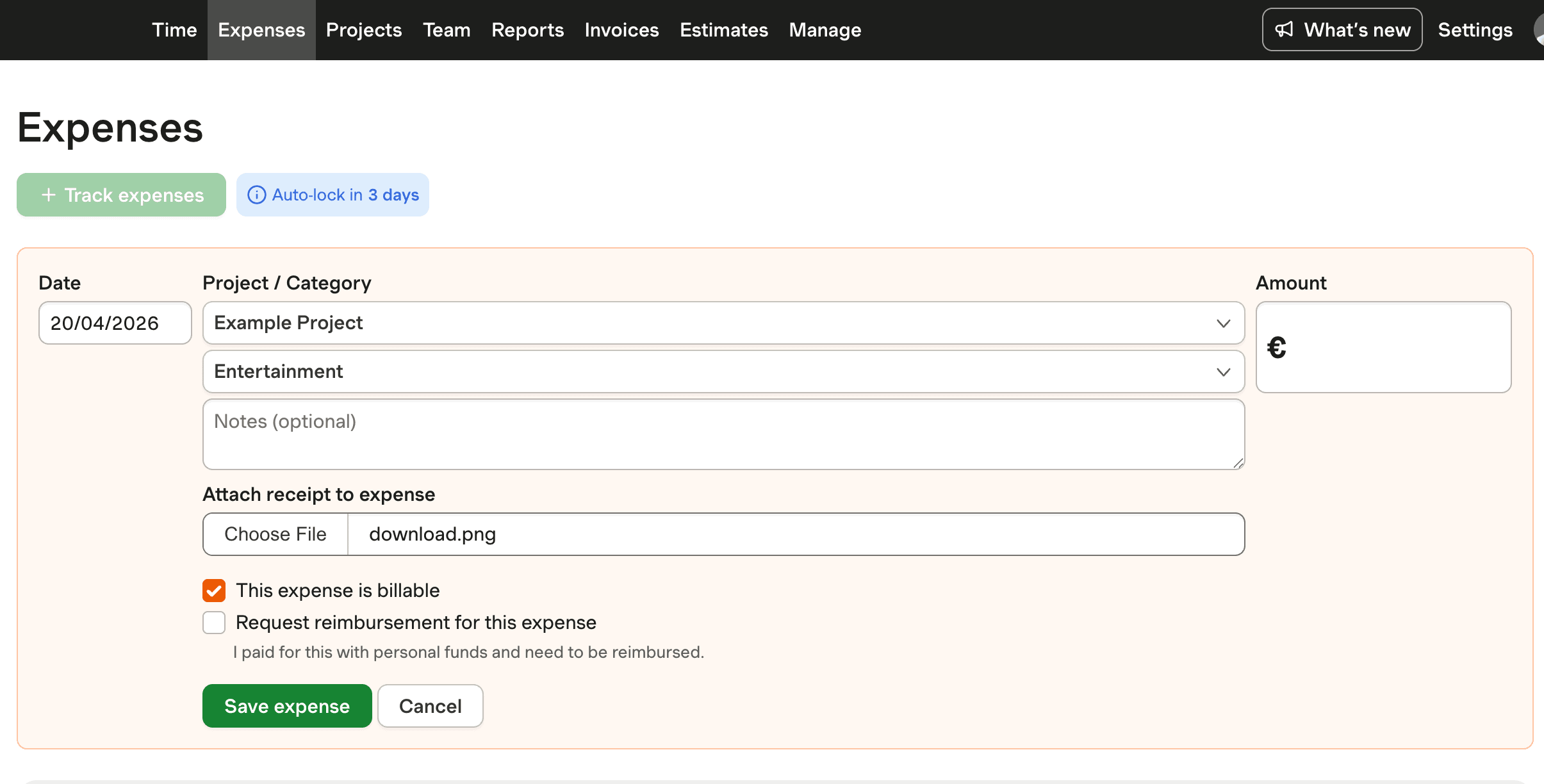
Harvest lets you manually track miles driven, adding custom notes to categorize each trip for detailed project analysis.

Harvest interface for tracking miles driven in project settings.

Keep Track of Miles Driven FAQs

  • The best mileage tracking apps offer features like automatic logging, IRS compliance, and integration with accounting software. While Harvest provides manual tracking with customizable entries, other apps might offer automated tracking for those needing seamless integration.

  • Harvest allows users to manually enter and categorize mileage with custom notes. This feature is great for small businesses needing detailed project-related travel tracking, although it does not offer automated mileage logging.

  • Harvest integrates with QuickBooks Online and Xero for invoice copying. However, it doesn't sync expense entries directly, making it ideal for businesses that manually manage their expenses.

  • Accurate mileage tracking is crucial for tax deductions as it ensures compliance with IRS regulations, which require detailed records of each trip. This prevents disallowed deductions and potential penalties.

  • Key features include automatic logging, IRS-compliant logs, integration with accounting systems, and ease of use. Harvest supports manual entry and detailed categorization, suitable for specific business needs.

  • Manual tracking, like the system offered by Harvest, allows for detailed customization and control over records. This helps businesses strategically plan and manage travel expenses, aligning with operational goals.

  • The market is expected to grow from USD 250 million in 2023 to USD 620 million by 2032, showing an 11% CAGR. This growth reflects an increasing reliance on digital tracking solutions over traditional methods.