
Harvest
Expenses
Sign up

Scalable Expense Management

Harvest simplifies scalable expense management with project-based tracking and invoicing, ideal for small-to-medium businesses looking to streamline operations without complex integrations.

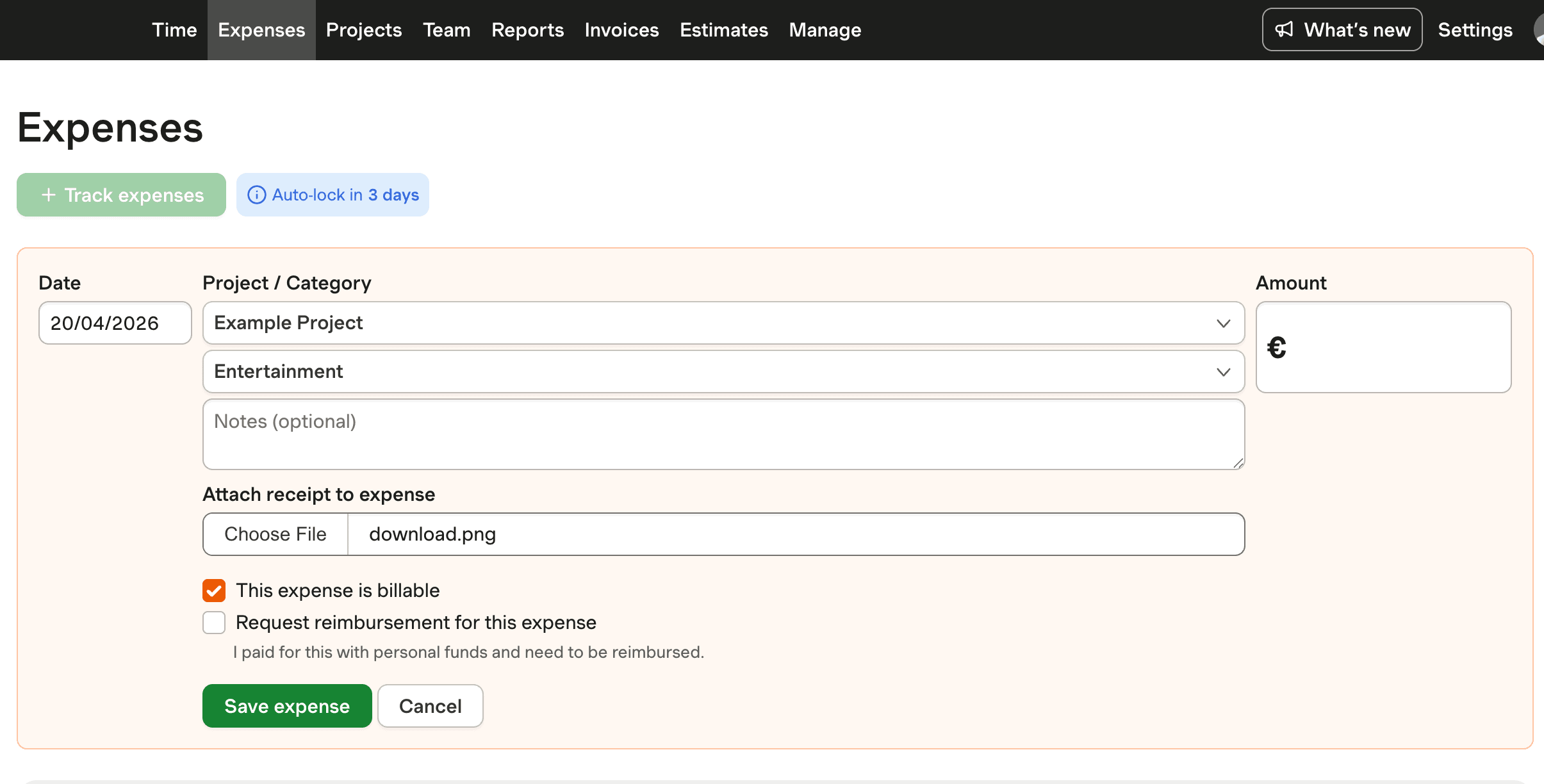
  • Attach receipts to projects & tasks
  • Turn tracked expenses into client invoices
  • Free 30-day trial, no credit card needed

or drag & drop • Images and PDFs, max 10 MB

The Challenges of Manual Expense Management

Manual expense management poses significant challenges for businesses, particularly as they scale. Despite technological advancements, 32% of companies still rely on outdated methods such as spreadsheets and paper to manage expenses, with this figure rising to 38% among large corporations. These manual processes are fraught with issues, including data entry errors, duplicate records, lost receipts, and delayed reporting, which can lead to distorted financial data and hinder timely decision-making.

To tackle these challenges, businesses are increasingly turning to automated solutions. Automation can decrease the cost of processing expense claims by up to 78% per transaction and reduce human error by 29%. Furthermore, companies that automate their expense management processes experience a 28% reduction in processing costs. By adopting automated tools, businesses can streamline their operations, improve accuracy, and enhance overall financial control.
Streamlining Expense Management with Automation

Automation is crucial for scalable expense management, offering significant gains in efficiency and accuracy. By automating routine tasks, businesses can save over 5,400 employee hours, freeing up resources for more strategic initiatives. Automation also facilitates real-time reporting, providing immediate snapshots of business expenditure to better control spending habits.

In the United States, the adoption of automated expense management solutions is high, with 83% of large enterprises and 71% of SMEs leveraging these technologies. Harvest offers a straightforward, project-based expense tracking solution, ideal for small-to-medium businesses that do not require complex compliance or integration capabilities. By implementing Harvest, users can efficiently manage expenses without the need for extensive manual intervention.

Integrating Expense Management with Existing Systems

Seamless integration with existing accounting systems is a key feature of scalable expense management solutions. Businesses benefit from smooth data transfer, elimination of redundant data entry, and improved operational efficiency when their expense management systems integrate with core platforms like accounting and HR systems. However, Harvest focuses on time tracking and invoicing rather than integrating with ERP systems.

For small-to-medium businesses, Harvest's project-based expense tracking can be an effective solution. While it does not integrate with ERP systems, it allows users to manage expenses manually within the context of their projects, facilitating straightforward invoicing and financial management. This approach is particularly beneficial for companies looking to maintain financial control without the complexity of ERP integration.

The Benefits of Cloud-Based Expense Management

Cloud-based expense management solutions are dominating the market, capturing 74.18% of global revenue by 2025. These solutions offer flexibility, accessibility, and scalability, making them attractive to businesses of all sizes. Cloud deployments support hybrid and remote work models, allowing employees to manage expenses on the go via mobile devices.

Harvest provides a cloud-based platform for expense tracking and invoicing, making it accessible across multiple devices, including web, macOS, Windows, iOS, and Android. This flexibility enables businesses to manage expenses efficiently, regardless of their location, supporting the need for scalable solutions that can grow with the organization.

Overcoming Compliance Challenges in Expense Management

Compliance is a crucial aspect of expense management, particularly for businesses operating across multiple jurisdictions. In the EU, for example, the VAT in the Digital Age initiative mandates structured electronic invoicing and near-real-time digital VAT reporting by 2028. However, Harvest does not offer automated tax compliance features, requiring users to handle this aspect manually.

Despite this limitation, Harvest can still be effective for small-to-medium enterprises that do not need complex compliance capabilities. By focusing on manual expense tracking and straightforward invoicing, Harvest allows businesses to maintain control over their expenses while ensuring compliance through traditional methods. This makes it a viable option for companies seeking a simple, project-based expense management tool.

Discover Scalable Expense Management with Harvest

Harvest offers project-based expense tracking and invoicing, perfect for managing expenses in small-to-medium businesses.

Harvest scalable expense management interface screenshot

Scalable Expense Management FAQs

  • Scalable expense management software should offer automation to reduce processing costs by up to 78%, integration capabilities for seamless data transfer, and compliance features to meet regulatory requirements. Harvest provides project-based tracking and invoicing, ideal for small-to-medium businesses.

  • Harvest offers project-based expense tracking and invoicing, allowing small businesses to manage expenses efficiently without complex compliance needs. It supports multiple devices and helps streamline financial management.

  • Automating expense management workflows can lead to a 28% reduction in processing costs and a 29% decrease in human error. It also saves time by automating routine tasks, freeing up resources for strategic initiatives.

  • While Harvest supports multiple currencies, it does not handle currency conversions, limiting its support for global reimbursements. It's best suited for businesses without complex global operations.

  • Cloud-based deployment offers flexibility and accessibility, capturing 74.18% of global revenue by 2025. It supports hybrid work models, allowing employees to manage expenses on the go.

  • Common challenges include data entry errors, duplicate records, and delayed reporting. Automation can significantly reduce these issues by streamlining processes and improving accuracy.

  • Harvest does not integrate with ERP systems. It focuses on time tracking and invoicing, making it ideal for businesses seeking straightforward financial management tools.