
Harvest
Expenses
Sign up

Servicenow Expense Management

Harness the power of Harvest to simplify project-based expense tracking, reducing time spent on manual processes and improving billing accuracy.

  • Attach receipts to projects & tasks
  • Turn tracked expenses into client invoices
  • Free 30-day trial, no credit card needed

or drag & drop • Images and PDFs, max 10 MB

The Evolution of Expense Management

Expense management has evolved from labor-intensive, paper-based systems to advanced automated platforms. This transformation is driven by the need for efficiency, cost control, and compliance. Organizations can lose up to 5% of their annual revenue due to expense fraud and policy violations. Automated systems now handle 75% of expenses, achieving a 94% compliance rate and saving over 300 hours annually. Despite this progress, 40% of employees still find expense reporting time-consuming, and 32% of companies rely on spreadsheets and manual processes.

Harvest offers a streamlined solution for small-to-medium businesses, focusing on project-based expense tracking. While not integrated with ERP systems like ServiceNow, Harvest excels in tracking expenses alongside time, providing detailed, exportable reports. This capability helps businesses maintain control over project costs without the complexities of larger ERP integrations.
Maximizing Efficiency with Automated Expense Tracking

Automating expense processes can significantly enhance business efficiency. For example, automating expense workflows can save businesses over 5,400 employee hours. Companies that utilize automated systems report a 75% faster reconciliation time. A construction firm reduced its reconciliation time by 75%, showcasing the potential time savings.

Harvest simplifies expense tracking by allowing businesses to record expenses directly within projects. This feature is particularly beneficial for teams that need to track billable hours and expenses simultaneously, ensuring accurate client billing and internal cost management. Harvest's system is designed to streamline expense reporting, reducing the manual effort required and accelerating the expense management lifecycle.

Ensuring Compliance and Reducing Fraud

Maintaining compliance and reducing fraud are critical challenges in expense management. Organizations must comply with regulations by keeping detailed records of spending. Automated systems can embed policy checks directly into workflows, reducing policy violations and audit risks. However, only 39% to 47% of companies have adopted full-scale expense management software, highlighting a gap in compliance capabilities.

While Harvest does not offer compliance features specific to regulations, it supports businesses in maintaining accurate records through detailed expense reports. These reports can be used to manually check for discrepancies and ensure adherence to both internal policies and external regulations. By focusing on accurate data entry and thorough reporting, Harvest aids businesses in managing expenses responsibly.

Practical Steps for Implementing Expense Management

Successful implementation of an expense management system involves several key steps. It starts with assessing current processes to identify pain points, followed by defining clear expense policies. Choosing the right software is crucial, as is configuring automated workflows and integrating with existing financial systems.

Harvest provides a straightforward expense tracking solution that fits seamlessly into existing workflows for small-to-medium businesses. By focusing on project-based tracking, Harvest allows teams to manage expenses efficiently without the need for complex integration processes. Training employees on using Harvest effectively ensures that all team members can contribute to accurate and timely expense reporting.

Explore Harvest's Expense Tracking

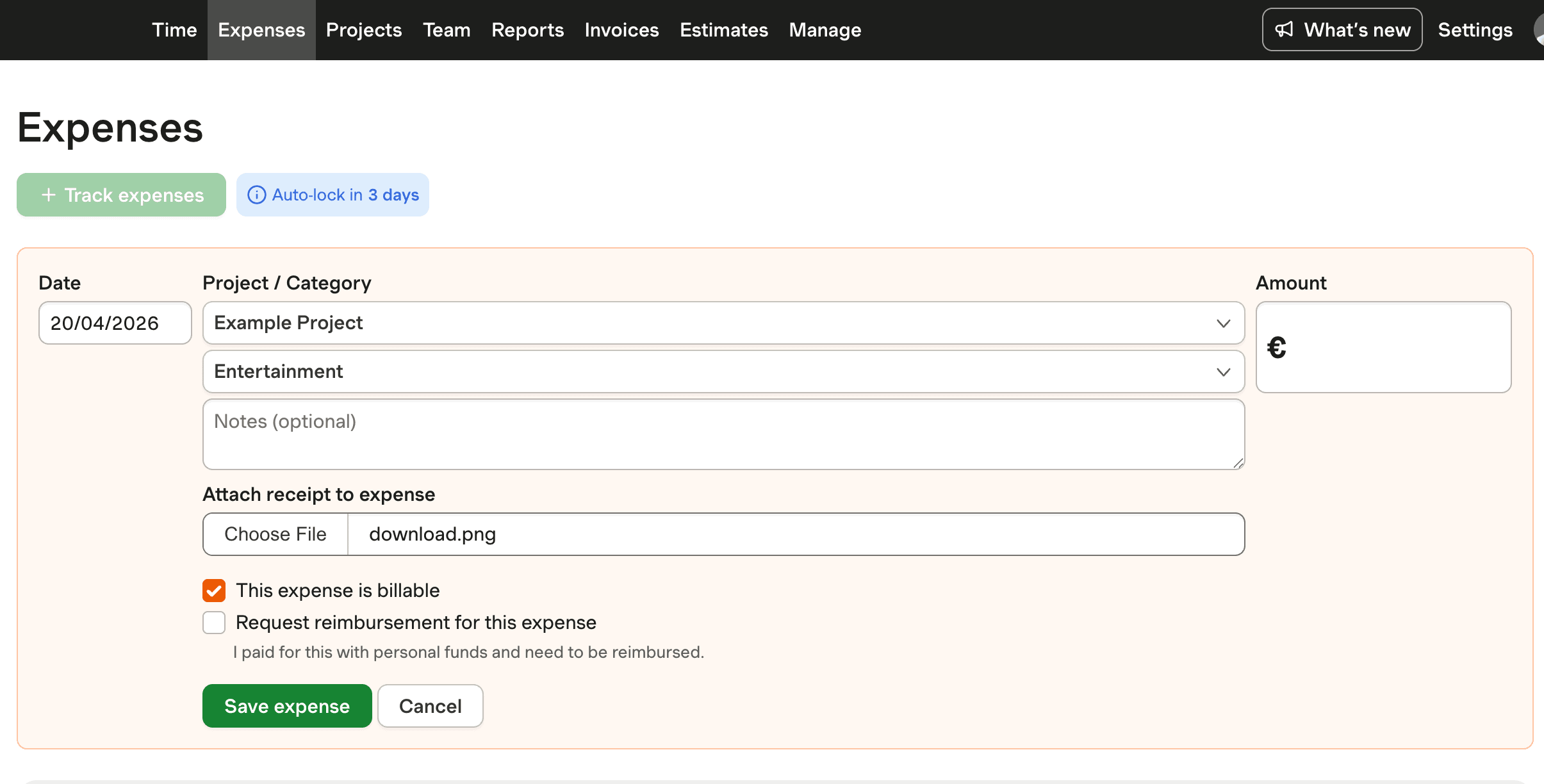
See how Harvest streamlines project-based expense tracking, enhancing billing accuracy and reducing manual processes.

Harvest interface for project-based expense tracking.

Servicenow Expense Management FAQs

  • Manual expense management often leads to inefficiencies, such as high processing costs and time consumption. For example, the average manual expense report costs $58 and takes about 20 minutes to process. This inefficiency can result in a loss of up to 5% of annual revenue due to fraud and policy violations.

  • Automation in expense management significantly reduces processing time and errors. Automated systems handle 75% of expenses, achieving a 94% compliance rate and saving over 300 hours annually. They streamline workflows, reduce manual data entry, and offer real-time visibility into expenses.

  • Harvest does not integrate with ERP systems like ServiceNow. However, it provides project-based expense tracking that simplifies expense reporting and billing, catering to small-to-medium businesses without the need for complex integrations.

  • Automated expense tracking enhances efficiency by reducing manual entry and speeding up reconciliation times. For instance, some companies report a 75% faster reconciliation and save over 5,400 employee hours by automating their expense processes.

  • Harvest aids in reducing manual expense reporting by allowing users to track expenses within projects. This method ensures precise billing and cost management, minimizing the need for manual data entry and manual report generation.

  • Project-based expense tracking with Harvest allows businesses to manage expenses alongside billable hours, ensuring accurate client billing and cost control. This integrated approach streamlines expense reporting and reduces administrative burden.

  • Implementing an expense management system involves assessing current processes, defining clear policies, selecting appropriate software, configuring workflows, and training employees. Harvest offers a straightforward solution for small-to-medium businesses to manage expenses efficiently.