
Harvest
Expenses
Sign up

Tracking Vehicle Expenses in Quickbooks

Harvest enables businesses to track mileage expenses with ease, providing a project-based solution that ensures accurate reimbursement and tax compliance.

  • Attach receipts to projects & tasks
  • Turn tracked expenses into client invoices
  • Free 30-day trial, no credit card needed

or drag & drop • Images and PDFs, max 10 MB

The Challenge of Tracking Vehicle Expenses

Tracking vehicle expenses accurately is essential for businesses aiming to maximize tax deductions and manage operational costs effectively. Businesses often struggle with separating personal and business use, especially when employees use their personal vehicles for work purposes. According to a YouGov survey, 56% of company car drivers are unaware of the rules for reclaiming business mileage, leading to potential misreporting and lost deductions. Moreover, manual tracking methods can introduce errors, with 80% of timesheets containing mistakes that impact tax compliance and financial accuracy.

The transition to digital tracking solutions can alleviate these issues significantly. Digital platforms provide real-time tracking and automated data entry, reducing manual errors and ensuring compliance with tax regulations. Businesses that adopt digital solutions report a 70% boost in productivity, saving over 30,000 hours annually. Embracing technology is not only a matter of convenience but also a strategic move to safeguard against compliance risks and financial losses.
How Harvest Simplifies Mileage Tracking

Harvest offers a straightforward solution for businesses needing to track mileage expenses effectively. By allowing users to set a per-mile rate, Harvest enables companies to reimburse employees accurately for personal vehicle use during business activities. This feature helps firms maintain clear records, which are vital for IRS or CRA compliance, where meticulous log-keeping is required for tax deductions.

The platform's project-based expense tracking system further enhances its utility. Users can categorize expenses to align with their specific business needs, ensuring that all vehicle-related costs are accounted for within the broader context of project accounting. This integration aids businesses in maintaining consistent financial records, facilitating easier tax preparation and strategic financial planning.

Maximizing Tax Deductions with Accurate Records

The IRS and other tax authorities emphasize the importance of accurate and contemporaneous records for vehicle expenses. Detailed logs that include trip dates, mileage, and business purposes are critical for compliance and maximizing tax deductions. Harvest supports these requirements by offering a platform where businesses can track mileage expenses alongside project costs, ensuring that all relevant data is captured and organized efficiently.

For businesses that use mixed-use vehicles, determining the percentage of business use is essential. This percentage directly impacts the deductible amount under the actual expense method, which requires accurate separation of personal and business use. With Harvest, businesses can streamline this process by maintaining detailed records that simplify the calculation of business-use percentages, ultimately optimizing tax deductions.

Improving Efficiency Through Integration

Integrating expense tracking with broader financial management systems is crucial for operational efficiency. Harvest facilitates this integration by allowing businesses to track all project-related expenses, including mileage, in one place. This holistic view not only reduces manual entry errors but also enhances financial visibility, enabling more informed decision-making.

Moreover, by integrating vehicle expense tracking with payroll and reimbursement systems, businesses can streamline the reimbursement process. This ensures timely payments to employees and reduces administrative overhead, which is particularly beneficial for businesses with significant travel requirements. Digital receipt management within Harvest further enhances this efficiency, allowing automatic recording and categorization of vehicle-related expenses.

Tracking Vehicle Expenses with Harvest

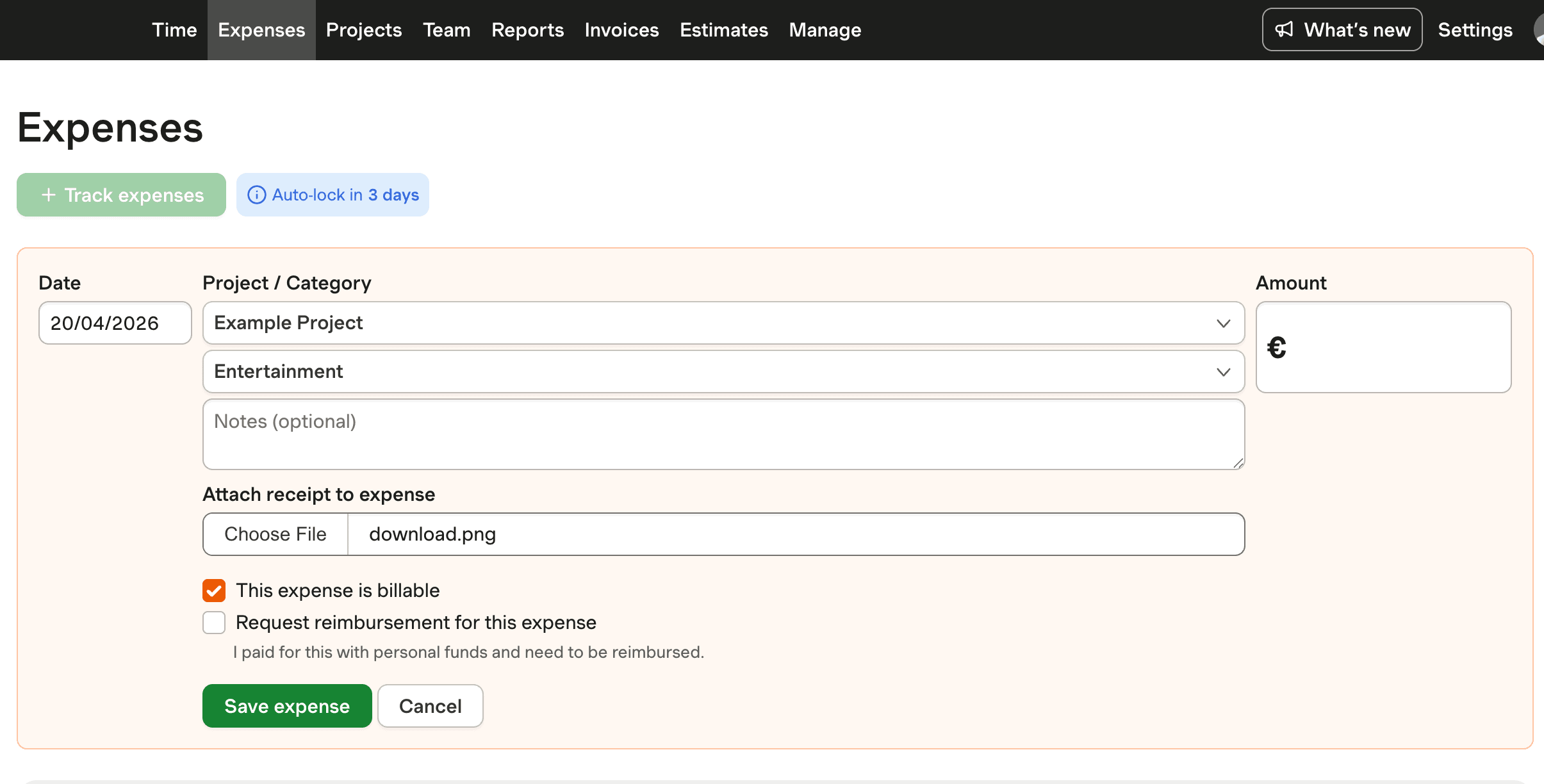
See how Harvest helps businesses track mileage expenses accurately and efficiently for tax compliance.

Harvest interface showing vehicle expense tracking features.

Tracking Vehicle Expenses in Quickbooks FAQs

  • To set up vehicle tracking in QuickBooks, go to the "Lists" menu and select "Chart of Accounts." Create a new account for each vehicle by choosing "Fixed Asset" and entering details like purchase price and date. Track expenses by categorizing them under these accounts.

  • In QuickBooks, you can track various vehicle expenses, including fuel, maintenance, insurance, and repairs. Categorize these expenses under specific accounts to ensure they are captured accurately for tax purposes.

  • To categorize vehicle expenses for tax deductions, ensure each expense is linked to the appropriate account in QuickBooks. This facilitates accurate financial reporting and simplifies the deduction process during tax filing.

  • There are two primary mileage deduction methods: the standard mileage rate and the actual expense method. The standard mileage rate is simpler, while the actual expense method can yield higher deductions for vehicles with significant operating costs.

  • Harvest supports mileage tracking by allowing users to set a per-mile rate for reimbursement. This feature helps businesses keep accurate records of personal vehicle use for business, aiding in tax compliance.

  • While Harvest does not directly integrate with QuickBooks, it offers comprehensive project-based expense tracking that aligns with QuickBooks' financial management capabilities. This ensures consistency in financial records.

  • Automated vehicle expense tracking reduces manual errors, enhances accuracy, and saves time. Businesses report productivity boosts of over 70% and cost savings of up to 25% on maintenance with automation.

  • For vehicle tax deductions, keep detailed logs of each trip, including date, mileage, and business purpose. Retain receipts for all vehicle-related expenses if using the actual expense method to support your deductions.