
Harvest
Expenses
Sign up

Trucking Expense Software

Harvest offers customizable expense categories and mileage tracking to simplify trucking expense management, addressing issues with manual record-keeping and compliance.

EXPENSE REPORT DRAFT

Drop your receipts here or click to upload

Images and PDFs (max 10 MB each)

Date
Category
Merchant
Description
Amount
Total
$0.00

Customise report

Appearance

Show report title

Report settings

Challenges in Managing Trucking Expenses

Managing trucking expenses presents unique challenges, especially with rising costs and complex compliance requirements. The average marginal cost of trucking has soared to a historic high of $2.27 per mile in 2023, burdening operators with significant financial pressure. Fuel alone can account for 31% to 44% of these costs, making effective management essential for maintaining profitability. Moreover, the need for precise record-keeping and compliance with regulations like the International Fuel Tax Agreement (IFTA) adds layers of complexity, as errors can lead to penalties and increased audit risk.

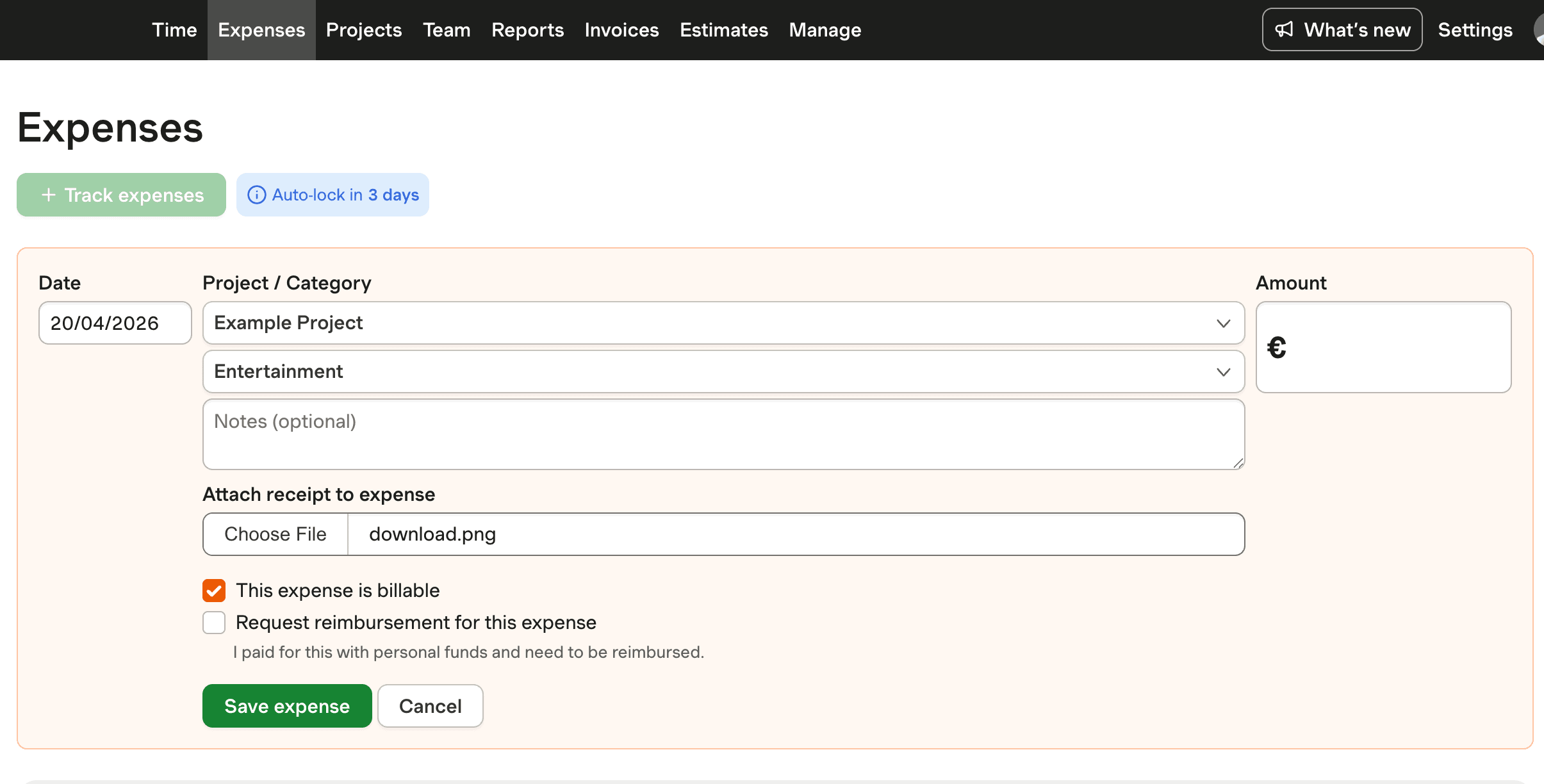
Harvest offers a solution by providing customizable expense categories that help trucking businesses categorize costs like tolls and maintenance efficiently. While it doesn't automate IFTA reporting, Harvest's project-based expense tracking allows carriers to manage expenses by date, project, and category, helping ensure accurate record-keeping and reducing the risk of financial mismanagement.
Simplifying Expense Tracking with Harvest

For many trucking businesses, manual record-keeping is still prevalent, leading to errors and lost receipts, especially during tax season. This approach can result in missed deductions and increased administrative burdens. Harvest addresses this challenge by allowing users to create custom expense categories tailored to trucking needs. Whether it’s tracking maintenance costs or toll expenses, Harvest ensures that every expense is categorized accurately.

Additionally, Harvest’s mileage expense category feature enables cost-per-mile calculations, which are crucial for understanding operational costs in trucking. While it requires manual entry for mileage, this feature helps operators maintain precise records that are essential during audits and for strategic decision-making. By automating expense tracking, Harvest significantly reduces the likelihood of errors and helps streamline the financial management process.

Strategic Financial Management for Trucking

Effective financial management in trucking requires not only tracking expenses but also leveraging technology to optimize operations. With operating costs rising by 3.6% to $1.779 per mile in 2025, it's crucial for trucking companies to adopt solutions that offer strategic insights. Although Harvest does not provide real-time financial tracking specific to trucking, its detailed expense reports can still offer valuable insights when filtered by client, project, person, and date.

By integrating these reports into broader operational strategies, companies can identify cost-saving opportunities and make data-driven decisions. While Harvest lacks direct integration with electronic logging devices (ELDs), its project-based tracking system helps maintain accurate records, which can be crucial for strategic planning and financial audits. This approach empowers businesses to better navigate the financial landscape of the trucking industry.

Enhancing Compliance and Reducing Administrative Burden

Compliance with regulations like IFTA is a major concern for trucking companies, as non-compliance can lead to penalties and increased audit risks. Carriers must file quarterly fuel tax reports and maintain detailed records for each vehicle, which can be administratively taxing. While Harvest does not automate IFTA reporting, it facilitates meticulous record-keeping through its customizable project and expense categories, which are essential for compliance.

Incorporating Harvest into your expense management processes can significantly reduce the administrative burden by organizing expenses in a clear and systematic manner. This not only simplifies compliance efforts but also enhances overall operational efficiency, allowing trucking companies to focus more on their core operations rather than the intricacies of financial management.

Trucking Expense Management with Harvest

See how Harvest helps trucking businesses manage expenses with customizable categories and mileage tracking, reducing errors and improving efficiency.

Harvest interface showing trucking expense categories and mileage tracking.

Trucking Expense Software FAQs

  • The average marginal cost of trucking reached a record high of $2.27 per mile in 2023. This increase reflects rising expenses across fuel, maintenance, and other operational costs, posing a challenge for fleet operators to manage efficiently.

  • Trucking companies can achieve significant fuel cost savings by adopting digital management solutions. Users of GPS fleet tracking have reported fuel savings from 8% to 16%, thanks to optimized routes and improved operational efficiency.

  • Separating personal and business finances is crucial for truckers to avoid confusion and ensure clarity during tax reporting. Using dedicated business bank accounts and credit cards helps establish financial boundaries and simplifies expense tracking.

  • Common errors include relying on manual record-keeping, which can lead to lost receipts and inaccuracies, and using vague expense categories like "miscellaneous." These practices can result in missed deductions and financial insights.

  • Harvest helps by offering customizable expense categories and mileage tracking, allowing truckers to organize costs like tolls and maintenance more efficiently. This reduces errors and enhances financial oversight.

  • Digital tools in trucking operations can lead to substantial financial benefits, such as reducing invoice discrepancies by up to 80% and achieving freight cost savings of 8% to 10%. These tools also enhance productivity and operational efficiency.

  • Harvest allows users to create custom expense categories tailored to trucking-related costs, such as tolls, maintenance, and fuel, enabling more precise financial tracking and management.